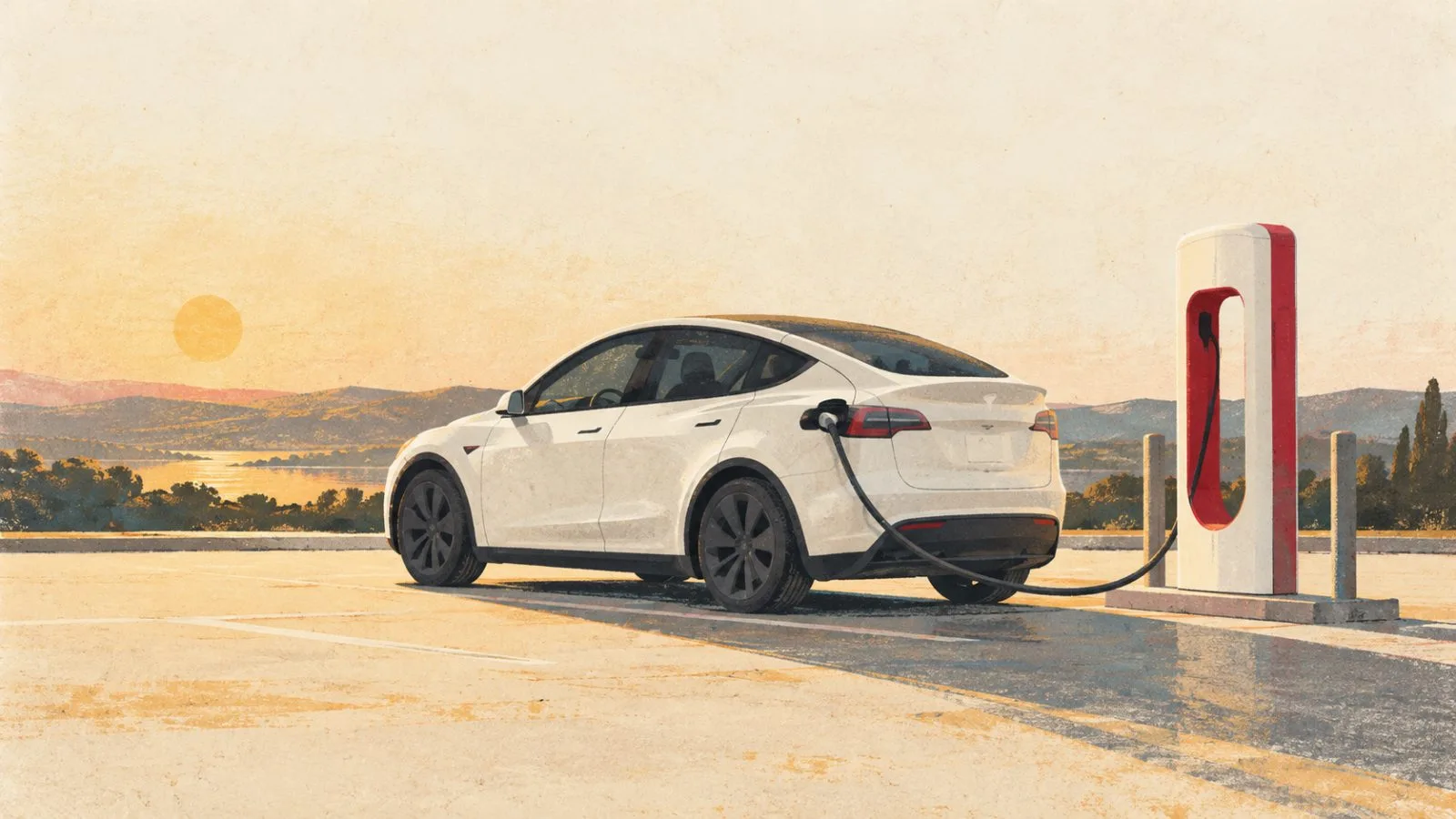
Tesla is accused of marketing driver-assistance software to South Korean buyers whose cars are ineligible to use it, according to a consumer group complaint reviewed by Reuters.
Reuters reported that a South Korean consumer group plans to ask the Korea Fair Trade Commission (KFTC) on Thursday to stop Tesla Korea from advertising Full Self-Driving (Supervised) to vehicles ineligible to use the software. The group also seeks administrative fines and a referral to state investigators. It alleges Tesla knew the software was legally unusable on most cars it sold in South Korea but promoted it broadly to local buyers.
At an October parliamentary hearing, Tesla Korea country manager Seo Young-deuk said FSD was available on about 20% of Teslas registered in South Korea. Those eligible vehicles were made in the United States. The complaint says South Korea recognizes U.S. vehicle-safety standards under a free-trade agreement, while China-made cars do not receive the same treatment.
Tesla figures submitted to South Korea’s National Assembly put sales of Shanghai-produced vehicles in the country above 170,000 since 2023. The records also showed that 99% of new Teslas sold in South Korea in 2025 could not legally use FSD. Sales of China-made Teslas ineligible for the software had increased more than fivefold between 2023 and 2025.
FSD once carried a one-time price of 9.043 million won. In August, Tesla switched to monthly billing at 150,000 won. The complaint alleges that in 2025 Tesla promoted FSD as “coming soon” and separately posted a demonstration filmed in South Korea without clearly explaining the software’s limited eligibility.
South Korea’s transport ministry told a lawmaker that FSD did not meet local safety rules, including a rule requiring drivers’ hands to remain on the steering wheel. At an Oct. 8 hearing, Seo said Tesla had not formally requested testing from the ministry. Reuters reported that Tesla sought certification about two weeks later.
The KFTC opened an investigation into Tesla’s FSD advertising earlier in 2026 and received written responses from the company, an agency official told Reuters. The official declined to provide further details. Reuters also reported that Tesla did not respond to requests for comment. The group plans to submit its complaint Thursday.