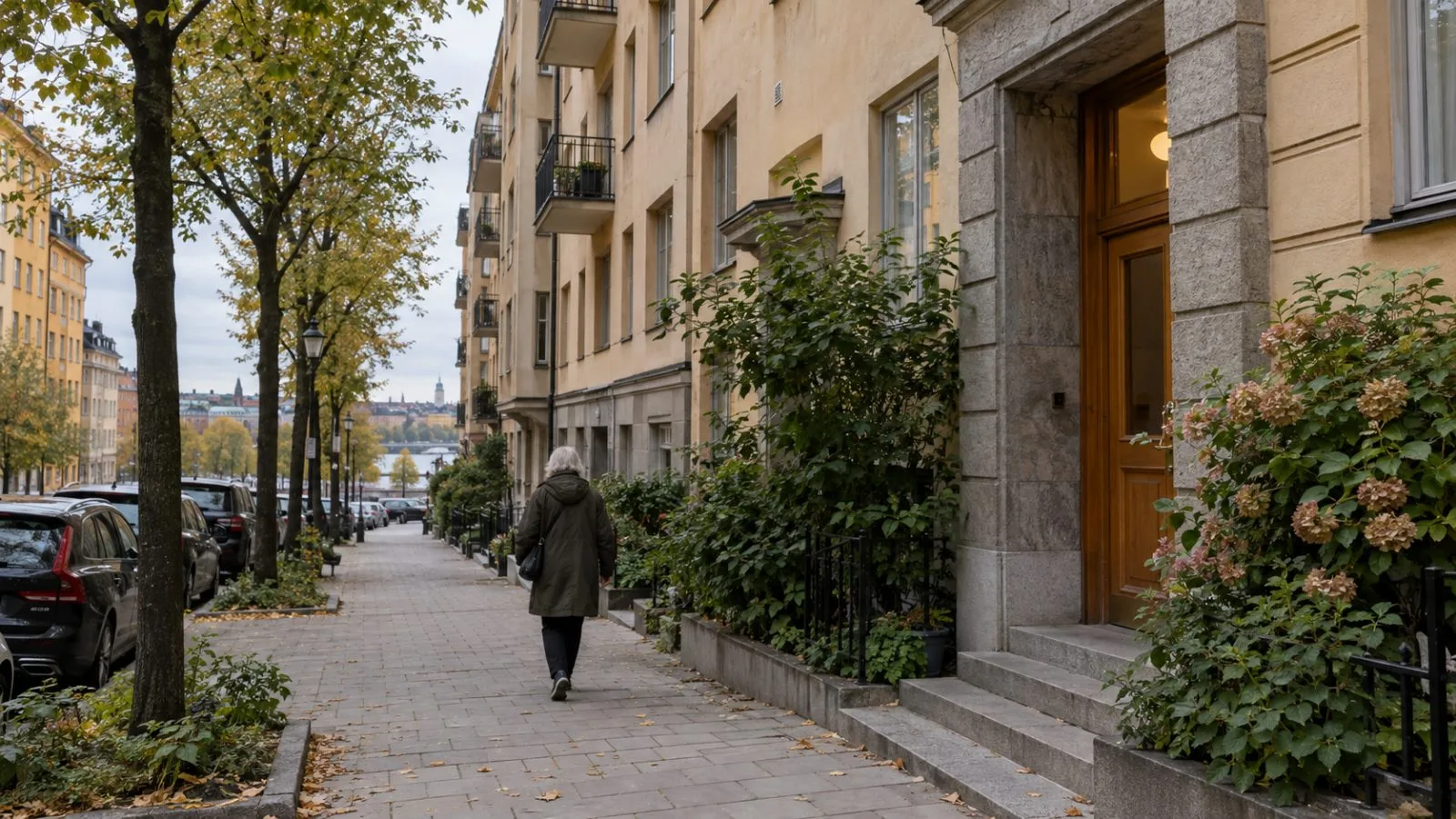
A Stockholm study of older adults found the strongest link between greenery and lower dementia incidence when vegetation was measured within 100 meters of home, focusing attention on residents’ immediate surroundings.
In the analysis published in Alzheimer’s & Dementia, researchers tracked 2,993 people aged 60 or older in Stockholm’s Kungsholmen district. Participants entered the study from 2001 to 2004, and 477 received a dementia diagnosis over as many as 16 years of follow-up.
The team used satellite images to calculate a vegetation index for areas within 100, 250 and 500 meters of each residential address. Its main analysis used average vegetation levels during the five years before a diagnosis or the end of a participant’s follow-up.
Within 100 meters, each 0.18-point increase in the index corresponded to a 21% lower adjusted hazard of dementia. Hazard describes the rate at which diagnoses occurred during follow-up. The finding does not mean an individual’s chance of developing dementia fell by 21%.
The association was weaker when the researchers measured vegetation within 250 or 500 meters. Their models accounted for age, education, socioeconomic circumstances, physical activity, fine-particle air pollution, road traffic noise and nearby water. Because the study observed participants rather than assigning them to different environments, it cannot establish that vegetation caused the difference.
A subgroup analysis found a stronger association among women, although the evidence did not establish a difference between women and men. The study also did not test whether planting trees or creating parks would change dementia outcomes.
The authors said earlier research on greenery and dementia had produced mixed results, and many studies measured vegetation across broad neighborhoods. They identified stress, sleep, exercise, social contact and reduced exposure to urban hazards as possible explanations, without determining whether any accounted for the finding.
The researchers described nearby green space as a potential resource for older city residents. Their study estimated neither the number of dementia cases an intervention might prevent nor the cost of adding vegetation.