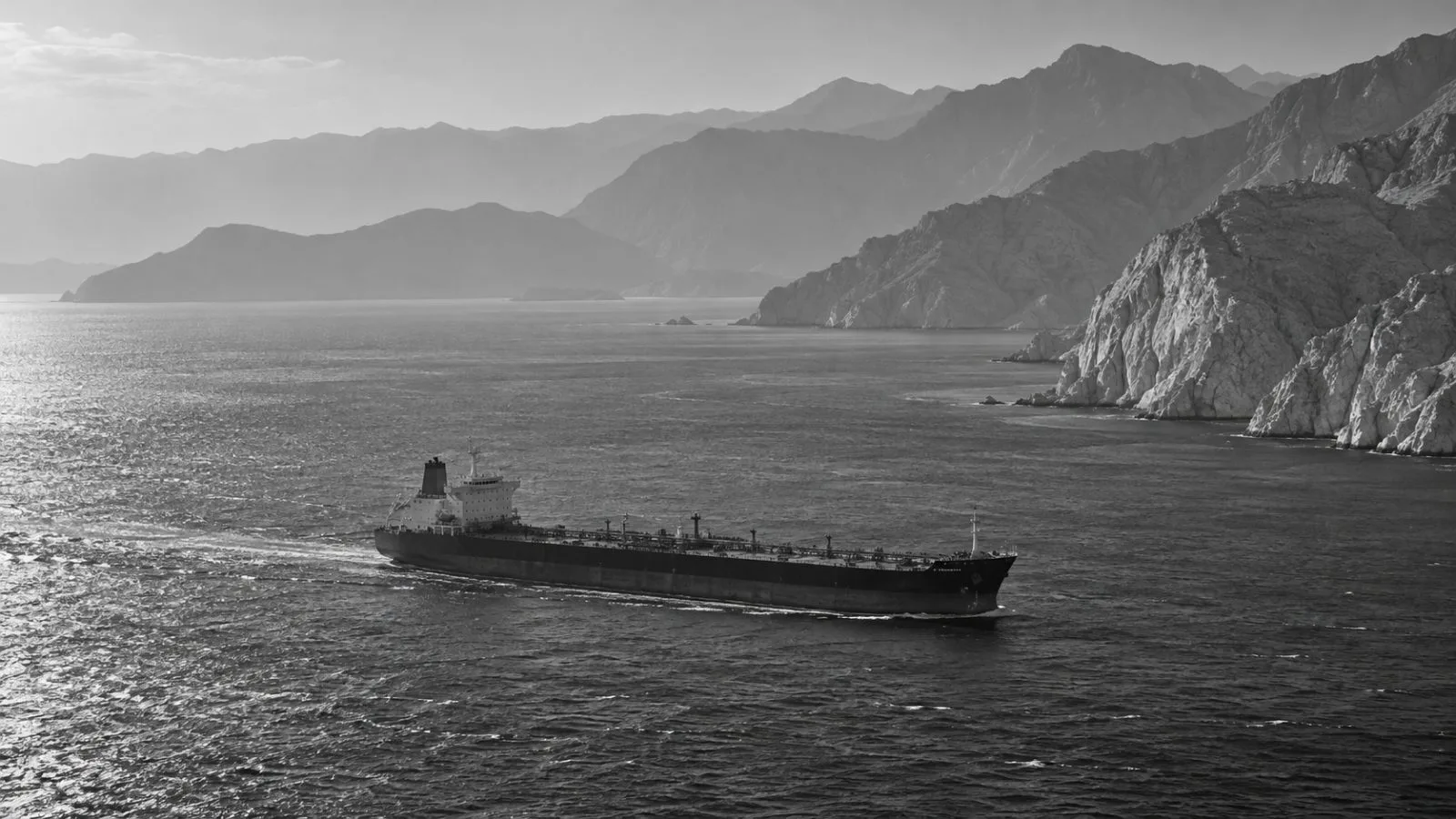
Shipping through the Strait of Hormuz has recovered, but vessel attacks continue to keep marine insurance premiums high, Global Risk Intelligence and Planning chief executive Hal Kempfer said.
A Joint Maritime Information Center (JMIC) advisory on Oct. 18 rated the threat to shipping in the strait as severe. The center cited U.K. Maritime Trade Operations (UKMTO) data showing 254 transits in the week through Oct. 14, about 70% below pre-conflict traffic, figures EconoTimes detailed in its earlier coverage of the threat and export recovery.
In an Oct. 22 interview with David Lin, Kempfer said U.S. Navy assistance had expanded from guiding vessels to escort-like support, helping raise traffic in both directions. He said ships had shifted toward a southern route near Oman's coast from routes through the middle of the strait across Omani and Iranian territorial waters.
Kempfer said about 97% of ships completed the passage without trouble, while he estimated that 3% were targeted. He cited a recently attacked ship that sank while being towed toward port. He also said some ships that are harder to detect on radar cross Hormuz, then transfer cargo to other vessels farther south.
Kempfer said lower insurance premiums would require fewer missile and drone strikes. He sees no single military solution given Iran's weapons reserves and widely dispersed launch sites. He expects more spending on systems to intercept cruise and ballistic missiles and drones before any ground campaign; he said Iran's geography would demand substantial forces and an operation might not eliminate the threat.
Kempfer said he had seen no indication of mining on a large scale in the strait, although some clues pointed to possible deployment. He added that currents could carry floating mines toward Iranian waters.
Kempfer said a quick end to the conflict appeared unlikely. He assessed that Iran's leadership, along with the Revolutionary Guard Corps, was seeking negotiating leverage before the U.S. midterm elections. The blockade's effect on oil revenue, together with insurgent activity inside Iran, could press leaders to rethink their strategy after the elections, he said.