A Brattle Group analysis for The Pew Charitable Trusts says wider use of customer-sited energy could avoid $614 billion in U.S. power-system costs through 2050, if major barriers are eased.
The estimate is cumulative and stated in inflation-adjusted, undiscounted 2026 dollars. The modeled scenario raises distributed energy capacity to 524 gigawatts by 2050, about 4.5 times current levels. Brattle says that outcome depends on expanded adoption and the removal of significant policy and regulatory barriers; it is not a forecast of likely deployment.
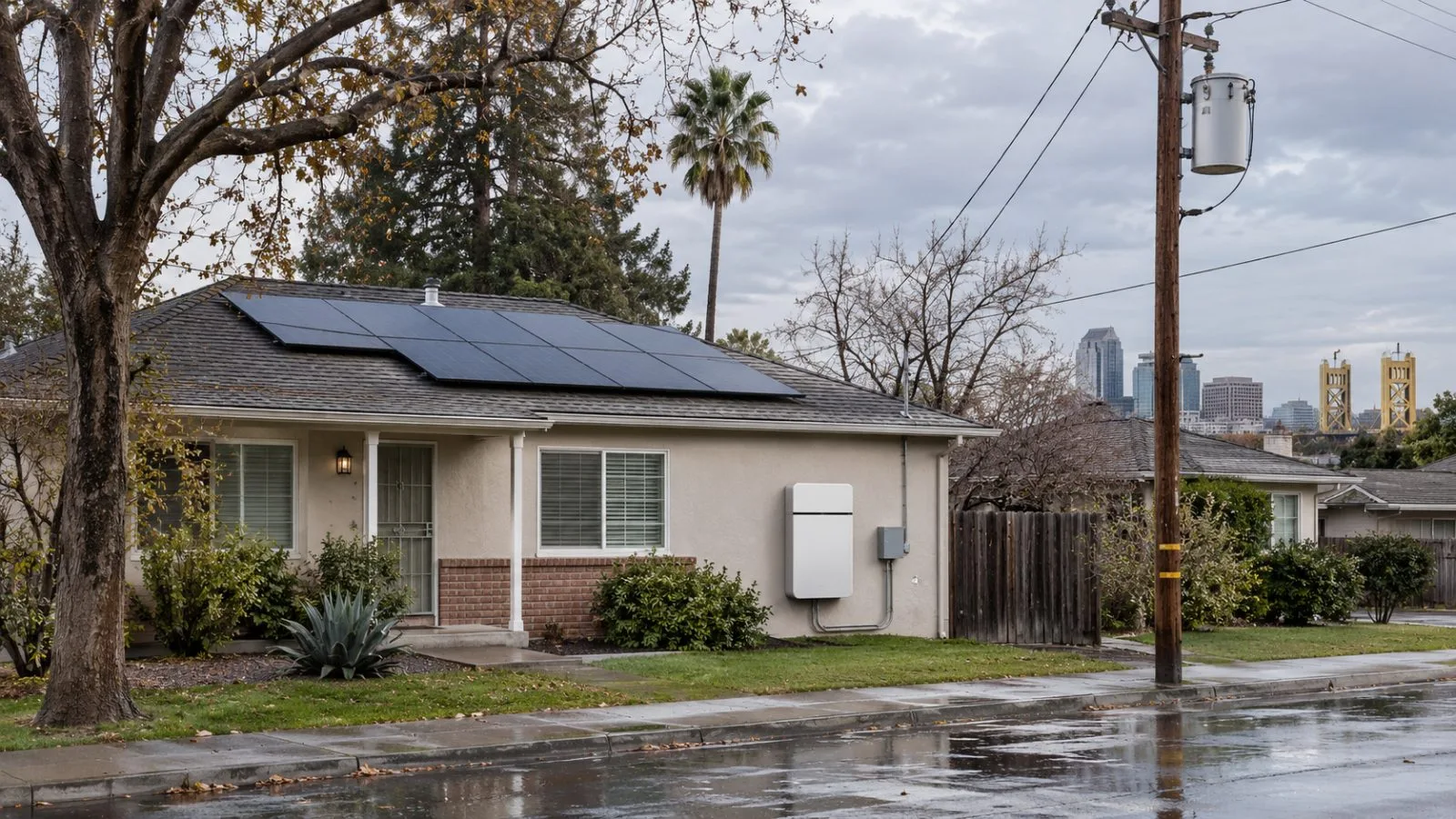
The resources in the model include local solar and batteries, flexible heating and cooling, managed electric-vehicle charging, and demand response from commercial and industrial users. Distributed energy resources are systems that generate, store or manage power near where it is used. The analysis covers 25 U.S. regions.
For households, the study estimates an average $122 reduction in annual electricity bills by 2050, after accounting for costs to enable deployment. Brattle says the modeled resources could offset roughly half of projected household bill increases beyond inflation by 2035. The bill estimate is in 2026 dollars.
Brattle estimates that three policy changes could account for $266 billion in avoided power-system costs, or 43% of the benefits it identifies. The measures are including distributed resources in utility distribution planning, reducing local permitting costs and reforming interconnection. The study also points to slow or costly approvals, limited utility planning and incentives that favor utility investment over customer-sited options as barriers to adoption.
Distributed energy owners could be paid for providing grid services, while lower system costs could put downward pressure on rates for other customers. How those benefits are divided would depend on program and policy design. Implementation also carries costs for administration, aggregators, technology and marketing.
The modeled portfolio could avoid roughly 70 gigawatts of net natural-gas capacity additions between 2030 and 2050, a 22% reduction, and cut cumulative power-sector carbon dioxide emissions by 863 million metric tons through 2050, or 3% compared with the status quo scenario. In a separate scenario requiring carbon-free power by 2050, Brattle estimates distributed resources could offset about 175 gigawatts of utility-scale capacity and reduce annual generation costs by $45 billion in 2050.
Ryan Hledik, a Brattle principal and report co-author, said the opportunity is to “treat them as resources in utility planning rather than leave their capabilities untapped.” The study says its estimates do not capture all potential benefits, including resilience and some transmission benefits.