A 2016 global review of seagrass restoration found that 37% of trials persisted after a median 36 months, showing how recovery can depend on planting scale and conditions at the site.
Published in the Journal of Applied Ecology, the meta-analysis by van Katwijk and co-authors combined 1,786 trials. Projects that began with more than 10,000 plants or seeds showed positive population growth in the analysis. The 37% figure describes trial persistence, not the share of individual shoots that survived.
Planting size was not the only factor associated with results. Reduced water quality, often linked to excess nutrients, and construction were tied to weaker outcomes. The researchers said pressures should be addressed before replanting. GEOMAR, a German marine research institute, also identifies warming waters as a threat to meadows.
Seagrass provides habitat for marine wildlife and helps stabilize sediment, reduce wave impacts, filter water and store carbon, according to GEOMAR. These functions matter to coastal ecosystems and communities.
Global loss estimates cover different records. A 2009 assessment of 215 studies found a 29% decline in documented seagrass area since records began in 1879. A later assessment found a net loss of 5,602 square kilometers, or 19.1% of the area surveyed across 547 sites from 1880 to 2016. That survey covered about one-tenth of a separate estimate of global extent. In Europe, a 2019 study of 737 sites across 25 countries found gains exceeded losses in the 2000s for the first time since the 1950s in its dataset, though gains were concentrated in particular places and species.
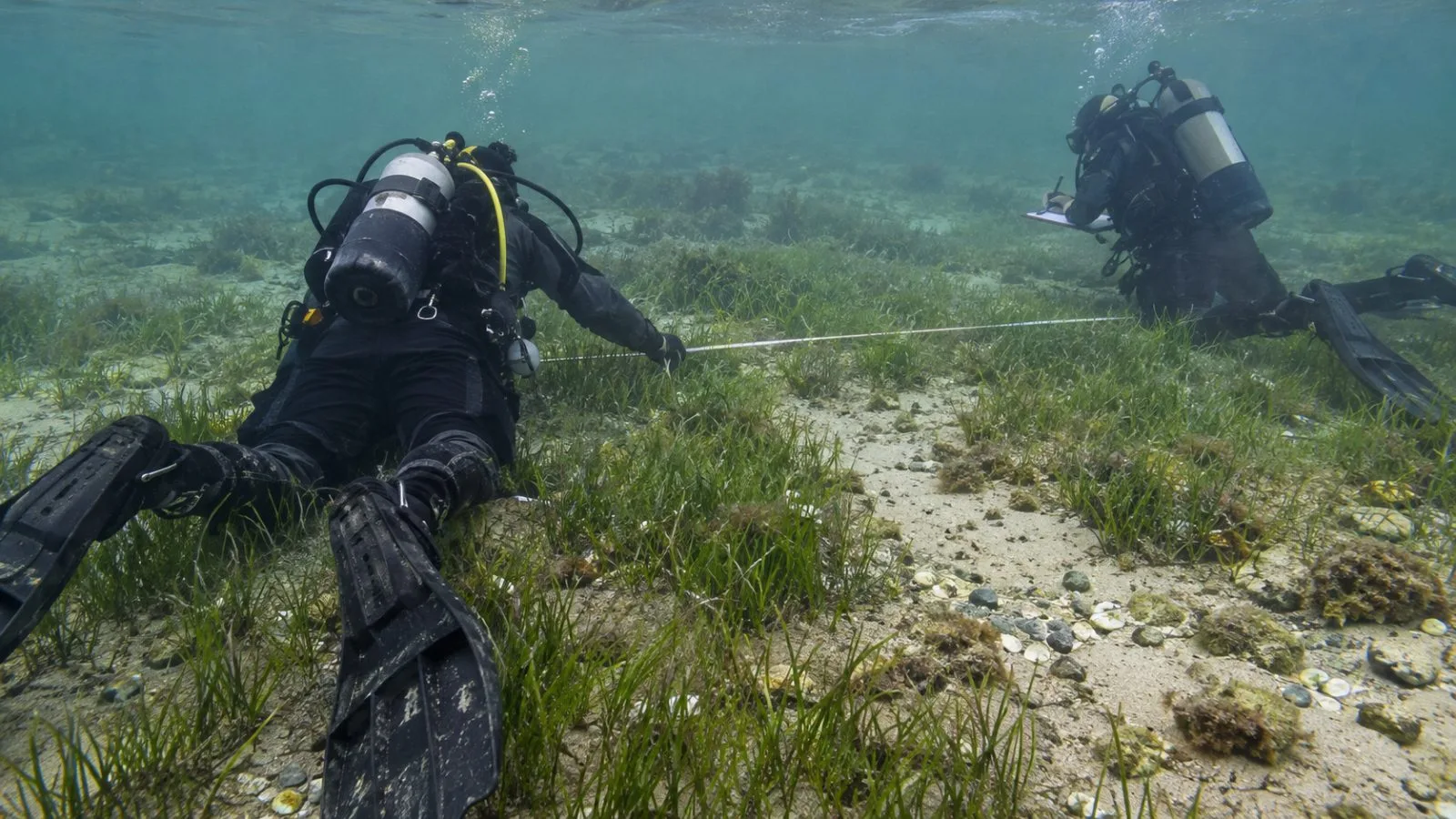
Preliminary results presented in a 2023 conference abstract showed planted plots remained after two years at three southwestern Baltic sites. Animals associated with the meadows returned sooner than sediment microbes and carbon stocks responded. In June 2025, GEOMAR outlined a planting effort involving divers from five NGOs, with eight shoots per square meter planned at nine sites from Holnis to Fehmarn. The announcement said a monitoring program would track environmental conditions and planting results.
Thorsten Reusch, professor of marine ecology at GEOMAR, said, “There’s little point in replanting seagrass that won’t survive rising water temperatures in a few years’ time.” GEOMAR’s ZOBLUC project, focused on seagrass restoration and carbon storage, began in 2025 with a budget of about €6 million and is scheduled to run through September 2030.