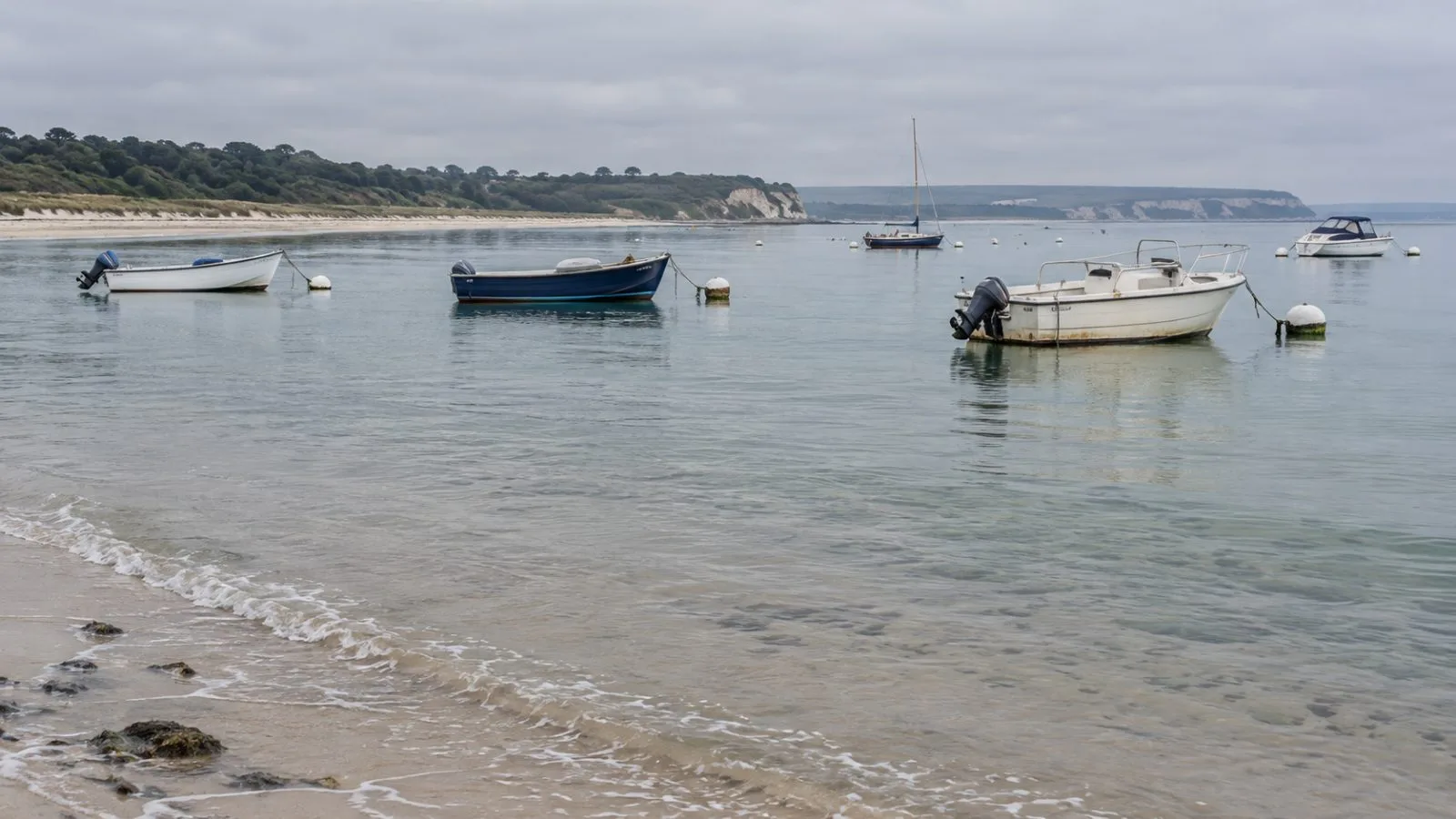
The Studland Bay Marine Partnership said the average area of bare seagrass patches near its first 10 eco-moorings fell 93.6% between 2021 and 2025, as boaters gained an alternative to anchoring.
Kira Dunn, who conducted the study for a University of Southampton MSc, examined 39 damaged seabed areas using side-scan sonar, historical satellite images and five years of monitoring data, according to the partnership. It said signs of regrowth appeared in each scar assessed after repeated disturbance ceased. Conventional chain moorings remained at a second site until 2023. The partnership reported a 65.4% reduction there and no significant change from 2021 to 2023.
“The results clearly show that seagrass is recovering in areas where physical disturbance has been removed,” Dunn said in a statement published by the partnership. The reported observations do not isolate the moorings’ effect from the voluntary no-anchor zone and boater outreach, which also aimed to reduce disturbance.
Studland Bay, off England’s Dorset coast, became a Marine Conservation Zone in 2019. The Marine Management Organisation (MMO) established a voluntary no-anchor zone in 2021. Eco-moorings connect a surface buoy to a screw fixed in the seabed with an elastic line, avoiding the seabed scouring caused by moving chains. The seagrass supports wildlife including seahorses and provides nursery habitat for commercially important fish.
The MMO awarded the partnership £186,000 in 2023 toward a £248,000 conservation project. The partnership’s monitoring report listed 87 eco-moorings installed by 2024. In a camera sample spanning 89 days from June 13 to Sept. 18, 2025, 73% of recorded vessel appearances involved use of a mooring and 8% involved anchoring in seagrass. The figures count appearances, not individual boats.
The partnership estimated £11,400 in lost mooring-fee income during its 2025 sampling period, describing the amount as a result of payment noncompliance. Its cameras could not establish which vessels had paid. The partnership says fee income is not enough to cover maintenance costs.
The MMO is seeking evidence on the impacts of recreational activity and anchoring in England’s marine protected areas. The call for evidence closes Nov. 25, 2026.