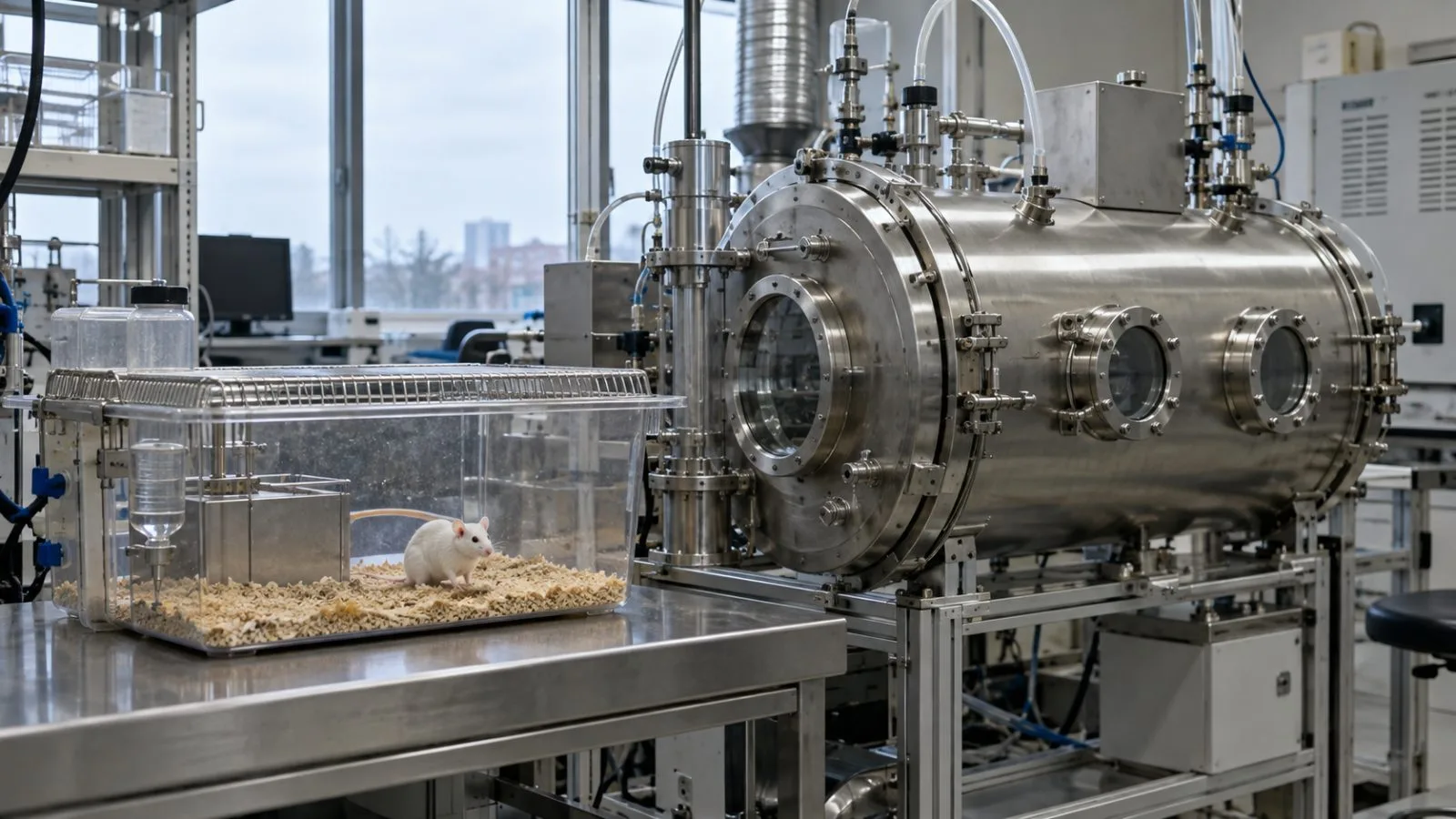
A mouse study by Jeonbuk National University researchers found that PM2.5 worsened bone marrow stem cell aging and dysfunction in diabetic mice, pointing to a possible inflammatory mechanism.
The researchers exposed diabetic and non-diabetic mice to artificially generated PM2.5, particles less than 2.5 micrometers across, in an atmospheric simulation chamber. The concentration was 50 micrograms per cubic meter, and exposure lasted two hours daily for five days.
In diabetic mice, mesenchymal stem cells showed a shift toward fat-cell development and away from bone-cell development. Hematopoietic stem cells, which produce blood cells, had lower colony-forming capacity and reduced ability to repopulate. The study examined both as bone marrow cell populations.
The paper also reports higher levels of pro-inflammatory cytokines and damage to the lungs and liver. In the pancreas, researchers found disruption of insulin-glucagon homeostasis, the balance between hormones that regulate blood sugar.
The researchers linked some changes to the NLRP3 inflammasome, a component of the body’s inflammatory response. They reported that MCC950, an NLRP3 inhibitor, reversed adverse changes in both stem cell populations. The experiment tested a possible biological mechanism in mice, not a treatment in people.
The authors said they were examining an area that had not previously been explored: how fine-particle exposure affects bone marrow stem cells in the context of diabetes. The study does not establish whether similar effects occur in humans.
The paper was made available online June 27 and appeared in Journal of Hazardous Materials, Volume 514, on Aug. 1, 2026. Professor Sung-Ho Kook said the findings could encourage “a more integrated approach to disease prevention.” The experiment did not assess whether MCC950 is safe or effective in people.