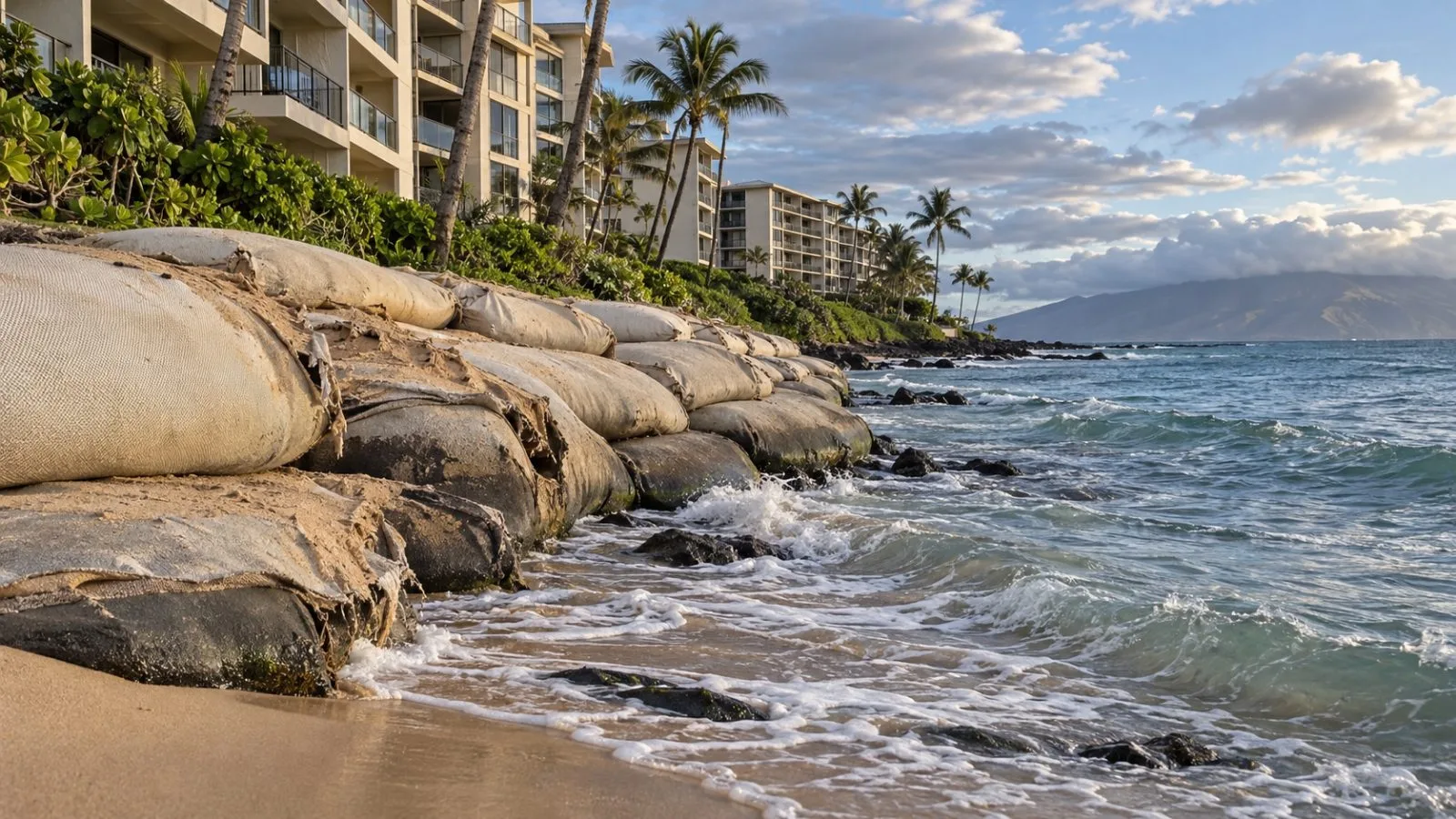
A Surfrider Foundation review found low grades for emergency shoreline rules in 27 of 30 coastal and Great Lakes states it assessed, as the group warned temporary defenses can persist beyond immediate threats.
Surfrider’s 2026 State of the Beach assessment gave 27 states a C or lower. Connecticut, Oregon and Texas received B grades, while Alaska, Maryland, Minnesota, Mississippi and Wisconsin received F grades. The group reported no A grades and said it scored state laws, not how consistently officials enforce them. Its seven criteria include requirements for written approval, time limits, removal and enforcement procedures.
Surfrider argues that weak permit limits and removal enforcement can let short-term structures become long-term barriers, restricting beach movement and contributing to erosion on nearby properties. The group recommends a two-year limit for emergency structures and requiring permits to include a longer-term erosion plan.
The National Oceanic and Atmospheric Administration (NOAA) says shoreline barriers can shield homes and commercial infrastructure from erosion. They may also disrupt sediment movement and limit space for beaches and wetlands as sea levels rise, putting public beach frontage and habitat at risk.
Hawaiʻi records show one example of prolonged emergency protections. A 2018 Hawaiʻi Department of Land and Natural Resources submittal said a three-year authorization issued in 2007 for geotextile sandbags and Tensar structures at the Hololani Resort Condominiums in West Maui had been extended four times and was valid through May 1, 2018. A proposed 2025 Hawaiʻi Senate concurrent resolution, later deferred by a committee on March 21, described the sandbags as still in place and proposed removing them as part of a rock revetment project. The proposal asserted the revetment would use less public beach space.
A study indexed by the U.S. Geological Survey estimated that seawalls and revetments narrowed 17.3 ± 1.5 kilometers of Oʻahu beach and eliminated 10.4 ± 0.9 kilometers between 1928 or 1949 and 1995. The estimates cover Oʻahu’s armored shoreline generally, not emergency permits nationwide.
“An emergency permit should buy time for meaningful adaptation — not become a poor substitute for it,” said Emma Haydocy, senior manager of Surfrider Foundation’s Coasts & Climate Initiative. Surfrider framed the report against El Niño and recent coastal storms. NOAA’s Oct. 8 outlook put the chance of a three-month Relative Oceanic Niño Index reading of at least +2.5°C in October-December 2026 at 83%, a threshold above previous events dating to 1950. NOAA says impacts at that magnitude are more likely, but not guaranteed. Its next ENSO Diagnostics Discussion is scheduled for Nov. 12.