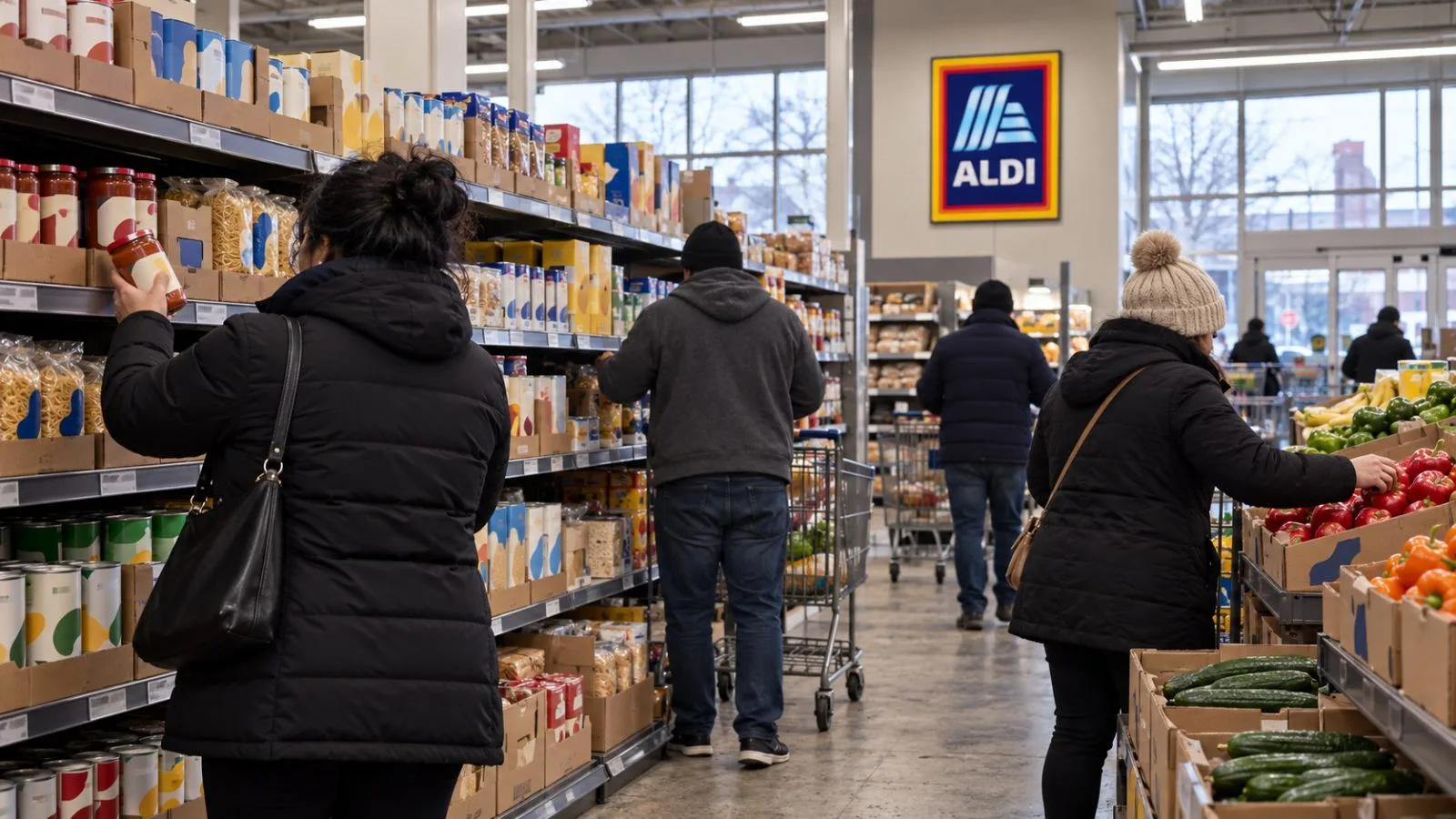
A Consumers’ Checkbook survey found ALDI prices 20% to 40% below the all-store average in each of seven U.S. metro areas, while research on Lidl’s entry suggests discount chains can change competitors’ pricing and sales.
Consumers’ Checkbook compared prices by unit. For conventional supermarkets, it used the cheapest comparable store-brand option at each chain, rather than matching a fixed set of national brands. The page was updated in November 2025, but does not say when checks were made. Its findings cover only those seven metro areas. Checkbook also pointed to lower overhead at smaller-format stores as one possible reason for ALDI’s price gap.
A 2023 paper by Lauren Chenarides, Miguel I. Gómez, Timothy J. Richards and Koichi Yonezawa examined grocery markets in the Eastern U.S. using Nielsen TDLinx data from 2014 through 2019. The researchers estimated incumbent retailers’ markups were 7.3% lower in markets where Lidl entered than in markets without discounter entry. Total store sales were nearly 2% higher following entry. The markup estimate is not a measured reduction in shelf prices, and the study’s store maps identify Lidl, so it does not measure ALDI’s specific impact.
The researchers said lower markups may benefit consumers while reducing incumbent grocers’ producer surplus, but did not calculate the combined welfare effect. They linked higher store sales to shoppers visiting other supermarkets for products discount chains do not carry. The paper also points to Walmart’s expansion in the 1990s and 2000s, when grocers facing direct competition were more affected than differentiated rivals.
ALDI said in 2025 that more than 90% of its products are private label. The company attributes quicker shopping to compact store layouts and says leaving everyday goods in their shipping cartons reduces shelf-restocking work. In a Jan. 12, 2026, announcement, ALDI said it planned more than 180 U.S. store openings by the end of 2026 and $9 billion in U.S. investment through 2028. Atty McGrath, CEO of ALDI U.S., said the company was planning additional distribution centers and “bringing ALDI to even more neighborhoods.” Its targets are nearly 2,800 U.S. stores by the end of 2026 and 3,200 by the end of 2028.