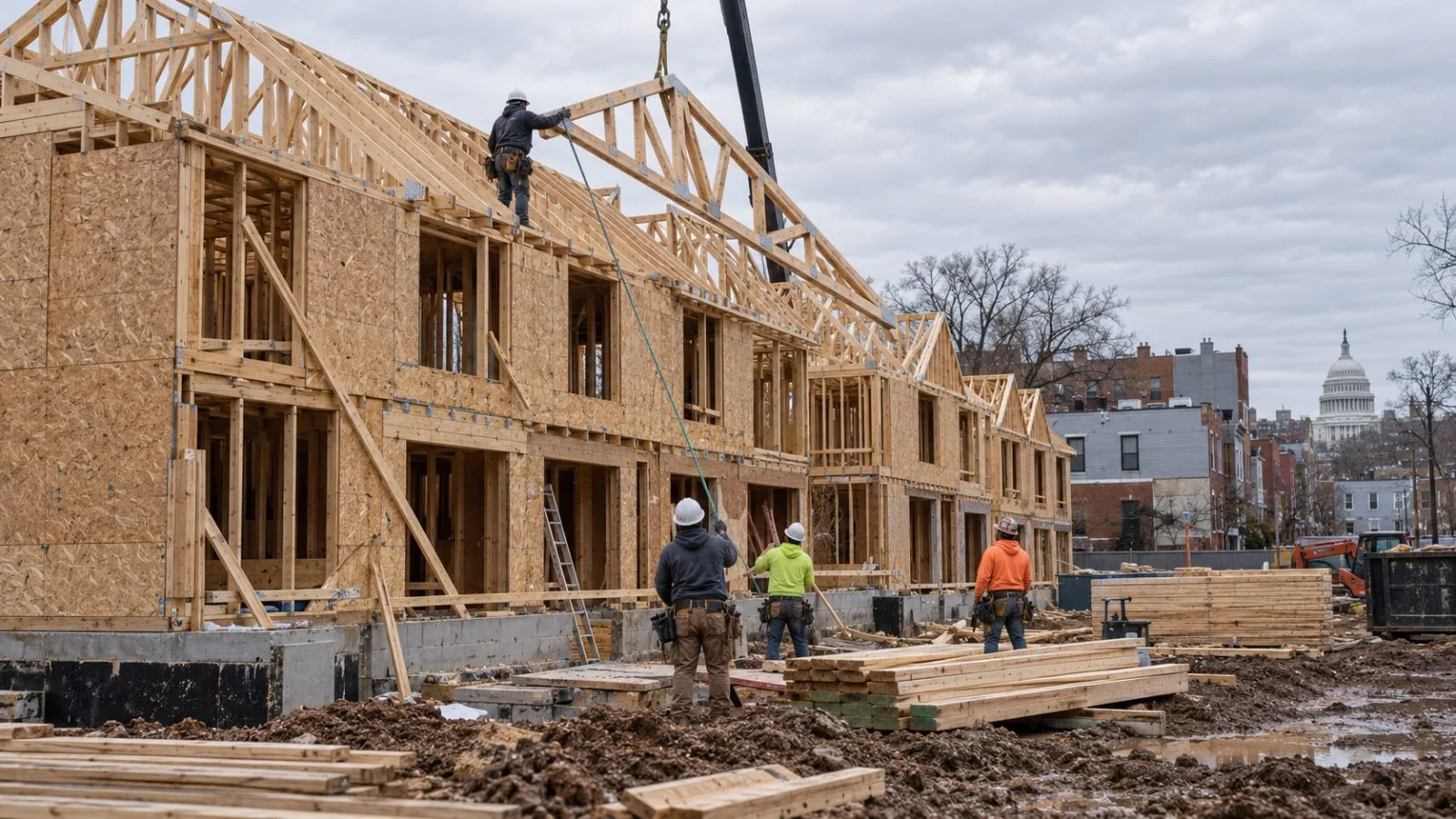
The Federal Reserve Bank of Atlanta’s GDPNow model estimates that U.S. residential investment will fall at a 7.9% annualized rate in the fourth quarter, weighing on the model’s broader gauge of economic growth.
In its Nov. 18 post, Econbrowser put GDPNow’s overall fourth-quarter growth estimate at 3.2% and said residential investment would subtract 0.29 percentage point from that rate. The 7.9% figure describes the component’s projected quarterly change expressed at an annualized pace; the 0.29-point figure is its estimated contribution to GDP growth. The model’s overall projection still shows growth.
The post said GDPNow’s contribution estimate for residential investment had been lowered by 0.17 percentage point. Goldman Sachs, by contrast, kept its estimate of the component’s contribution unchanged, Econbrowser reported. The comparison concerns the contribution to growth, not a different estimate of the 7.9% decline itself.
October housing indicators pointed in different directions. Econbrowser said housing starts exceeded expectations, but permits fell 7.4% from September; market consensus had expected a 1.4% decline. The post described starts as volatile this year, adding a caution to the stronger-than-expected figure.
An accompanying chart set GDPNow’s Nov. 18 estimate beside the Philadelphia Fed’s November Survey of Professional Forecasters median. It tracks residential fixed investment in billions of chained 2017 dollars at a seasonally adjusted annual rate, allowing the two estimates to be viewed on a comparable basis.
EconoTimes previously covered a separate GDPNow reading that put private-demand growth at 4.7% in the third quarter. That estimate addressed a broader demand measure, while the latest post isolates residential investment.