TIER IV and the Technical University of Munich (TUM) plan to pair NVIDIA’s Hyperion vehicle platform with Autoware for Level 4 autonomous-driving research in Germany, with public transport among its intended uses.
The partners announced the project at NVIDIA GTC Berlin. NVIDIA said TIER IV and TUM intend to use Hyperion to develop and validate autonomous public-transport systems in Germany. TIER IV’s release adds that the work will combine Hyperion and NVIDIA’s Halos safety system with Autoware-based vehicle projects. It also names robotaxis as an intended application and describes high-performance setups with two NVIDIA DRIVE AGX Thor computing systems. NVIDIA’s announcement does not specify those project-level details.
TIER IV said researchers and developers will be able to use the platform to build, test and validate autonomous-driving systems. The announcements did not give German test locations, a vehicle count or a deployment date. NVIDIA described the plans as forward-looking and subject to change.
The effort follows TIER IV and TUM’s Oct. 15 announcement that they had established the TUM Autoware Research Center. TUM said the center brings together its Automotive Technology, Cyber Physical Systems and Autonomous Vehicle Systems research groups, with work spanning vehicle safety, system assessment and adapting Autoware to new settings.
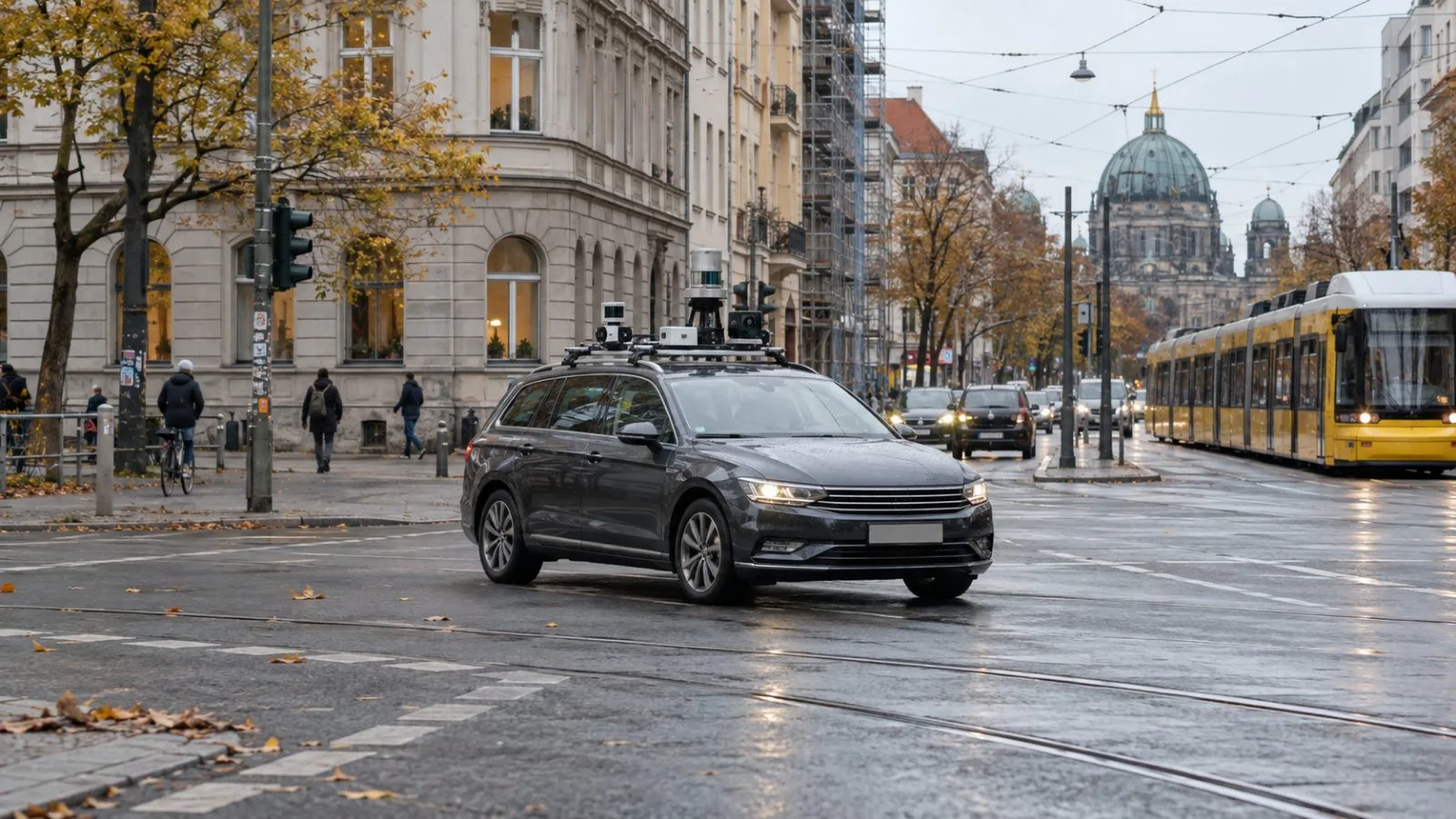
TUM’s EDGAR research vehicle runs Autoware. The university has demonstrated the vehicle on Berlin’s urban roads while working with TÜV-Verband on a Level 4 assessment method for the German government.
TUM has also linked open-source software and shared validation tools to the European automotive industry’s need for common approaches to vehicle software. The university pointed to a European Commission concept paper on an open European software-defined vehicle platform. The sources identify researchers and developers as intended users of the Hyperion work but give no project cost breakdown.