


 Samsung, SK Hynix Shares Fall as China's CXMT Advances DRAM Technology
  FAA Warns US Airlines Over Saudi Arabia Flight Risks
  Amazon Cuts More Jobs as AI Investment Expands
  South Korea Blocks 27 Crypto Exchange Websites in Regulatory Crackdown
  Hong Kong’s Second Solana ETF Launches With Lower Fees
  Meta Launches Muse Wonder AI Models, Shares Rise 3.7%
  Arthur Hayes Announces FLOP Testnet Launch Within Weeks
  Elon Musk Accuses Indian Telecom Giants of Blocking Starlink Launch
  Amazon in Talks to Acquire AI Startup Decart for $7 Billion
  Zcash Plans Quantum-Resistant Security Upgrade for January
  TSMC Profit Set to Surge 65% as AI Chip Demand Drives Record Earnings
  Nasdaq Faces Pullback to 26,225 Despite Bullish Outlook, UBS Says
  Most Americans Oppose Election Betting on Prediction Markets, Poll Finds
  Nvidia’s China AI Chip Market Share Falls to 34% as Huawei Gains Ground
  Syndax Stock Drops 15% After Axatilimab Trial Failure
  Orsted to Take Full Ownership of UK Offshore Wind Farm for £15 Million
  Elon Musk Eyes Semiconductor Manufacturing Expansion With $15 Billion Terrafab Project


 Add as a preferred source on Google
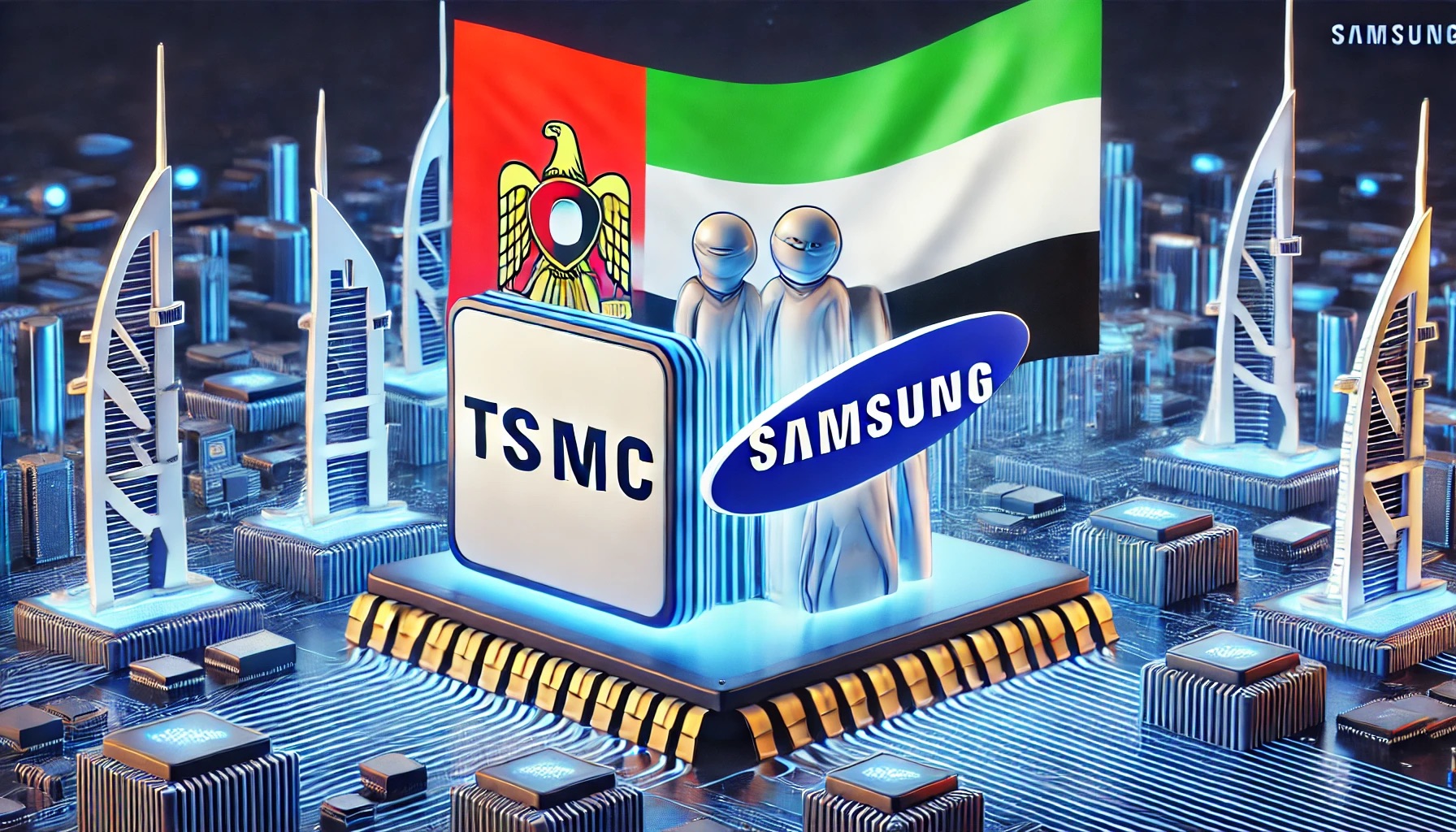
Samsung and TSMC are exploring plans to build semiconductor factories in the UAE to meet the rapidly rising demand for AI technologies, sources say. The projects could total more than $100 billion, but face significant technical challenges and early-stage uncertainties.
As reported by the Wall Street Journal, two major semiconductor manufacturers—Samsung Electronics Co. and Taiwan Semiconductor Manufacturing Co.—have discussed the possibility of constructing large new factories in the UAE in the near future to meet the surging demand for AI computing.
Samsung and TSMC Weigh UAE Expansion Amid AI Demand
Bloomberg reported on Sunday, citing sources familiar with the matter, that executives from TSMC—the largest chipmaker in the world—have recently visited the UAE to explore the construction of a plant complex that could compete with the company's state-of-the-art facilities in Taiwan.
Separate sources familiar with Samsung's plan told the Journal that the South Korean tech giant has dispatched representatives to the Middle Eastern nation to discuss potential new business ventures.
$100 Billion Investment Could Be Needed for UAE Factories
The initiatives may not materialize because of the many technical and other obstacles they encounter, according to the Journal, which stated that the conversations are in their early stages. According to the report, projects of this magnitude could end up costing over $100 billion to finish.
No comment was given by Samsung. According to an email response from TSMC, the company is currently not planning to reveal any new investments as it is concentrating on its current worldwide expansion projects. The Taiwanese semiconductor manufacturer is now constructing new plants in the United States, Japan, and Germany.
UAE’s Ambitious Goal to Become an AI Hub
Becoming a regional hub and AI testing ground is the goal of the UAE. This may involve providing financial support for OpenAI CEO Sam Altman's ambitious aim to increase the technology's infrastructure.
Gulf states have been making efforts to reduce their use of petrochemicals on a larger scale. They have identified the semiconductor industry as a potential growth market for over ten years. The former Advanced Micro Devices Inc. manufacturing operations, GlobalFoundries Inc., are majority-owned by Abu Dhabi's Mubadala investment arm. A factory in the Middle East was the initial target of that acquisition.
Infrastructure Challenges in the Gulf Remain a Key Issue
However, these endeavors have faced obstacles due to the Gulf's inadequate infrastructure, which makes it unfeasible to develop chip facilities. These plants require tens of billions of dollars to build and equip, and they quickly become outdated if not upgraded. Factory locations are strategically chosen by chipmakers to maximize access to trained labor, preexisting infrastructure, and suppliers and support networks.
G42 at the Center of UAE’s AI Push
Abu Dhabi-based G42 is at the center of the UAE's AI effort. Microsoft Corp. invested $1.5 billion in it earlier this year, and the two companies have just announced plans to establish two local centers to build AI industry standards, according to Yahoo Finance.
Last week, G42 and Nvidia Corp. announced their intention to establish a climate technology center together. Since Nvidia's chips are essential to the creation of AI software, the company's first collaboration with the company was this tie-up. G42 is also in a partnership with OpenAI, the brains behind ChatGPT.
U.S. Concerns Over UAE’s AI and China Connections
The United States government is worried that the United Arab Emirates (UAE) is trying to sell critical technology to China as a result of its rapid growth in artificial intelligence capabilities. G42 has already decided to cut ties with that nation before the Microsoft deal.







