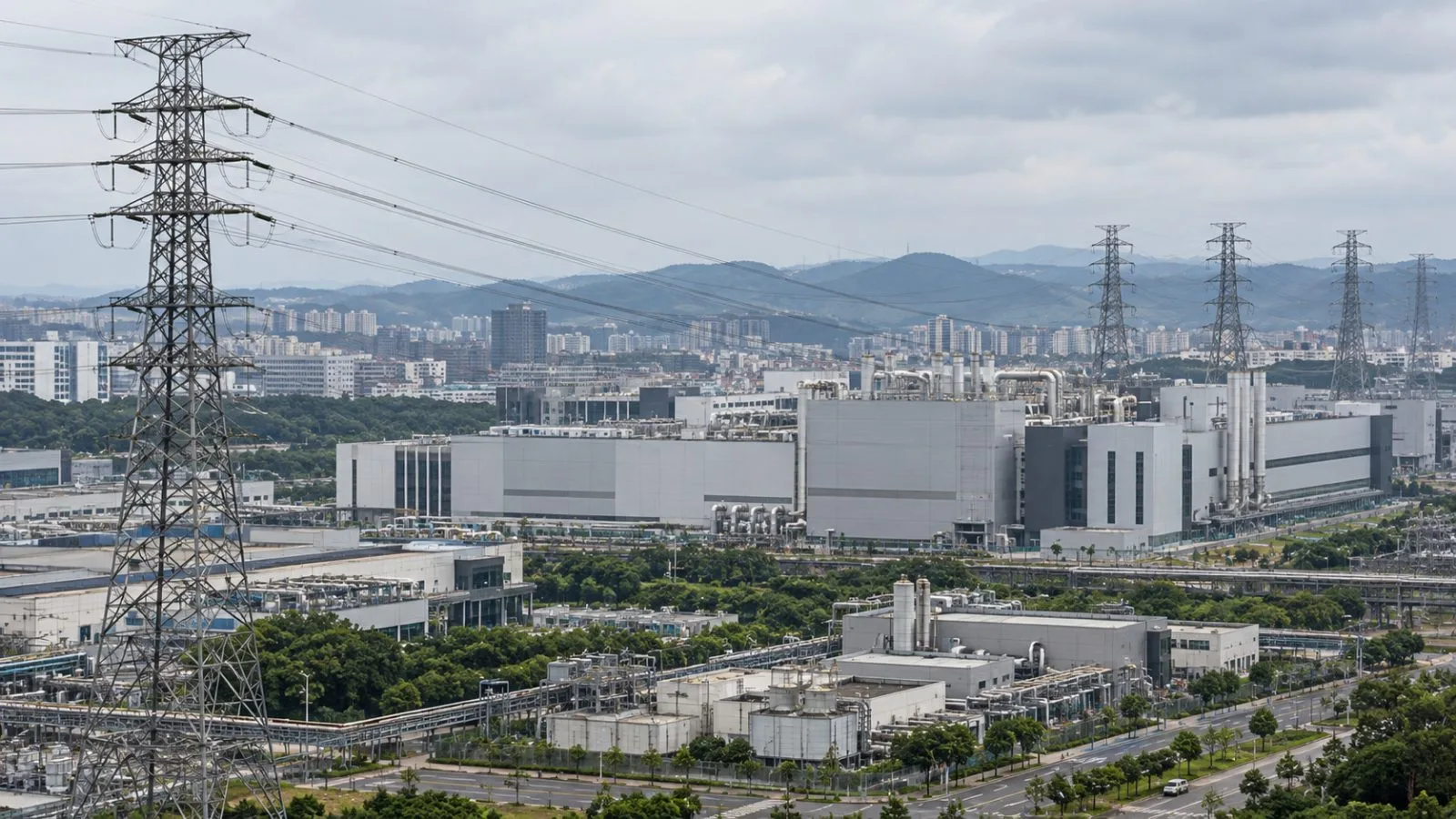
Taiwan's semiconductor industry is expected to use more than 50 billion kilowatt-hours of electricity in 2026, the Taiwan Research Institute (TRI) said, as AI-related production increases the sector's energy needs.
Industry consumption exceeded 4.5 billion kilowatt-hours (kWh) in September for the first time, up 11.55% from a year earlier. The increase marked a return to double-digit growth in semiconductor electricity use, TRI said Wednesday.
TRI attributed the increase to greater computing needs for artificial intelligence, which are lifting demand for advanced packaging and faster chips. Its annual forecast also reflects demand extending to servers, equipment, materials and key components. TRI said suppliers across that chain are benefiting from increased investment and production.
TRI said high-tech output was generating investment demand in other industries and supporting exports, production and business investment. It estimated Taiwan's economic growth at 12.6% in September.
Taiwan's September export orders reached a record $114.21 billion, according to the Ministry of Economic Affairs. Before those figures were released, the ministry had linked earlier order growth to demand for artificial intelligence, high-performance computing and cloud services. It identified semiconductor and server suppliers as beneficiaries.
Electricity demand grew more slowly across industry as a whole. Use among high- and extra-high-voltage industrial customers rose 1.76% from a year earlier in September, TRI said. Manufacturers used 1.96% more. TRI's electricity-based economic indicator remained red for an 18th consecutive month, signaling robust industrial activity.
The gains did not extend to every industry. TRI's indicator remained blue for chemical materials and textiles, signaling contraction. The institute said chemical producers faced a global surplus of petrochemical capacity and a slow recovery in demand. Textile producers, meanwhile, faced weak demand from overseas customers and price competition that weighed on orders and output.