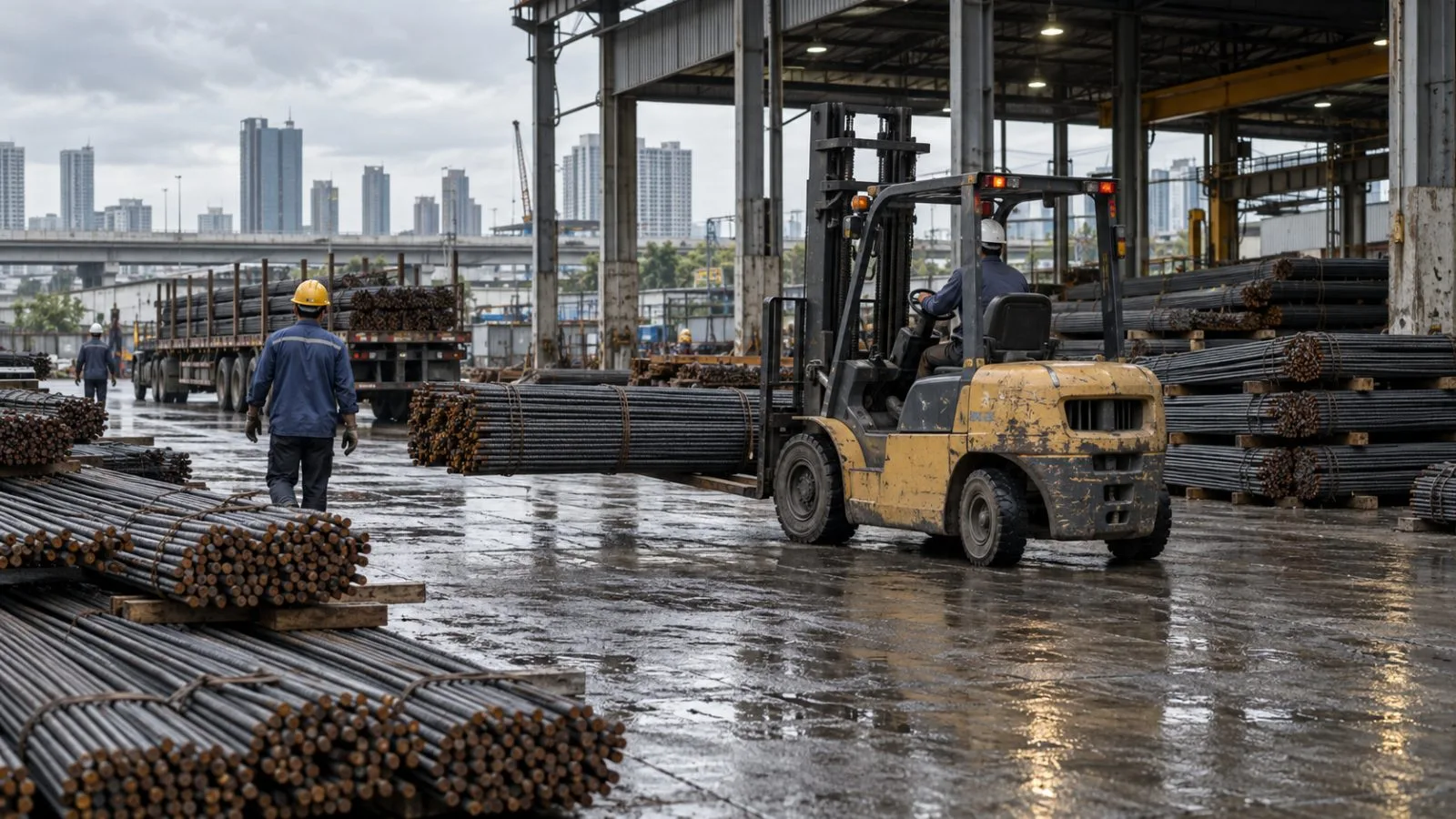
President and Chief Executive Anurag Pandey said Tata Steel (Thailand) Plc expects domestic steel demand to remain subdued through year-end and is urging Thailand to accelerate infrastructure spending to support consumption, the Bangkok Post reported.
Pandey said the company sees little chance of a meaningful improvement in steel consumption from new construction or repair work before year-end, whether the activity is public or private. He linked that outlook to severe flooding in September, cautious consumer spending, weak purchasing power and economic uncertainty.
Government projects could support demand, but Pandey said major infrastructure schemes have moved more slowly than expected. He cited slow progress on Thai-Chinese high-speed rail projects and urged officials to accelerate investment to bolster domestic consumption and support the country's struggling steel industry.
Pandey said local producers face pressure from cheaper Chinese steel imports, which have put pressure on prices and weakened domestic manufacturers' competitiveness. The Bangkok Post reported that some Thai steelmakers have cut production or suspended operations while competing with lower-priced products.
Pandey also said the prolonged conflict in the Middle East is adding uncertainty to global steel prices and contributing to volatility.
Tata Steel (Thailand) is focusing on higher-value green steel to improve its competitive position. Pandey said the company sees opportunities for its products in the United States, Europe, Australia and India. He tied interest in environmentally friendly steel in those markets to carbon-neutrality goals and the European Union's Carbon Border Adjustment Mechanism. The company is also pursuing automakers as buyers, citing demand for lower-emissions steel tied to carbon-neutrality goals and EU carbon-border rules.
Pandey said Tata Steel (Thailand), a unit of India's largest steelmaker, delivered 313,000 tons of steel in July-September, its second quarter of fiscal 2027. Deliveries were 6% lower than the previous quarter and 12% below a year earlier. The company exported 68,000 tons of green steel from Thailand during the quarter.