


 Meta Launches Muse Wonder AI Models, Shares Rise 3.7%
  Apple Names Steve Smith M&A Chief in Leadership Shakeup
  TSMC Q3 Revenue Beats Estimates as AI Chip Demand Surges
  Zcash Plans Quantum-Resistant Security Upgrade for January
  Elon Musk Eyes Semiconductor Manufacturing Expansion With $15 Billion Terrafab Project
  Apple Supplier Luxshare Faces US Patent Probe, Sees Limited Impact
  Solidigm Taps Goldman, Morgan Stanley for $10 Billion US IPO
  Samsung, SK Hynix Shares Plunge as China Chip Competition Grows
  TSMC Profit Set to Surge 65% as AI Chip Demand Drives Record Earnings
  Oracle Uses Trucked Natural Gas to Power AI Data Centers Amid Pipeline Delays
  Amazon in Talks to Acquire AI Startup Decart for $7 Billion
  Amazon Cuts More Jobs as AI Investment Expands
  Trump Buys Up to $25M in Meta Stock, Invests in SpaceX Debt
  US Suspends Microsoft, Adobe From Green Card Program
  Elon Musk Accuses Indian Telecom Giants of Blocking Starlink Launch
  Robinhood Chain Eyes Priority Gas Auctions for Faster Trades
  OpenAI Revenue Hits $50 Billion, Below Earlier $70 Billion Estimate


 Add as a preferred source on Google
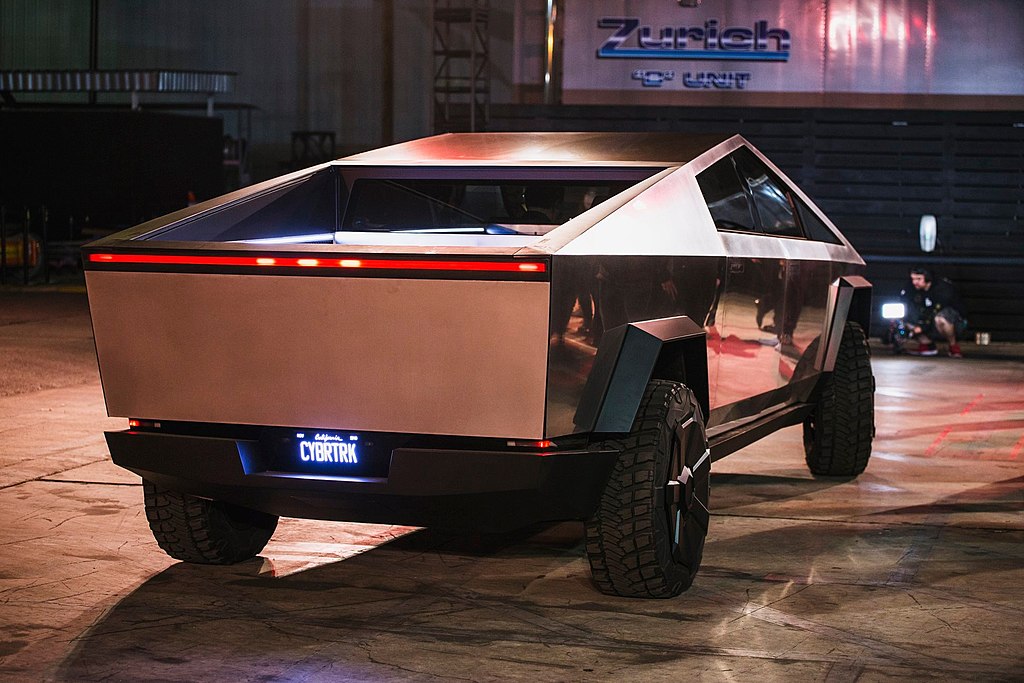
Early Cybertruck units have already begun to be sold in the United States by Tesla, and one executive believes the vehicle will soon be available in Canada as well.
Tesla Executive Confirms Cybertruck's Imminent Arrival in Canada Amid Global Tour
Tesla's Vice President of Public Policy and Business Development, Rohan Patel, stated on X on Saturday that the Cybertruck will undoubtedly be sold in Canada, adding that he will "hopefully" complete the required documentation "soon."
According to Teslarati, the announcement is being made in conjunction with the conclusion of the Canadian International Auto Show, which featured the Cybertruck and various other Tesla vehicles. Additionally, the Cybertruck has been displayed in Canadian dealerships in British Columbia, Quebec, and Ontario.
Many Canadians anticipating placing an order for a Cybertruck are likely to be pleased with the confirmation, particularly since those in other markets wonder whether the vehicle will ever be available in their respective auto markets due to regulatory concerns.
In addition to its North American tour, Tesla has recently unveiled the Cybertruck in Japan and China. In the coming months, the electric pickup is rumored to make its way to Germany and other European countries.
Although the Cybertruck has showcased these features, Tesla CEO Elon Musk has expressed skepticism regarding its legality on Chinese roads, and other Tesla representatives have made comparable observations regarding European markets.
Although the reason for Cybertruck's significant challenges in the Chinese market remained undisclosed, Tesla's Vice President of Vehicle Engineering recently remarked that its protruding edges would preclude it from even being considered for European markets.
"One, the truck market in the US is huge and two, European regulations call for a 3.2mm external radius on external projections," Moravy said in last year's report. "Unfortunately, it's impossible to make a 3.2mm radius on a 1.4mm sheet of stainless steel."
Edmunds Corrects Cybertruck Range Report After EV Community Feedback, Surpasses Estimates
Edmunds, an automotive resource organization, has updated its article regarding the range of the Tesla Cybertruck. The correction was made in response to EV community members on X, wherein several clarified that the motoring media outlet had inadvertently reported an incorrect range for the tires utilized in the Cybertruck test.
The initial Edmunds article regarding the range of the Tesla Cybertruck stated that the electric pickup truck failed to achieve the projected range of 340 miles. The media organization acknowledged in its initial report that the issue was present in every Tesla it had tested to that point; however, the Cybertruck outperformed the others, achieving a practical range of 334 miles as opposed to the 340 miles it was estimated to have.
"No Tesla has ever met its EPA-estimated range in our real-world testing, and now the Cybertruck falls short of Tesla's own 340-mile estimate –– just," Edmunds wrote in a post on X.
Electric vehicle enthusiasts swiftly reacted to the publication's article with corrections, with many pointing out that the 340-mile range of the Cybertruck is cited for the vehicle's Season tires, which will not be commercially available until 2024.
Presently, cybertrucks are outfitted with all-terrain tires, the range of which is estimated to be 318 miles. In light of this, the Cybertruck's range estimate was surpassed during Edmunds' testing.
After the publication, the automotive resource company incorporated the necessary corrections into its Cybertruck range article as a Community Note. In light of the response from the electric vehicle (EV) community, Edmunds swiftly decided to amend its initial article to depict the Cybertruck's range surpassing projections accurately.
"The Cybertruck tested was the Foundation Series on all-terrain tires, which is rated by Tesla as having 318-mile range. Our original article was based on the publicly-available range of 340 miles. The CT therefore actually exceeded its est. We have amended the original article," Edmunds in a follow-up post on X.
Although errors may occur when covering vehicles such as the Cybertruck, Edmunds merits praise for promptly revising its initial report and disseminating a subsequent social media post that rectifies the inaccuracy. This cannot always be said of Tesla or its media coverage, which is regrettable.
This was recently brought to light in the context of a Model 3 collision in which FSD was allegedly activated. Elon Musk, CEO of Tesla, stated unequivocally that the vehicle above did not have FSD installed; however, rumors persisted at the time of the collision that FSD was operational.








