Thai business leaders are urging companies to strengthen operations and supplier ties as imports and mainland China’s industrial overcapacity raise financial and commercial risks, the Bangkok Post reported.
Siam Cement Plc President and CEO Thammasak Sethaudom said firms face growing competition from imported goods and China’s excess industrial capacity. The Bangkok Post said panelists warned that poor preparation could bring financial losses and strain relationships with suppliers, trading partners and customers.
Sethaudom described the next two to three years as a critical adjustment period for businesses. He urged companies to manage financing costs, watch interest-rate movements and improve energy efficiency. The report also cited Thailand’s 2% sovereign borrowing rate, foreign direct investment inflows and competitive operating costs as opportunities to strengthen the economy.
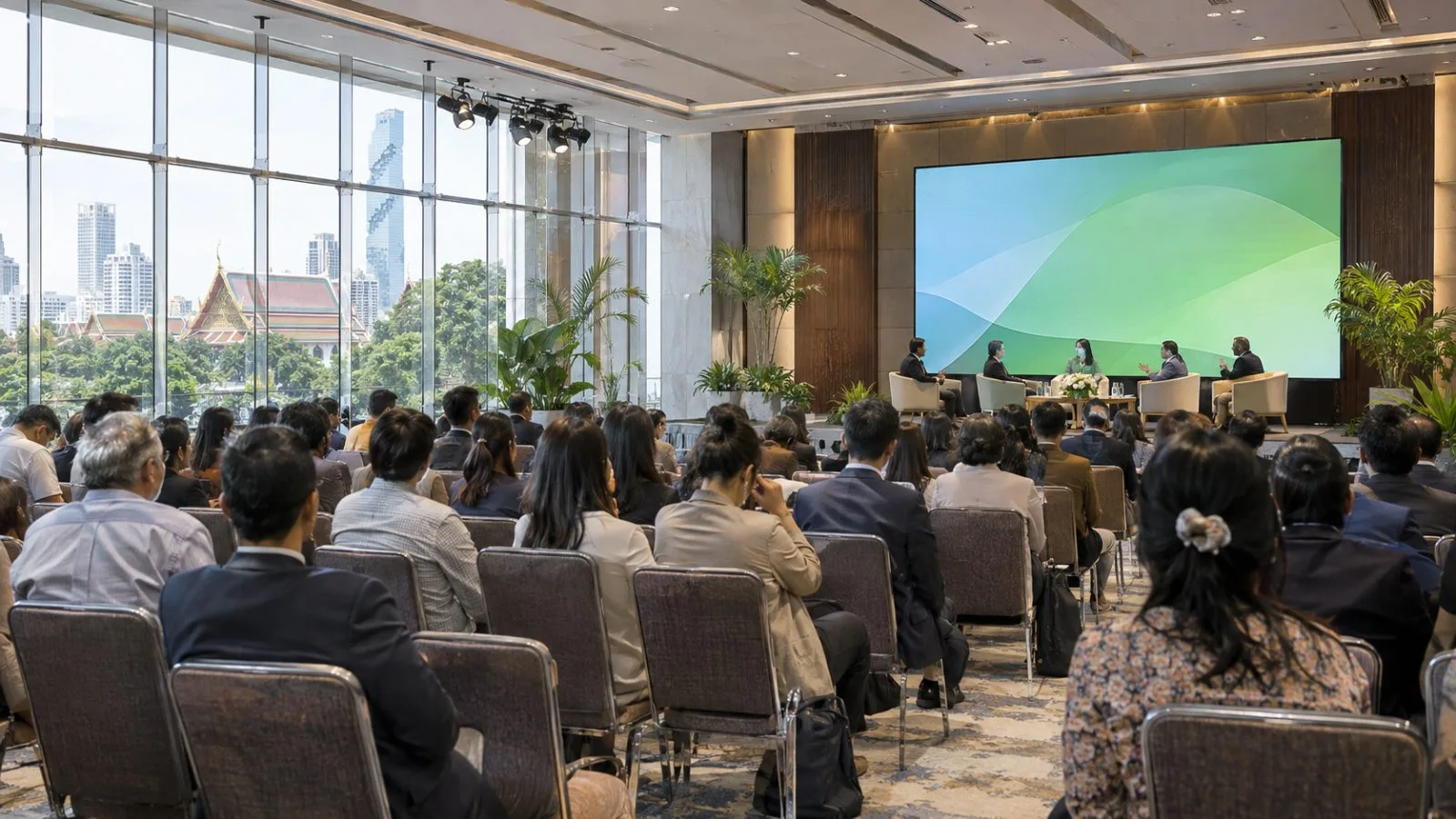
At a chief executives’ panel during Sustainability Expo 2026 on Nov. 14, speakers discussed how artificial intelligence and robotics may affect employment. They said technology can build workers’ capabilities and help them move into higher-value work. Training, separately, can help employees work alongside automation.
Frasers Property Ltd. Group CEO Panote Sirivadhanabhakdi urged education and workforce programs to adapt to skills demand in sectors such as semiconductors and advanced manufacturing. He also called on large companies to share expertise and common standards with small and midsize enterprises (SMEs) to support more inclusive supply chains.
Panote pointed to the Thailand Supply Chain Network, an alliance of major companies that works with more than 30,000 SMEs, as a model for coordination. He said its Business Partner Code of Conduct could help align expectations. The Bangkok Post put SMEs’ share of Thailand’s gross domestic product at about 35%.
Panote also urged policymakers and the public to consider property policies as part of efforts to attract international talent. Sethaudom’s remarks extend his earlier discussion of Chinese overcapacity and Southeast Asian markets at a Nov. 3 summit.