A newly identified species from Thailand's late Eocene fossil record is estimated to have weighed about 30 kilograms, evidence that some early rodents attained exceptional size roughly 33 million to 35 million years ago.
The study, published Nov. 4 in Scientific Reports, identifies the species as Yakamys sirindhornae. Its rounded weight estimate is about 30 kilograms; seven models used by the researchers produce a range of 21.4 to 47.3 kilograms.
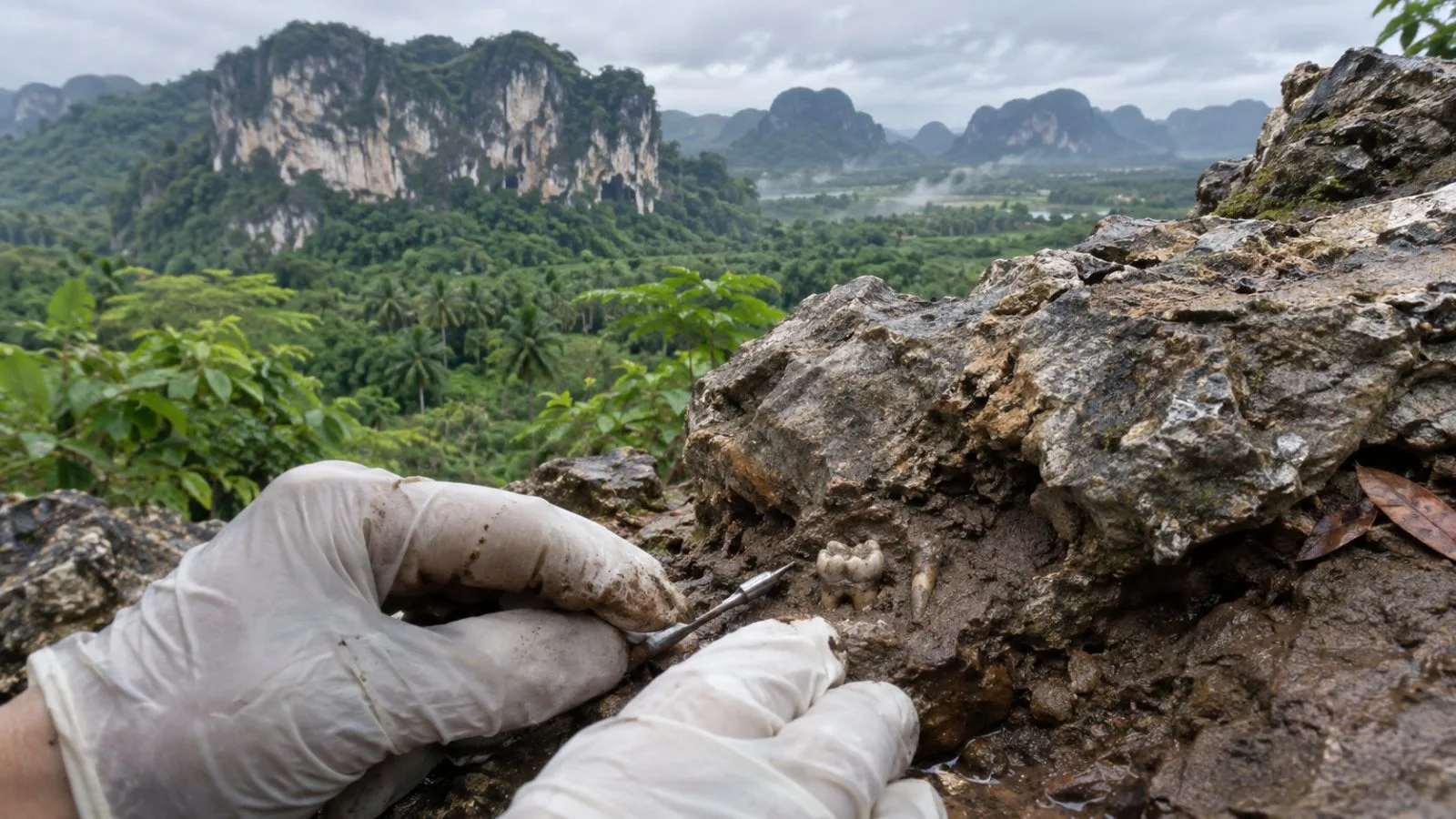
The identification rests on two dental fossils: a lower second molar and an associated lower incisor discovered in the Krabi Basin in 2004. The study places the animal in Ischyromyidae, an extinct family of early rodents.
The paper says the species name honors Her Royal Highness Princess Maha Chakri Sirindhorn, recognizing her longstanding support for scientific and paleontological research in Thailand. With only two dental specimens, the animal's body form and ecology cannot be reconstructed, the study says.