Thailand is weighing higher excise taxes on EVs imported by companies without Thai manufacturing facilities, while linking other rates to investment, production and employment in the country.
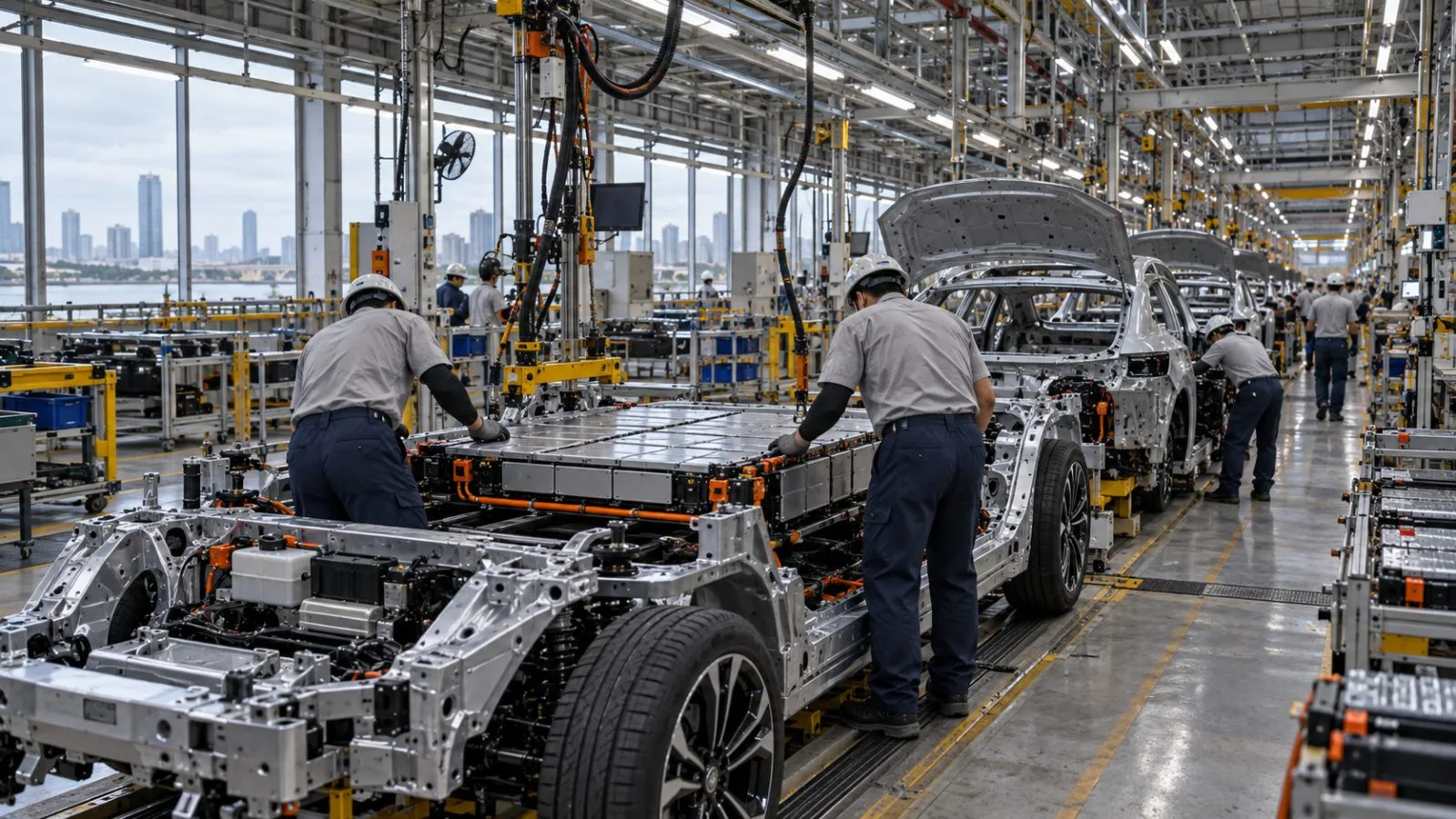
At a Sept. 10 meeting, the National Electric Vehicle Policy Committee agreed in principle to revise vehicle excise taxes across four categories. The government said imports by companies without Thai manufacturing facilities would face higher rates. The Thailand Board of Investment (BOI) said officials would weigh manufacturers’ investment alongside the extent of assembly, sourcing and skilled employment in Thailand.
The government’s announcement gave no rate or effective date. Bangkok Post reported Jan. 1, 2027, as the expected start date. Thansettakij reported Oct. 18, citing an unnamed Finance Ministry source, that the ministry planned to ask the Cabinet to set a rate of at least 30% on fully imported EVs with no Thai-made parts. The source put the existing rate at about 10%. The Nation later reported that Cabinet approval was pending. It also said vehicles meeting certain conditions can qualify for a 2% rate, so the roughly 10% figure does not apply to every EV.
Thansettakij’s source expected the proposed increase to raise prices for affected imported models. The final rate and its effect on retail prices have not been confirmed.
The proposal would build on Thailand’s EV 3.5 program, which links imports to local manufacturing. Participating companies must produce two vehicles in Thailand for each vehicle imported under the program in 2026; the ratio rises to three for each imported vehicle in 2027.
Thailand registered 126,950 battery electric vehicles (BEVs) from January through July 2026, an 88% increase from the same period a year earlier. BEVs, hybrids and plug-in hybrids together made up 55% of new car registrations, government and BOI figures show.
Thailand Board of Investment Secretary-General Narit Therdsteerasukdi, who also serves as secretary of the National Electric Vehicle Policy Committee, said the transition should produce “long-term capital formation, localized technology, and quality employment.” Cabinet consideration of the detailed proposal is the next step.