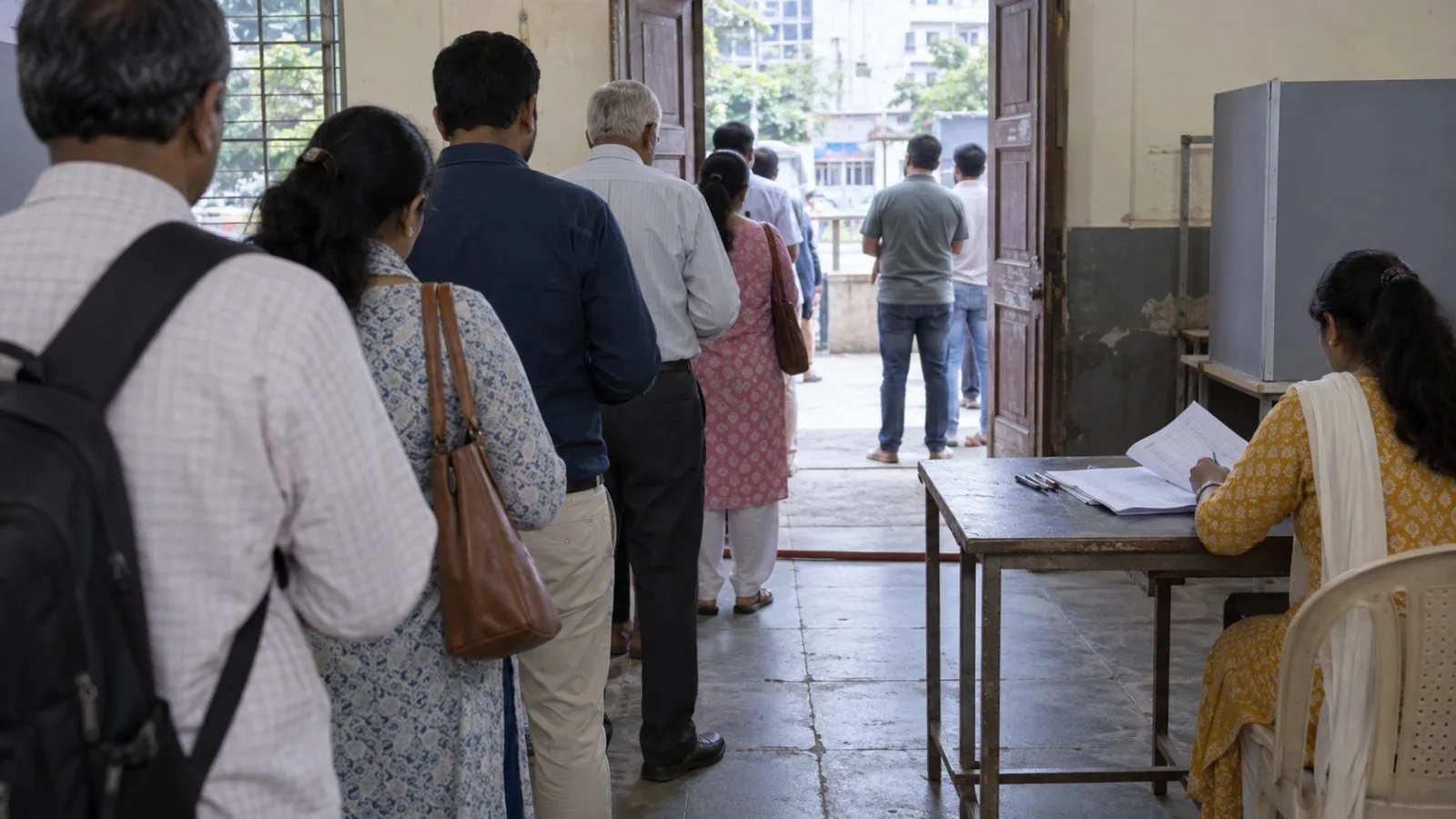
Alberta’s advisory immigration ballot has tied a debate over access to public programs to employers’ demand for workers, even as the official count and the measures’ eventual scope remain unsettled.
The Canadian Press said in an Oct. 23 report that 98% of polls were marked as reporting and that slim majorities favored proposals concerning service eligibility or fees. Its account did not publish vote shares or results for individual questions. Elections Alberta says an area may appear in reporting progress before every answer from it has arrived.
One ballot question asked whether access to provincial programs should depend on immigration status; another proposed a 12-month wait for certain social supports for nonpermanent residents, including childcare subsidies and student aid. A third asked whether those residents should pay fees for health care and education. The vote was nonbinding, so government action would still be needed, and the ballot set no fee amounts. The immigration questions were part of a broader vote on provincial powers and separation.
The Alberta government estimates that social services for temporary residents cost more than C$1 billion a year. It separately puts annual education costs for 45,000 children of temporary residents above C$600 million.
Economist Trevor Tombe’s study commissioned by the Calgary Chamber of Commerce projected more than C$4.1 billion in immigrant income taxes and employee contributions for 2026. The estimate draws on federal and Alberta income taxes and workers’ Canada Pension Plan and Employment Insurance payments. It leaves out employer payroll payments, GST and other consumption taxes. For immigrants under 40, the study put net provincial contributions just under C$1 billion after specified family programs, workers’ compensation and social assistance; that calculation is not a full accounting of health and education costs.
The Calgary Chamber’s member survey found 47% said recent or proposed immigration changes could harm their business, while 11% expected a positive effect. Fifty-one percent said immigrant employees were important to their operations. Chamber President and CEO Deborah Yedlin said policy should “make it easier, not harder” for businesses to reach the labor they need.
The Canadian Agricultural Human Resource Council projects foreign workers will fill 61% of Alberta’s peak agricultural labor gap by 2030. At Cargill’s High River plant, Faduma Ahmed of United Food and Commercial Workers Local 401 told The Canadian Press that temporary foreign workers, refugees, permanent residents and citizens work alongside one another. She described the jobs as “tough and high turnover.” Ahmed also told The Canadian Press the union would seek employer payment for new charges in collective bargaining.
Premier Danielle Smith said the government would pursue approved reforms in the coming months and years. Which proposals will advance, who would qualify and when rules could take effect have not been set. Elections Alberta says official results are due Thursday, Oct. 29.