
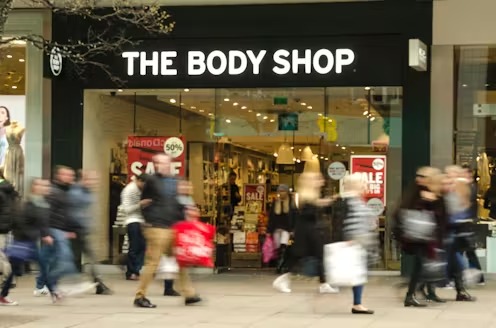
The Body Shop has become the latest casualty of the British high street. The familiar sight (and distinctive smell) of its stores is under threat as the UK arm of the business goes into administration.
A success story for almost 50 years, The Body Shop started out as a small enterprise in a UK seaside town – Brighton. From there, its founder, Dame Anita Roddick, championed “ethical” trading, opposition to animal testing, and excessive use of packaging for beauty products.
But being perceived as an ethical brand over five decades is not easy. A selling point which once made The Body Shop stand out can lose its sparkle when it does not evolve in line with changing market conditions and consumer expectations.
Claiming to be ethical has now become a popular approach for a wide range of modern businesses. You can drink ethical coffee as you feed your cat ethical pet food, while you both enjoy the warmth provided by an ethical energy supplier.
Complacency and remaining static is not an option for a successful skincare company – or any retail brand, for that matter. The Body Shop’s demise illustrates the adverse consequences of not adapting or innovating its ethical branding.
And research suggests that to be considered truly ethical, a brand needs to show it cares about people. This means treating employees and customers well, but can also mean reaching out to improve the lives of people who never encounter its products.
British supermarkets have proved much more more skilful at this in recent years. How often do you hear about a skincare or beauty brand setting up food donation points, appointing “community champions” (like Morrisons), or partnering with charities (like Tesco has with the British Red Cross)?
These are ethical initiatives that genuinely help people in need, while also giving shoppers an extra reason to spend money with the shops involved.
Our recent study indicates consumers tend to judge businesses that claim to be ethical in terms of their commitment to this kind of caring attitude, as well as fairness and honesty. This supports previous research that shows an emergent consumer focus on morality.
Unlike The Body Shop, a few skincare brands have had the foresight in recent years to emphasise caring for people in their branding, and been successful in solidifying their ethical image. These include Dove and its “Real Beauty” campaigns, and the Boots brand No7 with its “Future Renew” product range targeting women aged from 30 to 75, which aims to restore damaged skin and maintain a natural appearance without resorting to cosmetic procedures. No7 also partners with Macmillan Cancer Support to help women with cancer “look and feel like themselves”.
Similarly, Lush’s more prominent ethical standpoint appears to be centred on its employees’ craftsmanship, wellbeing and pride. The company states: “We believe in happy people making happy soap, putting our faces on the products and making our mums proud.”

Clean living. Anetam/Shutterstock
But The Body Shop’s demise is not just about its ethical stance. Commentators have argued that the company failed to innovate its product range, was not competitive enough on price, and ignored rivals such as Lush and Origins.
Not quite gelling
Nor could the company control the challenging economic conditions of the last few years, which have proved disastrous for all sorts of retailers. When spending power is squeezed by inflation and rising interest rates, consumers tend to rethink their shopping habits in favour of affordability.
That may explain the proliferation of cheaper beauty and personal care products for sale in supermarkets.
Overall then, a combination of factors has led to The Body Shop’s downfall in the UK. As a retail researcher and avid user of skincare products, I am genuinely sad to be writing about its current state.
The Body Shop was a pioneer of ethical branding; an iconic British company which drew people to the high street, offering unique products that allowed customers to pamper themselves – and the environment. But it may be that after 48 years, it failed to properly look after itself.


