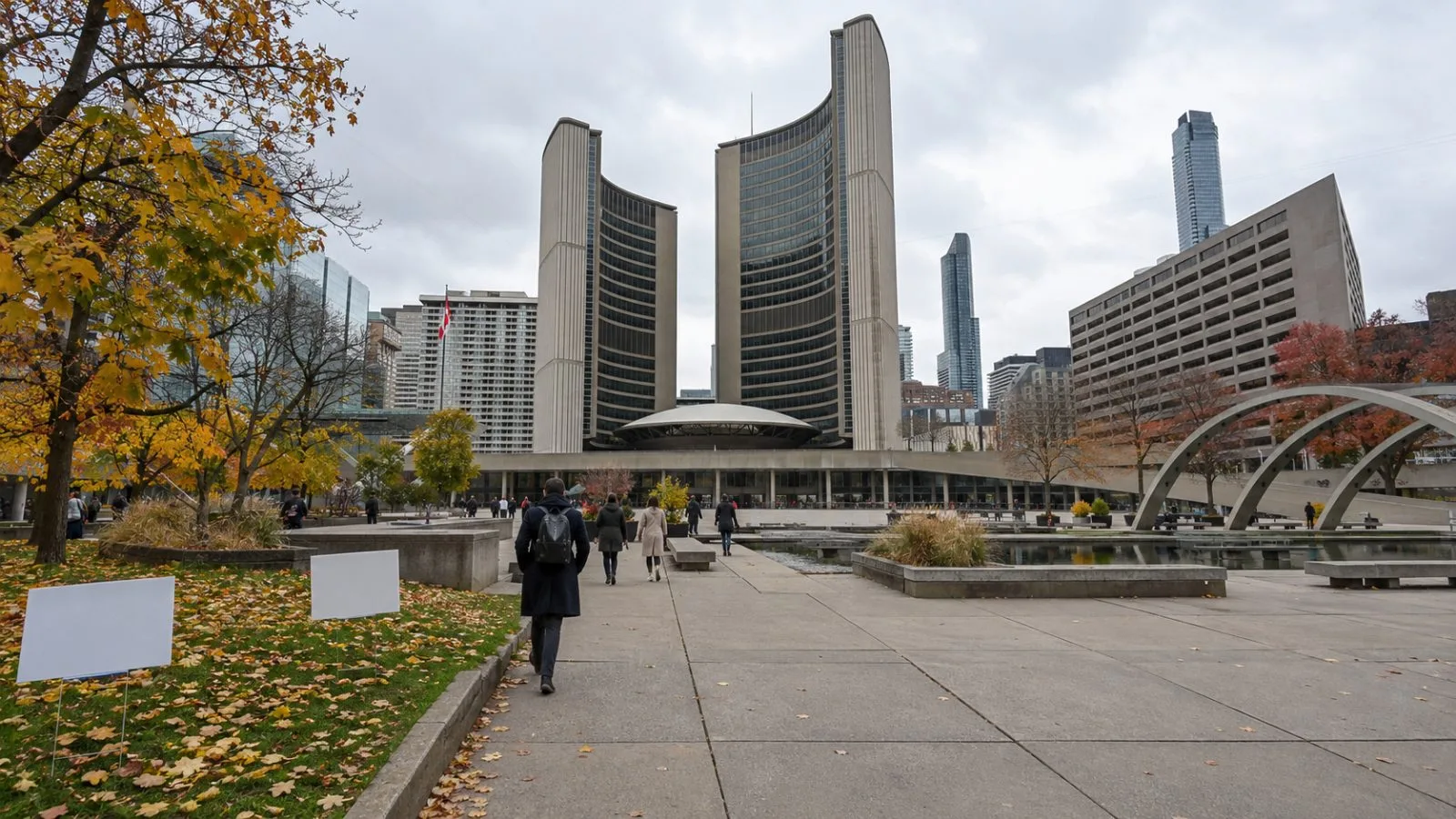
Toronto’s mayoral contest enters its final days without a consistent polling leader, as three surveys released Oct. 20 and 21 give Brad Bradford narrow leads in two polls and Olivia Chow an advantage in a third.
Liaison Strategies reported 49% support for Bradford and 47% for Chow among decided and leaning voters. It surveyed 1,000 Toronto residents by interactive voice response phone calls Oct. 18-19. The firm said the result reversed Chow’s five-point lead in its previous survey. Liaison’s margin of error was 3.1 percentage points for the full sample and higher for subsamples. Principal David Valentin said the poll did not establish a decisive advantage for either campaign.
Mainstreet Research’s Oct. 20 statement also placed Bradford ahead, at 48.9% to Chow’s 47.5%, and said 13% of voters were undecided. It did not explain how the undecided figure related to the support percentages. Mainstreet ranked affordability and cost of living as the top issue, at 38.3%, followed by getting around Toronto at 22.4% and crime and safety at 16.4%. Mainstreet President and CEO Quito Maggi said turnout and the campaigns’ efforts to bring voters to the polls could shape the result.
Among decided voters, Pollara Strategic Insights found Chow leading 53% to 46%. For all respondents, the poll gave Chow 44%, Bradford 38% and undecided voters 16%. Pollara surveyed 1,099 eligible residents from Oct. 13-19, combining 695 online panel responses with 404 live telephone interviews. CUPE Local 416 commissioned the poll. Pollara said a margin of error did not apply because its sample included an online panel.
The regional picture was similar in the Liaison and Pollara surveys: Bradford led in North York and Etobicoke, while Chow was ahead downtown and in Scarborough. Their results are difficult to compare directly because they used different methods and did not report candidate support on the same voter base.
The City of Toronto has scheduled the municipal election for Oct. 26.