


 Trump Announces Russia-Ukraine Energy Ceasefire as Zelenskiy Awaits Details
  North Korea Fires Ballistic Missiles as Tensions With South Korea Escalate
  Djibouti Migrant Boat Capsizes, Killing 139 and Leaving 84 Missing
  US Charges Maduro and Wife With Torture Conspiracy
  US Grants Aurora Five-Year Exemption for Self-Driving Trucks
  Trump Secures Russian Diesel Deal as US Fuel Prices Surge
  US, EU Push for Action Against Asia’s Excess Factory Capacity
  GLP-1 Weight-Loss Drug Use Surges Among U.S. Children
  JD Vance Questions Pentagon Plan to Livestream Fort Hood Shooter’s Execution
  Blockchain.com Seeks CFTC Approval for Prediction Markets and Crypto Derivatives
  Apple Supplier Luxshare Sees Limited Impact From US Patent Probe
  RFK Jr. Launches Nationwide Vaccine Safety Review
  Hengrui Shares Rise on $2.6 Billion Novo Nordisk Obesity Drug Deal
  SK Biopharmaceuticals Secures Global Rights to Biohaven Epilepsy Drug Opakalim
  New York Declares Measles Disaster Emergency as Cases Surge
  Fairshake Backs 32 Pro-Crypto House Candidates
  US Suspends Microsoft, Adobe From Green Card Program


 Add as a preferred source on Google
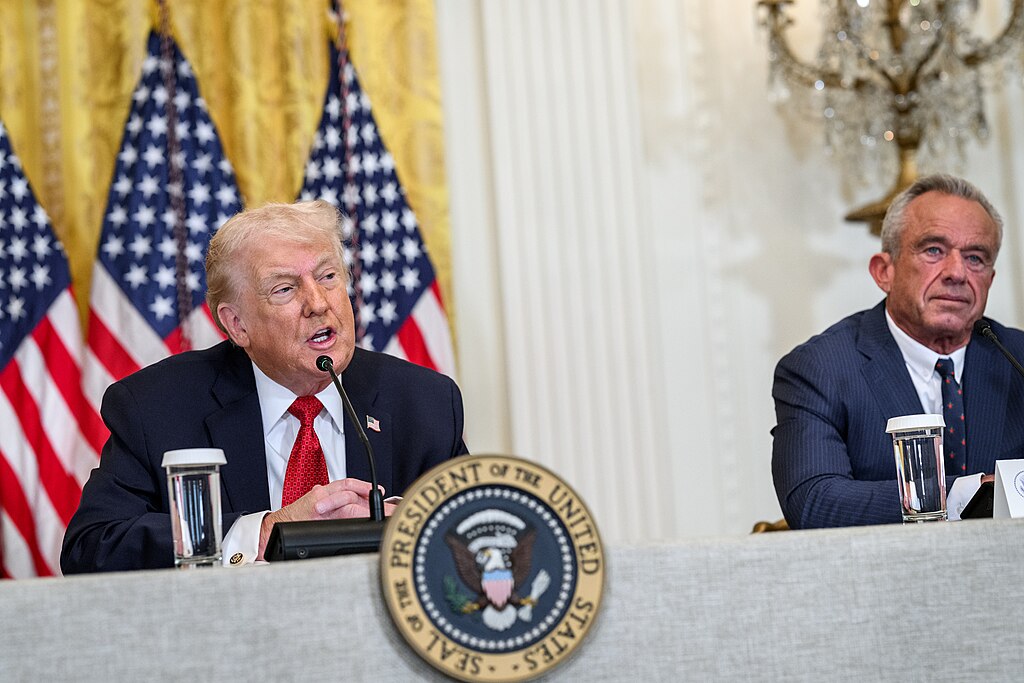
President Donald Trump has signed an executive order seeking to reduce the number of routine childhood vaccinations recommended in the United States and directing the Justice Department to challenge certain state vaccine laws.
The order advances Health Secretary Robert F. Kennedy Jr.’s long-standing effort to overhaul the U.S. childhood immunization schedule. It recommends universal vaccination against 11 diseases, compared with 18 diseases on the schedule recommended by the U.S. Centers for Disease Control and Prevention (CDC) in late 2024.
Vaccines for COVID-19, influenza, rotavirus, hepatitis A and B, bacterial meningitis and respiratory syncytial virus (RSV) would move to categories for high-risk groups or shared clinical decision-making. These vaccines could still be recommended for children based on medical conditions, exposure risks or discussions between parents and doctors.
The executive order also calls for separating the measles, mumps and rubella (MMR) vaccine into three individual shots and spreading childhood vaccinations across multiple healthcare visits. However, standalone measles, mumps and rubella vaccines are not currently available from U.S. manufacturers, meaning this change cannot immediately be implemented.
For families, the order does not immediately eliminate access to vaccines or change the federal Vaccines for Children program, which provides free immunizations to eligible children. Some major insurers have also indicated they will continue covering CDC-recommended childhood vaccines while reviewing the new policy.
Doctors and major medical organizations, however, have strongly criticized the changes. The American Academy of Pediatrics said the policy could confuse parents and encourage delays in vaccination. Medical groups also emphasized that extensive scientific research has found no evidence linking vaccines to autism.
The order could also affect state vaccine requirements. Because states determine school-entry immunization rules, the Justice Department is being directed to challenge state laws that the administration argues violate parental rights, religious freedom, disability protections or equal protection.
Public health experts warn that reducing routine vaccination could increase children’s exposure to preventable diseases such as measles, polio and whooping cough. They also stress that childhood vaccine schedules are designed around when children are most vulnerable and when vaccines provide the greatest protection.







