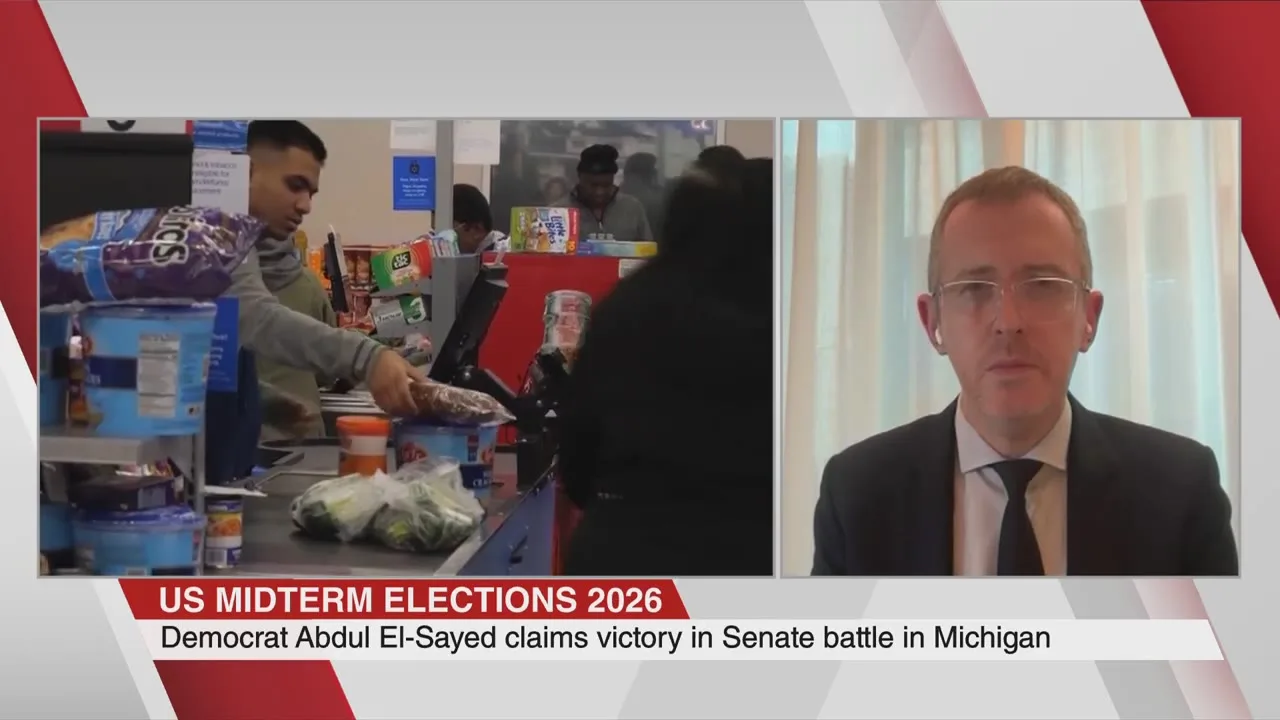
President Trump could pursue bolder foreign policy moves after his midterm defeat despite Democratic gains in Congress, European Council on Foreign Relations distinguished visiting fellow James Crabtree said.
Democratic control of Congress could bring closer scrutiny of his decisions, but would do little to limit his authority abroad. “That could mean more foreign policy adventures. Not less,” Crabtree said.
In a CNA interview published Nov. 4, Crabtree identified affordability as the biggest factor behind the Democratic victory. He linked higher living costs to Trump's tariffs and the war in Iran.
He also attributed the defeat to perceptions of corruption around the Trump family while Americans struggled financially. He described the breadth of the Democratic victory as greater than expected and a rejection of Trump's governing agenda.
Crabtree treated living costs and corruption as separate issues, although voters might connect them. The Democratic message that people around the Trump family were prospering while others struggled had proved effective, he said.
Democratic control of the Senate was unlikely to prevent further action against Iran, bring down tariffs or restore more open trade. Trump could instead seek dramatic initiatives to regain control of the political agenda.
Crabtree raised the possibility of renewed war with Iran but said it was uncertain. He also mentioned talk of a meeting between Trump and North Korean leader Kim Jong-un at an upcoming gathering in Shenzhen.
“That might not happen,” he said, while describing such a meeting as potentially attractive to Trump after the defeat.
On China, Democrats in the House and Senate would probably make it harder for Trump to seek closer ties with Beijing. Crabtree described congressional Democrats as more inclined toward a tougher approach than the president.
He expected closer scrutiny of semiconductor sales to China and more pressure to approve a $14 billion arms sales package for Taiwan that he said was awaiting approval.
Trump nevertheless retained considerable freedom, with meetings with China's president expected at the Asia-Pacific Economic Cooperation gathering in Shenzhen and then at the Group of 20 gathering in the United States.
Crabtree expected little change in American security commitments in the Indo-Pacific. Japan, Australia and the Philippines could benefit from Democrats' support for alliances and gain another route to influence Washington through Congress.
For Southeast Asia, he expected little improvement in trade predictability. Trump had pursued another way to impose tariffs after the Supreme Court rejected his earlier approach, and retained room to strike agreements such as Washington's deal with Malaysia.
The outcome could still affect Asia through renewed attacks on Iran or changes in relations with China. But expectations that Congress would substantially restrain Trump were unrealistic, Crabtree said: “In the end the president remains a powerful figure.”