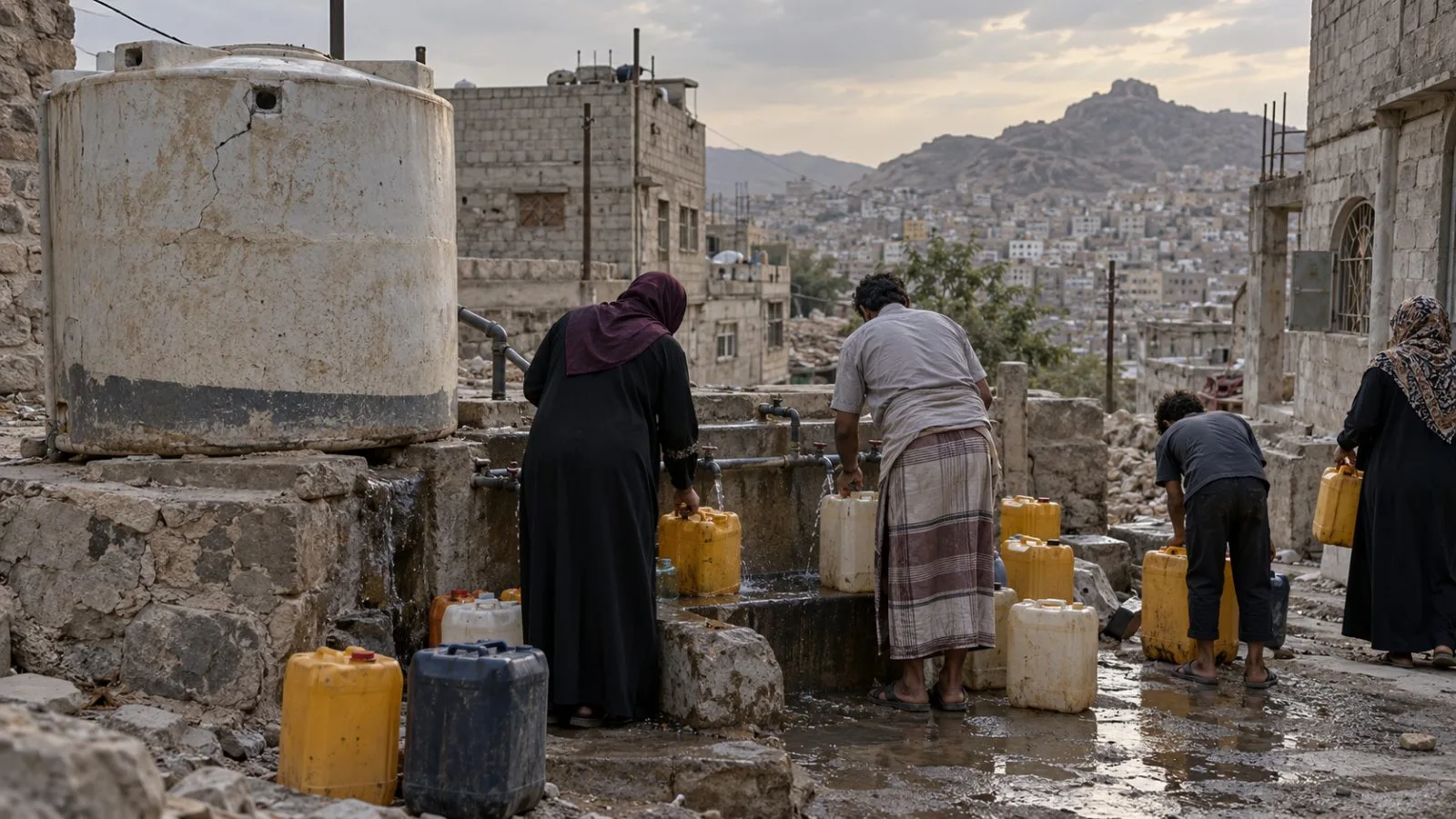
Ta’iz’s water supply is under growing strain after production fell by half and alternative sources began running out, the United Nations (U.N.) said, as insecurity and road closures disrupted essential deliveries.
Yemen’s Humanitarian Coordinator Laurent Bukera said Oct. 20 that water access was a concern for hundreds of thousands of families. The statement did not give the city’s current output or say when the decline began.
Bukera linked the supply disruption to insecurity and road closures impeding deliveries of fuel and other essentials to Ta’iz and nearby areas. He urged Houthi de facto authorities to ensure safe passage for commercial goods and humanitarian aid. He also said prices for food and fuel still available had more than doubled, without specifying the comparison period.
Amnesty International reported that Houthi authorities had cut Ta’iz’s main route to Aden and obstructed aid deliveries, putting access to food, water and health care at grave risk for hundreds of thousands of people. The organization said Houthi forces had surrounded the city at various points since 2015.
The International Organization for Migration reported that 124,092 internally displaced people were hosted in Ta’iz Governorate, a figure for the governorate rather than the city.
In an Aug. 6 update, UNICEF said it had rehabilitated 10 wells, restoring 878 cubic meters of capacity per day and improving clean-water access for 215,000 people. The agency attributed the wells’ deterioration to sediment accumulation and pump failures.
The Associated Press reported that one family was stretching 10 liters of bottled water across four days and that some families were paying up to 75% more for bottled water than a few weeks earlier. The AP quoted Ta’iz resident Hadil al-Shahid saying, “We stopped drinking coffee and tea.”