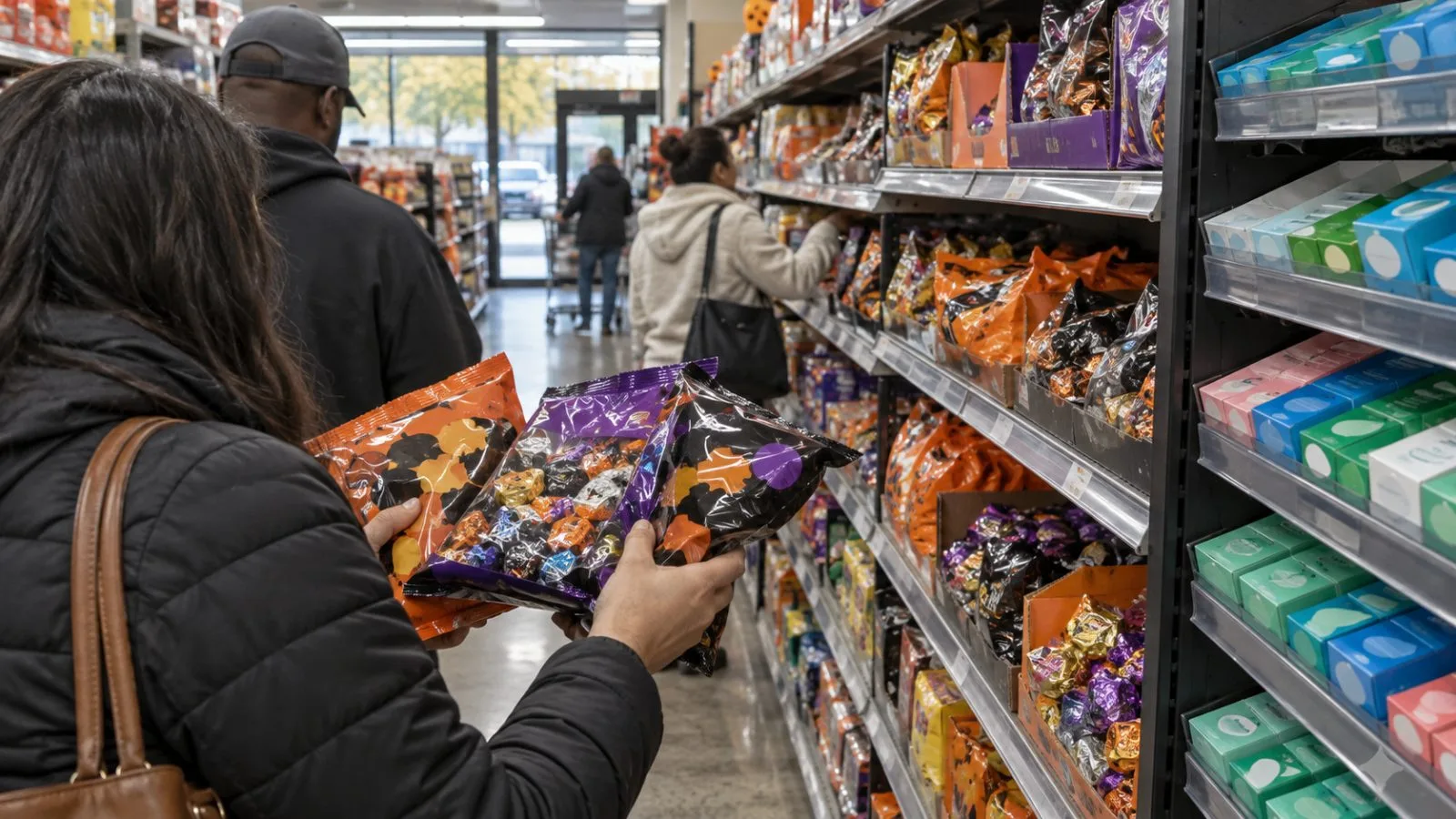
U.S. candy and gum prices rose 7.7% in the year through September, outpacing overall inflation and adding pressure to shoppers' budgets before Halloween, federal data show.
Bureau of Labor Statistics (BLS) data show the category rose 7.7%, compared with a 3.7% increase in overall consumer prices. It was more than 18% above its level two years earlier. The measure covers candy and gum generally; it does not isolate chocolate or Halloween products.
Chocolate adds a timing issue for shoppers. David Branch, sector manager at Wells Fargo Agri-Food Institute, told NPR that the cocoa in chocolate candy currently on store shelves was purchased in 2025. Branch said manufacturers' purchasing cycles can delay how quickly changes in cocoa prices reach retail prices.
International Cocoa Organization (ICCO) data put the indicator price at an average of $6,612 per tonne in 2024/25, 39% above the previous season. ICCO linked a late-2024 rise to weaker arrivals, weather shocks and low stocks. Prices declined from January 2025 as demand softened and supply and inventories improved, according to a prior EconoTimes account of ICCO's cocoa market data.
Circana, which tracks purchases in U.S. supermarkets, found that dollar sales of chocolate candy increased over several years while the volume shoppers bought fell, NPR reported. The pattern means consumers paid more while buying less chocolate.
Enna Grazier, owner of New Hampshire small-batch chocolate company Enna Chocolate, told NPR that a 50% tariff on some holiday packaging and ingredients she planned to obtain from Canadian suppliers disrupted her plans. She said she had to change how she sourced or handled some packaging needs.
The National Retail Federation forecasts U.S. Halloween spending will reach a record $13.5 billion this year, up 3% from last year, with average planned spending of $115 per person. EconoTimes previously covered the Halloween spending forecast.