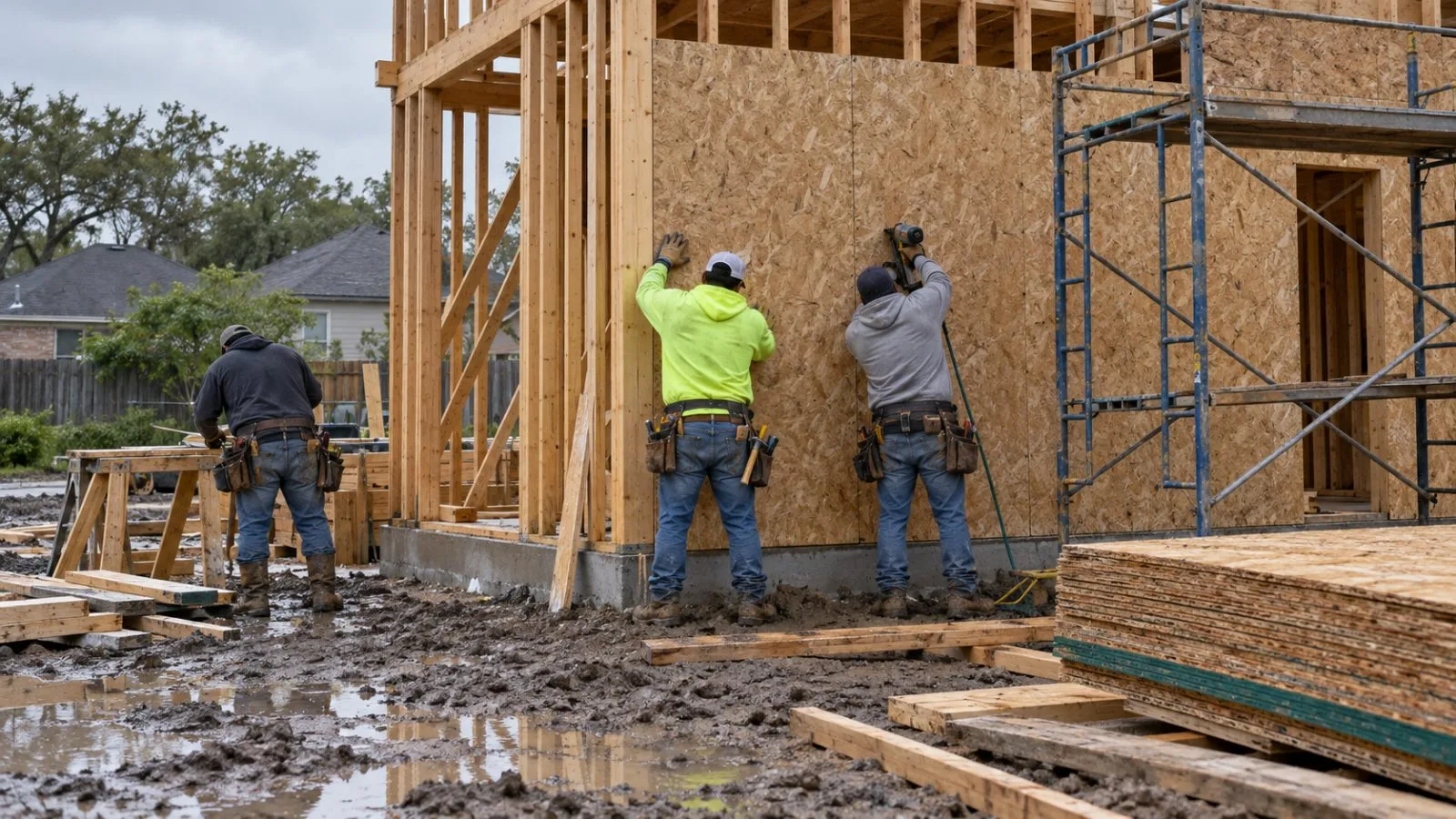
U.S. housing starts were estimated at a 1.221 million-unit annual pace in September, the second-lowest since spring 2020 in Haver Analytics’ review of government data.
The U.S. Census Bureau and U.S. Department of Housing and Urban Development released the preliminary, seasonally adjusted estimate on Oct. 20. August’s revised pace was 1.288 million, making September’s point estimate 5.2% lower. An annualized rate extends one month’s construction pace over a full year; it is not the number of homes begun in September.
The uncertainty around September’s starts estimate is substantial. The agencies calculated a 90% confidence range stretching from a 17.0% monthly decline to a 6.6% increase. Because the range includes zero, the lower estimate does not establish that construction fell.
The estimated pace for single-family homes was 859,000 annually, 4.6% under August’s estimate. Using the National Association of Home Builders’ grouping of buildings with two or more units, government figures put the estimated multifamily pace at 362,000, 6.7% below August’s estimate.
Permit estimates moved in different directions. Single-family authorizations stood at an annualized 845,000, down 4.0% from August, while permits for buildings with at least five units reached 503,000, up 5.9%.
By Oct. 15, Freddie Mac’s survey put the average rate on a 30-year fixed mortgage at 7.40%; it had been 6.71% on Sept. 3. The National Association of Home Builders cited financing costs, construction expenses and buyer affordability pressures as its NAHB/Wells Fargo Housing Market Index fell three points to 29 in October, its weakest reading since June 2012. In that month’s survey, 43% of builders reported cutting prices and 65% said they used sales incentives.
The Census Bureau plans to publish October’s New Residential Construction estimates at 8:30 a.m. ET on Nov. 18.