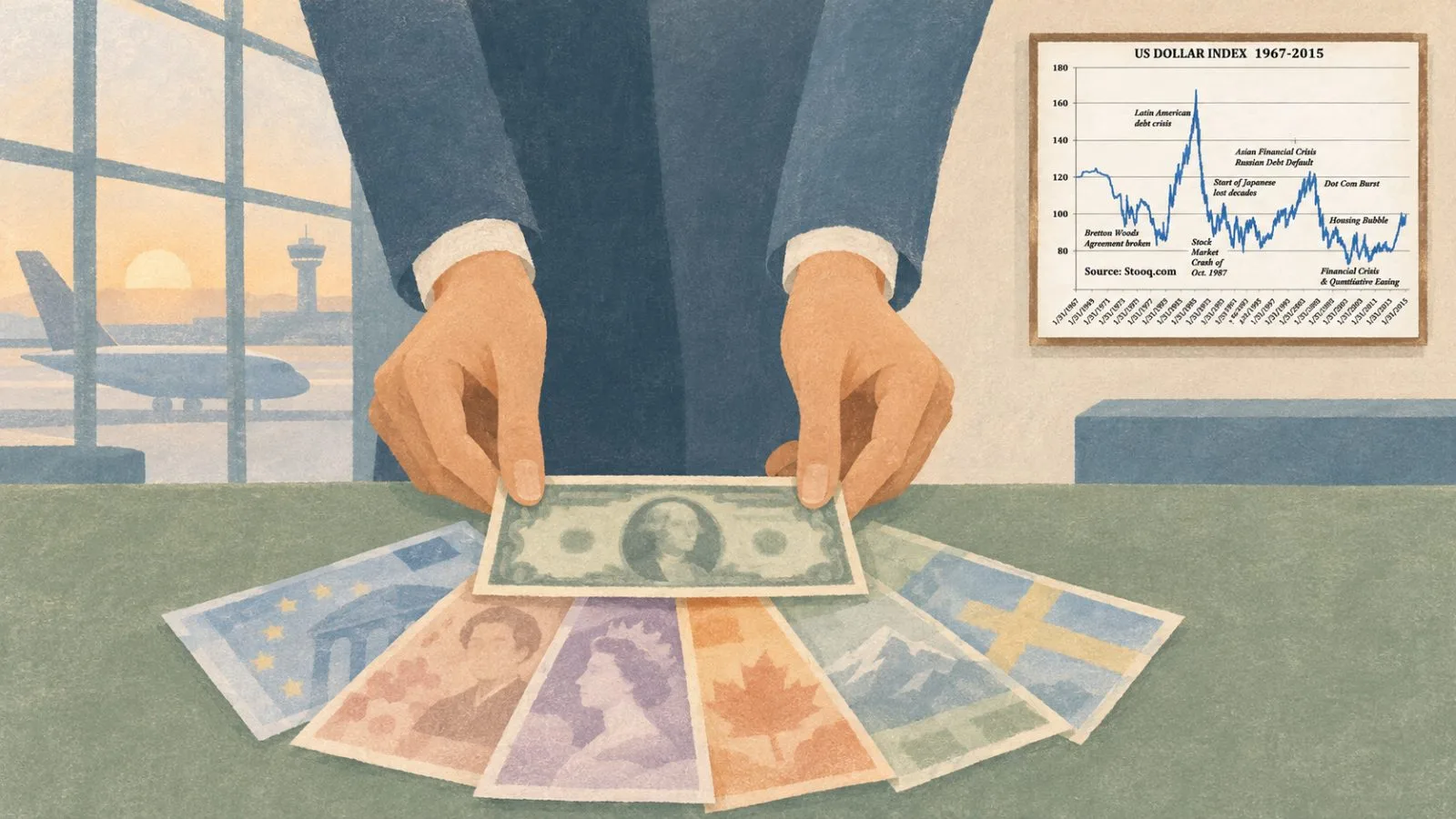
U.S. inflation releases this week will test whether price data reinforce rate expectations supporting the dollar, which slipped Monday after its largest daily gain in almost six months.
The retreat followed Friday’s jump: Reuters put the U.S. Dollar Index near 101.9 during London trading Monday, a 0.3% decline on the day. Friday’s rise was almost 0.8%, the gauge’s largest daily increase in nearly six months, the news agency reported. ING FX strategist Francesco Pesole told Reuters that continued risk aversion through the week was important to sustaining the dollar’s advance.
The Bureau of Labor Statistics (BLS) said payroll employment increased by 165,000 in October, against an average monthly gain of 48,000 over the preceding 12 months. Unemployment was 4.1%. The stronger hiring figure forms part of the backdrop for expectations about Federal Reserve (Fed) policy.
Inflation data show the challenge facing those expectations. The consumer price index rose 3.7% in September from a year earlier, up from 3.4% in August. The index excluding food and energy increased 2.6% over the year, BLS data showed.
FXStreet reported that Elias Haddad of Brown Brothers Harriman viewed firm activity and employment, alongside persistent underlying inflation, as evidence favoring continued hawkishness from the Fed. Estimates for a 25-basis-point rate increase at the Dec. 9 decision differed slightly: FXStreet reported an 80% probability, while Reuters put it at about 81%. Those figures reflect market pricing, not a Fed commitment.
The Fed held its target range at 3.75% to 4.00% on Oct. 28. Its next meeting is scheduled for Dec. 8-9, with the policy decision due Dec. 9. EconoTimes has previously examined ING’s assessment of how Fed expectations may influence the dollar.
The BLS scheduled the October consumer price index release for Tuesday, Nov. 10, at 8:30 a.m. ET. Its October producer price index report is due Friday, Nov. 13, at 8:30 a.m. ET.