The U.S. midterm vote may have only a brief effect on the dollar, with ING saying Federal Reserve expectations should continue to outweigh election-driven currency moves.
ING FX strategists Francesco Pesole, Frantisek Taborsky and Chris Turner said in a note that the election was unlikely to cause structural changes in foreign exchange. Pesole said a Democratic win in both chambers could put short-term pressure on the dollar, though ING did not expect the election to cause a lasting shift in foreign exchange. ING said expectations for Federal Reserve policy would remain the main influence on currency markets.
Market pricing leaves room for a change in the outlook, the bank said. ING described its base case as markets having fully priced in Republicans losing the House, while only partly accounting for a Democratic sweep. The bank cited prediction markets as putting Democrats’ chance of securing the Senate at 74%; that figure reflects market pricing, not an election result.
If Democrats take both chambers, ING said, concern that tighter rules could weigh on AI stocks and legislative gridlock could renew worries about government funding and the debt ceiling. ING gave no estimate for the size or duration of any potential dollar decline. A split in control, with Democrats holding the House and Republicans the Senate, would be neutral or slightly supportive for the currency, the bank said.
The view follows an earlier ING outlook on the dollar if AI stock turmoil persists. The bank said continued technology-stock turbulence could leave the dollar trailing other Group of 10 currencies, while lower U.S. rate expectations could remove a source of support.
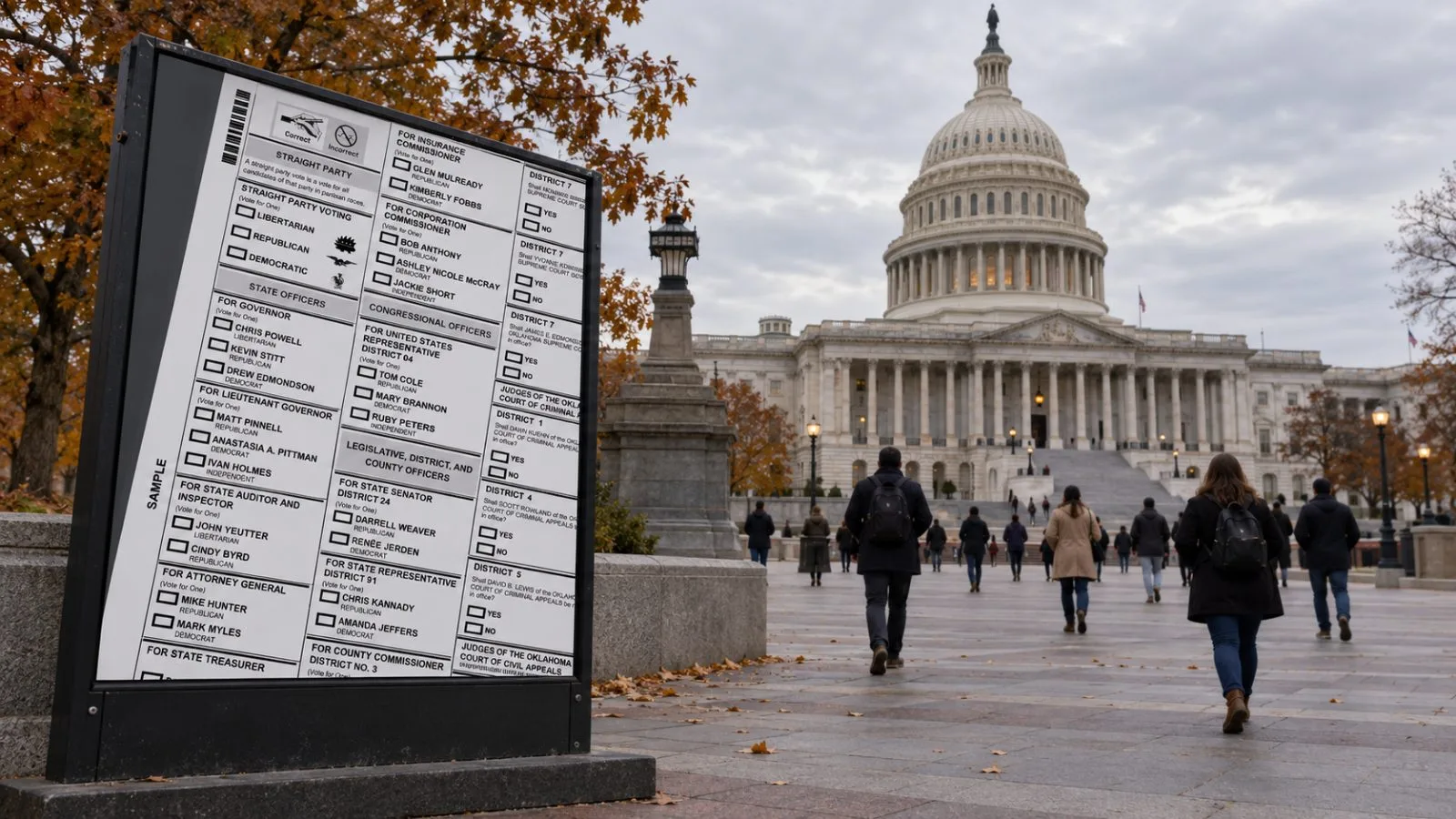
The election covers all 435 House seats and 35 Senate seats. USAGov says congressional elections determine which party holds a majority in each chamber for the next two years. The Associated Press said it can take days to determine control of Congress. After the 2022 vote, the AP projected Senate control on the fourth day after Election Day and House control on the eighth.
The U.S. Bureau of Labor Statistics scheduled the September 2026 Job Openings and Labor Turnover Survey (JOLTS) for 10 a.m. ET Tuesday, Nov. 3.