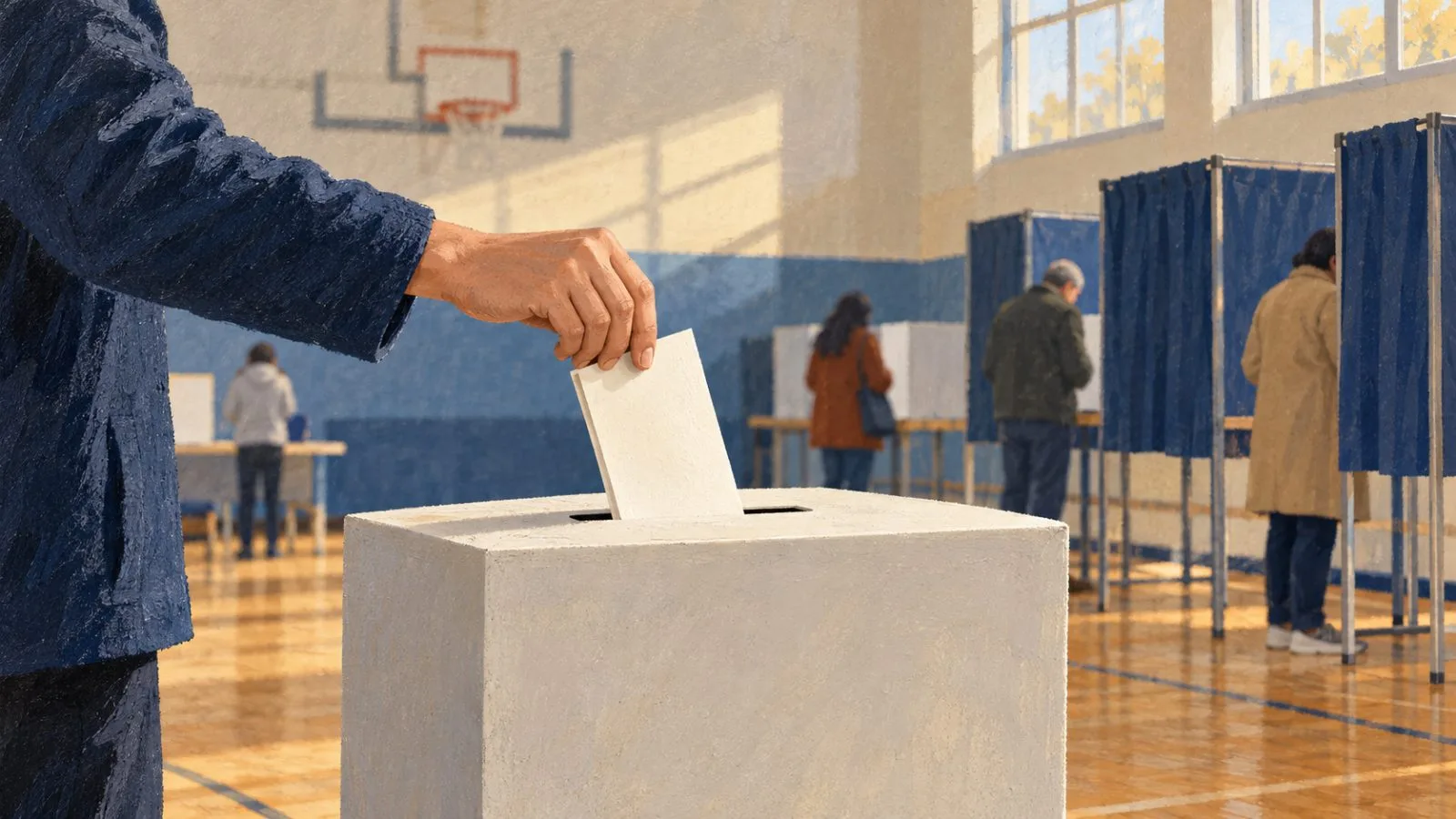
As U.S. voters choose Congress Tuesday, FLIPR co-authors Nate Silver and Eli McKown-Dawson’s final forecast put Democrats in a strong position, while a Kansas survey highlighted a potential source of polling error.
Their forecast projected a near-certain Democratic majority in the House and said polling favored a Democratic Senate win. The Senate started election day with 53 Republicans, 45 Democrats and two independents who caucus with Democrats. FLIPR’s Senate polling snapshots showed Democratic leads of 3.3 percentage points in Texas, 3 in Ohio, 4.9 in Michigan, 3.9 in Maine and 1.1 in Iowa. Silver Bulletin’s generic congressional ballot tracker put the Democratic margin at 8.9 points on Nov. 2 and 9.2 points after its likely-voter adjustment.
The polling picture comes amid low approval ratings for President Donald Trump. An AP-NORC poll of 1,119 U.S. adults, conducted Oct. 8-12, found 35% approved of Trump’s job performance and 64% disapproved. On the economy, 25% approved of his handling and 74% disapproved. The poll’s margin of sampling error was 3.9 percentage points.
The Kansas race illustrates how participation can shape a poll. A Washington Post and George Mason University’s Schar School of Policy and Government survey of 801 likely voters, conducted Oct. 22-26, found Democrat Adam Hamilton leading Republican Sen. Roger Marshall 52% to 43%. FLIPR’s Kansas average showed a four-point Democratic advantage. The Washington Post reported that registered Democrats who answered an interviewer’s call were more likely than registered Republicans to complete the survey: 32% versus 12%. The poll’s authors cautioned that the nine-point result could overstate Democratic support.
The Post said low response rates alone do not explain polling errors; differences in participation among groups can matter, including lower response among less politically engaged voters. FLIPR combines polls with fundamentals such as incumbency and fundraising, along with outside race ratings. Silver Bulletin says its topline estimates are typically based on 40,000 simulations. The Washington Post’s review found that polls fell 3 to 5 points short of Trump’s support in the 2016, 2020 and 2024 presidential elections. The Post said polls did not consistently overestimate Republican support in the 2018 or 2022 midterms.
EconoTimes previously examined how 2024 surveys overstated Democratic margins in its review of polling accuracy. Nov. 3 election results will provide the next measure of whether polling leads translated into seats; post-election reviews can assess how accurately surveys captured support.