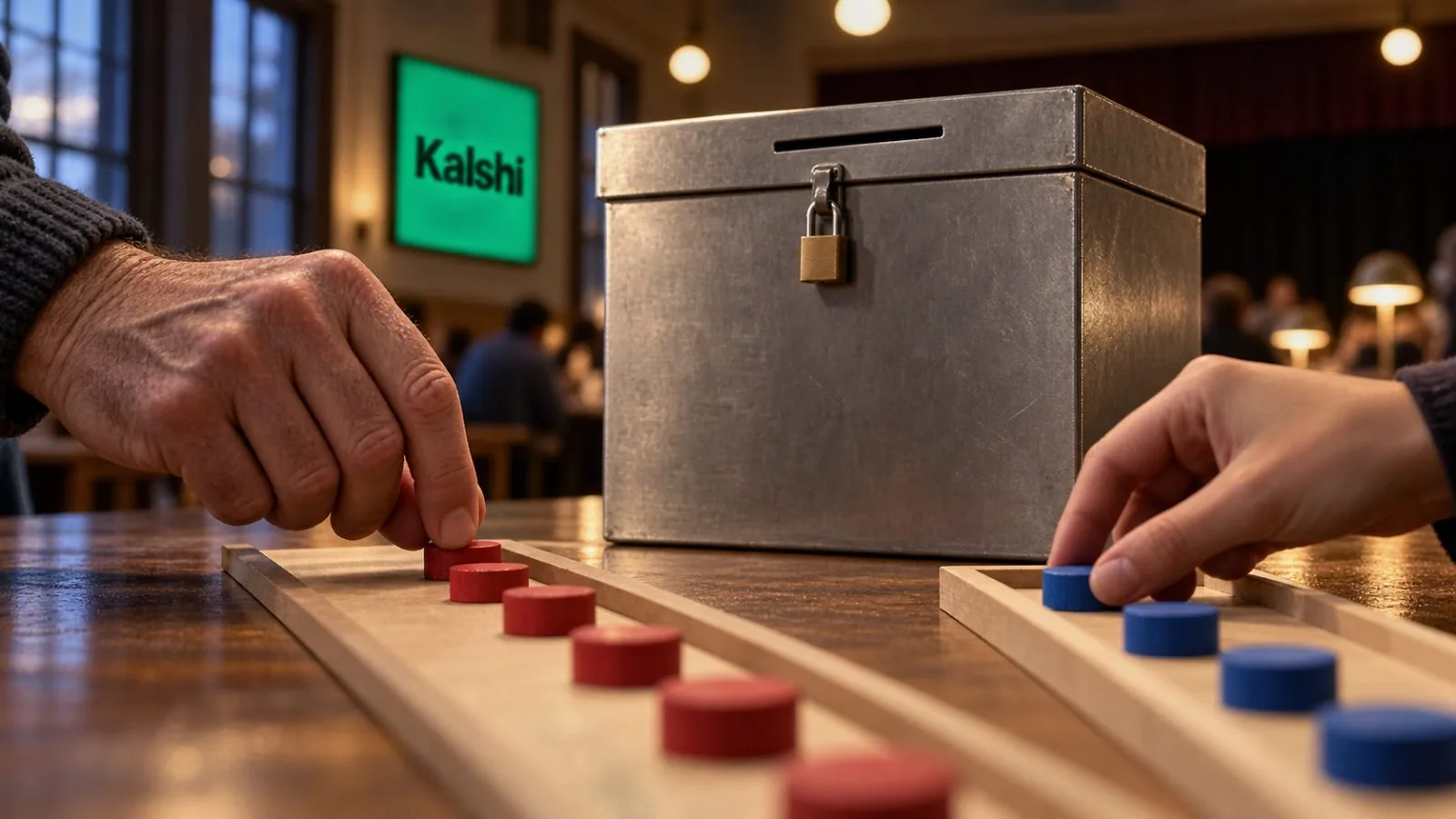
Kalshi and Polymarket contracts tied to the U.S. midterms had logged nearly $1.9 billion in trading by 8 p.m. ET Nov. 2, a Washington Post analysis found, underscoring the scale of election markets ahead of Election Day.
The count spanned more than 7,000 possible results, from federal and state races to primaries and selected high-profile mayoral contests. The Post put Kalshi’s volume at about $1.3 billion and Polymarket’s at roughly $600 million.
For its calculation, the Post assigned each contract $1 in volume; subsequent trades of the same contract added to the total. The figure therefore measures turnover, not how much cash bettors put at risk.
A CNN report published Oct. 23 put midterm-related trading above $1.4 billion. Representatives for Kalshi and Polymarket cited in the report gave totals of about $1.1 billion and more than $340 million, respectively. The dates and market coverage differ, so the figures are not a direct comparison.
The markets also reach people who do not trade. Kalshi said in an Oct. 6 update that viewers of its midterm markets outnumbered traders five to one, while site visits were 50 times the trader count. The Council on Foreign Relations reported that CBS, CNN, Fox News, The Wall Street Journal and X had agreements with Kalshi or Polymarket to include market odds in election coverage. CNN has said it uses Kalshi data and bars its editorial employees from trading on prediction markets.
The Anti-Corruption Data Collective (ACDC) counted more than $431 million in volume through Oct. 29 on congressional midterm markets across Kalshi, Polymarket and Polymarket US. ACDC found that a five-cent shift was possible for $3,500 or less in 96% of the 15,985 congressional markets with live order books. ACDC research fellow Michelle Kendler-Kretsch said market probabilities are “susceptible to manipulation.” EconoTimes has previously covered concerns that voters may mistake election odds for results.
Kalshi says its contracts pay $1 for a winning outcome and $0 for a losing one. The company describes contract prices as implied probabilities, not vote shares or guaranteed results. The Federal Election Commission lists Nov. 3 as the general-election date.