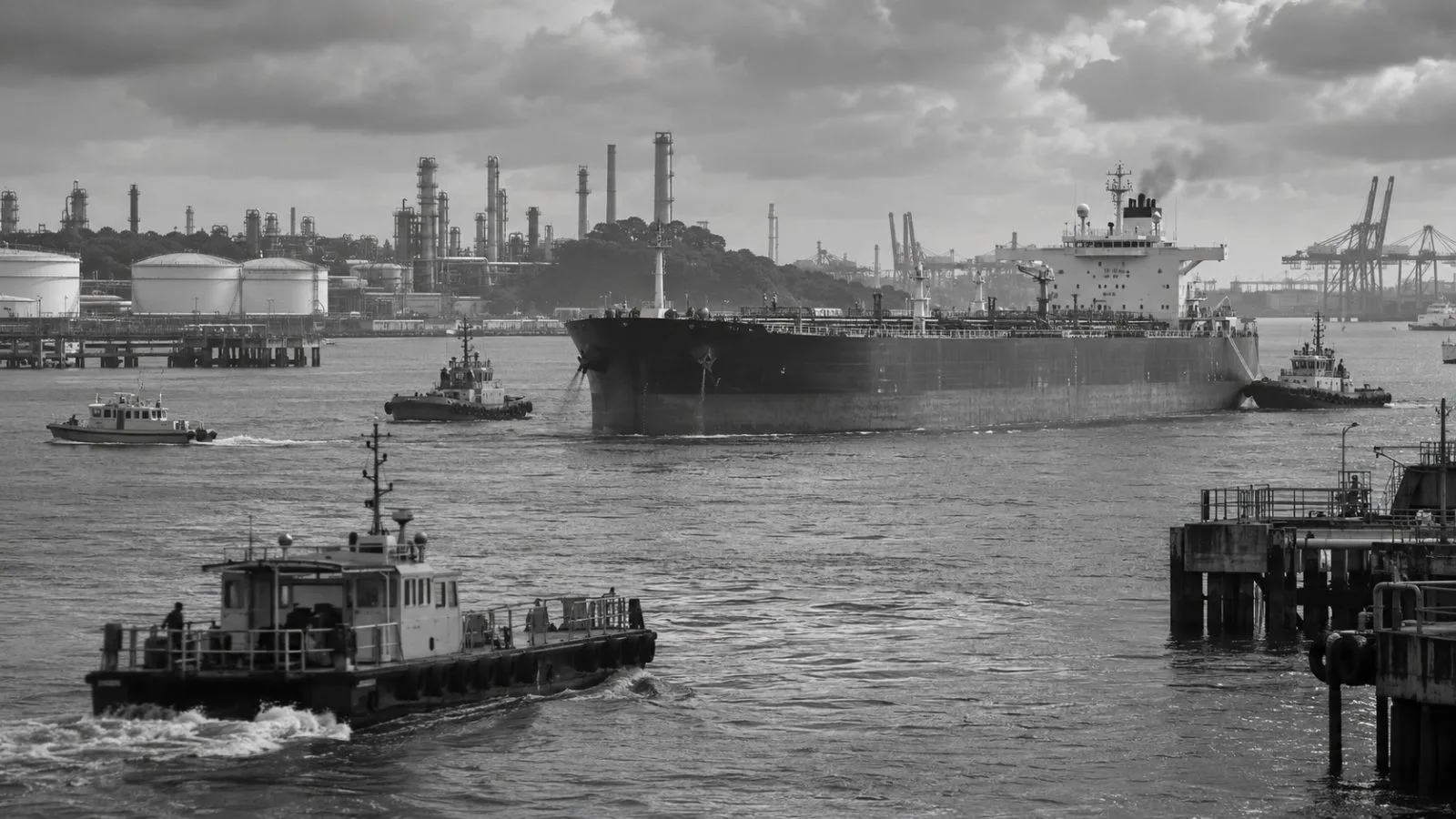
The Dubai-basis crack for 380-cst high-sulfur fuel oil (HSFO) turned negative in Asia, while October exports from the United Arab Emirates (UAE) to Singapore and Malaysia reached an eight-month high.
LSEG data cited by Reuters put the crack at a $2.29-per-barrel discount on Thursday, Nov. 5, after a $5.34 premium at the week’s start. Reuters said the reading was the lowest since mid-September.
Other parts of the market also softened: Reuters reported a weaker crack for 0.5% very low-sulfur fuel oil (VLSFO) and lower Singapore spot premiums for both grades.
Kpler figures cited in a Reuters report put October UAE fuel oil exports destined for Singapore and Malaysia at about 729,000 metric tons, the highest total in eight months. Emril Jamil, a senior oil research manager at Kpler, told Reuters traders were factoring in the possibility that a peace deal could bring more Middle Eastern oil into the market and weigh on prices.
Qatar’s Ministry of Foreign Affairs said Tuesday, Nov. 3, that Washington and Tehran were reviewing proposals exchanged through mediators and that it could not identify a specific breakthrough at that time. Reuters reported that traders also weighed Democrats’ congressional gains as one factor in lower perceived war risk. The Associated Press declared Democrats had won control of Congress, calling the Senate late Tuesday, Nov. 3, and the House early Wednesday, Nov. 4.
Kpler and LSEG ship-tracking data cited by Reuters put Asian fuel oil arrivals above 6 million tons in October, a seven-month high. LSEG data cited by Reuters showed dirty-tanker freight from Rotterdam to Singapore at about $95 per ton during the week through Nov. 5, down from a mid-October record near $168 per ton. Reuters said shipping costs continued to restrict cargo movements from Europe to Asia.
Cheaper residual fuel could lower shippers’ refueling bills and refiners’ feedstock expenses, Reuters reported. Traders expected Asian arrivals to taper in November, Reuters said.