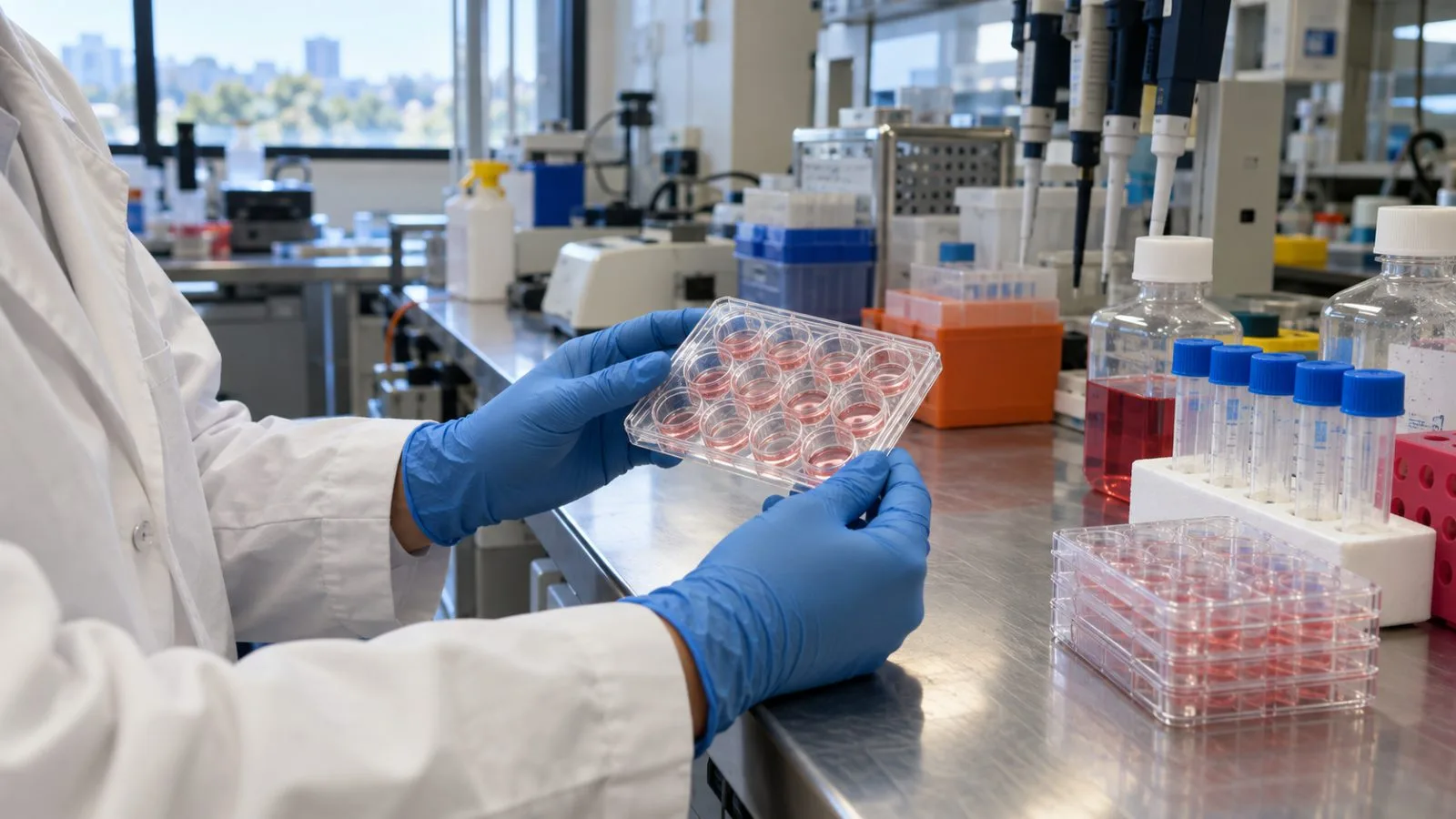
Researchers at the University of California, Los Angeles (UCLA), found that berberine hydrogen sulphate paired with enzalutamide showed synergy in four prostate cancer cell models, an early result that does not establish patient benefit.
The paper, published in Advanced Science, says MAESTRO draws on large language models and existing information about drug actions and prostate cancer pathways to rank combinations for lab work. Researchers assessed 3,592 natural products computationally and selected 150 for experiments alongside enzalutamide in three-dimensional spheroids made from 22Rv1 cells.
The study counted 23 as synergy candidates: each had a Bliss score above 0.1, and efficacy for the pairing exceeded that of enzalutamide on its own. Six qualified at both tested concentrations; 17 met the threshold at 10 µM and 12 at 1 µM.
That first screen used only 22Rv1 spheroids. In subsequent tests, berberine hydrogen sulphate with enzalutamide showed synergy in 22Rv1 and MDVR cells, which the paper identifies as resistant to enzalutamide, as well as VCaP and LNCaP, which it describes as sensitive. The four-model result applies to the selected pairing, rather than to all 150 candidates.
Enzalutamide blocks androgen receptor signaling. The paper says prostate cancer cells may activate other survival pathways that help them evade this blockade. MAESTRO combines known drug actions with pathway information to suggest experiments; its authors describe its rankings as hypotheses, not proof of how a combination works.
In 22Rv1 cells, the combination increased AMPK activity and lowered a marker associated with mTORC1 activity. The authors said the signaling pattern fit their pathway hypothesis, but it did not explain the full cause of the effects. In a UCLA Health announcement, study first author James C.H. Lo said the consistency across models surprised the researchers.
The paper reports experiments in established cell lines only; it did not demonstrate efficacy in animals, systemic safety, pharmacokinetics or a dose suitable for clinical use. UCLA said researchers plan to examine the pairing in patient-derived tumor models and animal studies, but gave no timetable.