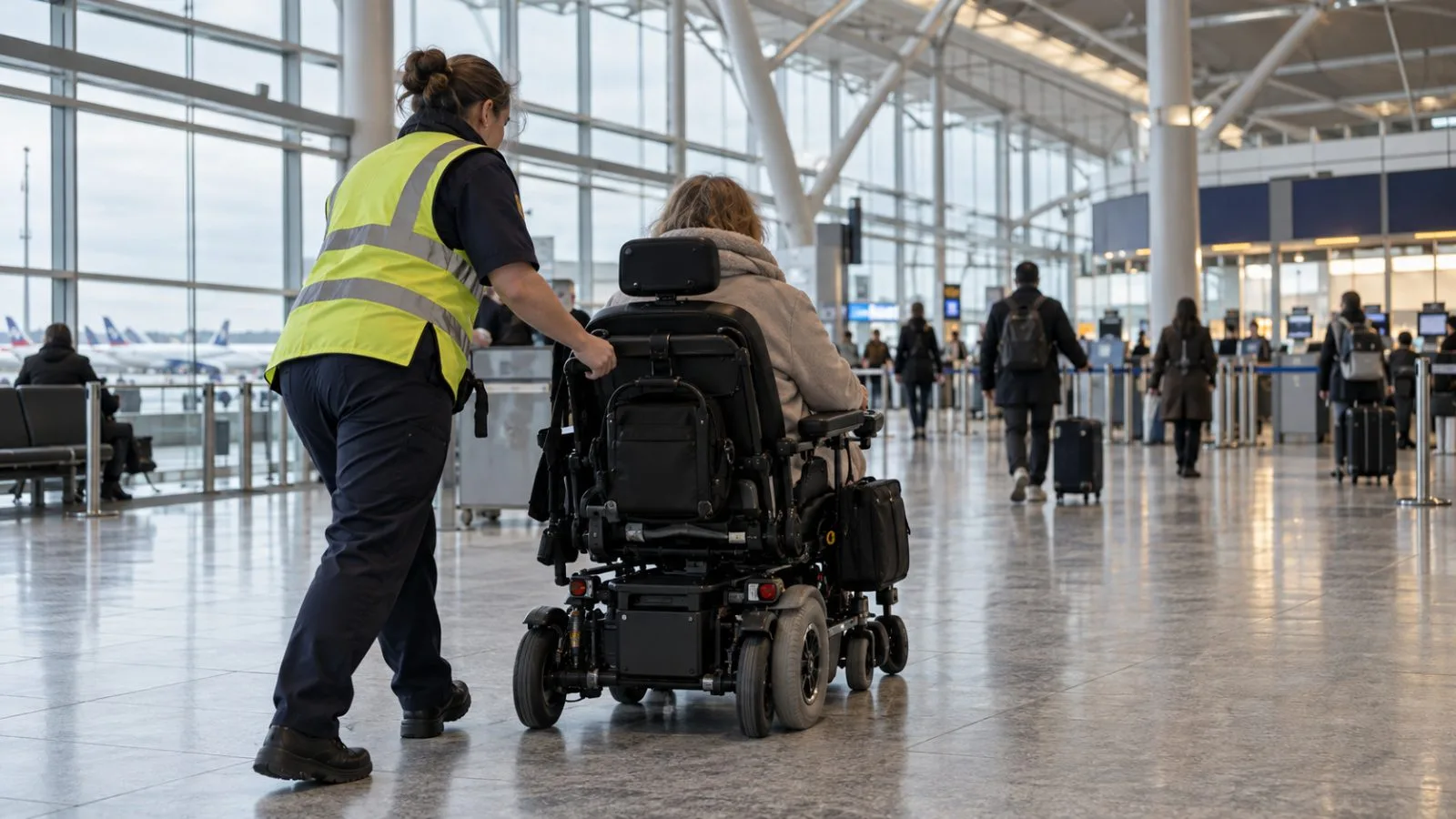
A UK aviation bill would remove the cap on airlines’ liability for lost or damaged mobility aids on domestic flights, expanding potential compensation for passengers who rely on wheelchairs and similar equipment.
The government-backed measure would also give the Civil Aviation Authority (CAA) broader powers to enforce passenger rights. It remains before Parliament and has not become law.
The CAA said 5.99 million passengers used assistance services at UK airports in 2025, up 9.4% from 2024. Total passenger traffic grew 3.3%. The regulator linked the faster growth in assistance use to pressure on larger airports during busy periods.
The Department for Transport said more than 1,000 wheelchairs were damaged during air travel in 2023. That figure draws on flights arriving in or departing from the UK, including international services; it is not a domestic-flight total.
The CAA calculated an average damage rate of 0.43% among the 10 airlines that supplied damage figures. Three other airlines provided wheelchair transport totals without damage figures. The regulator cautioned that records based on passenger claims may miss incidents.
In a 2025 CAA survey, 82% of recent flyers with a disability or health condition said they were satisfied with their latest trip, compared with 89% of those without one. In a separate, broader group of respondents with a disability or health condition, 58% said their condition made using airports or flying difficult.
A form introduced in March through the voluntary Flier Friendly Programme lets passengers give airlines advance technical details about their wheelchairs, including battery and handling needs. The Department for Transport also plans to trial a digital way to share support needs, though it has given no trial date.
The Aviation Accessibility Implementation Group has reviewed staff training content and plans to develop shared materials in its second year. The CAA plans to consult on revised airport quality standards later in 2026.
The bill’s next scheduled step is the start of its House of Commons committee stage Oct. 20.