British Prime Minister Andy Burnham said Brexit left the UK with an inadequate settlement and set conditions for a closer EU relationship, putting trade frictions and household costs on the agenda for Friday’s Brussels summit.
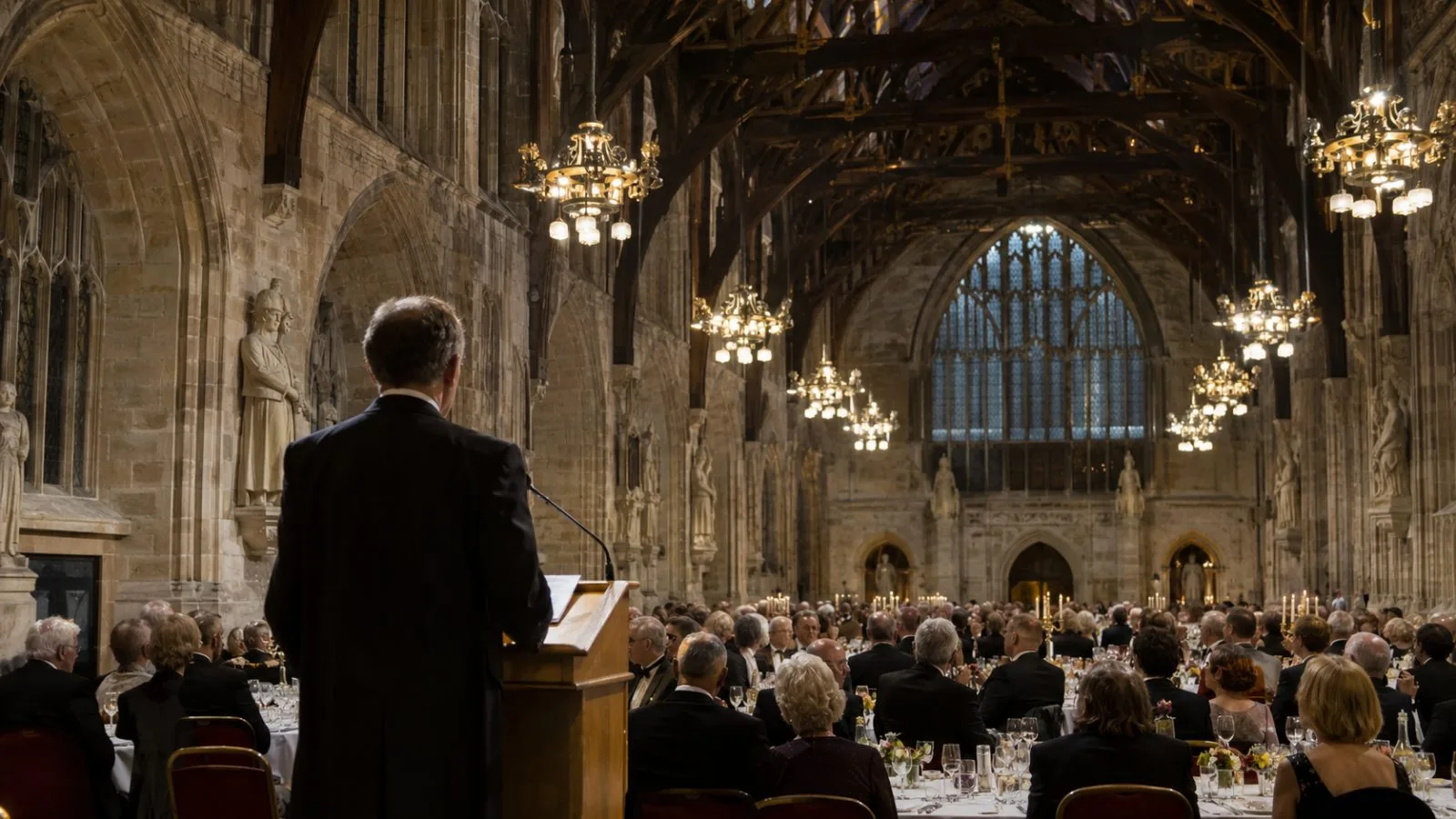
Speaking at the Lord Mayor’s Banquet on Monday, Burnham said Britain had “lost more than we have gained in the last 10 years.”
He said a deal must meet Labour’s manifesto and political limits, improve on the existing Brexit arrangements, and produce practical gains for communities he described as neglected. He cited the cost of living and the weekly shop, electricity bills, business red tape and cooperation on illegal immigration as areas where progress could matter.
Burnham described Brexit’s economic cost by referring to a 4% figure from the Office for Budget Responsibility (OBR) and other estimates as high as 8% of gross domestic product. The OBR projects that long-run potential productivity will be 4% lower than in a scenario where the UK remained in the EU. It expects the full effect 15 years after the Trade and Cooperation Agreement took effect. Separately, a study cited by the OBR estimated that Brexit had already reduced overall GDP by 6% to 8% by 2025. The estimates measure different effects, and the OBR has flagged uncertainty in assessing Brexit’s impact.
Burnham said a possible agreement could raise GDP by as much as 0.4%, without giving a calculation or timeframe. Labour’s 2024 manifesto rules out rejoining the EU, its single market or customs union, and restoring freedom of movement. It also promises closer trade and investment ties and a veterinary agreement intended to reduce border checks.
The UK government says summit talks will seek arrangements to lower costs and red tape for farmers and businesses. Burnham also said lower-income households have borne the greatest burden from food and fuel price increases, which he linked to Russia’s invasion and compounding events in the Middle East.
Burnham said finance and technology adjusted better to Brexit than other industries. He argued that a later turn toward a more populist approach after the initial negotiations produced tougher terms than people had expected.
European Council President António Costa and European Commission President Ursula von der Leyen are due to meet Burnham on Nov. 20. Leaders are expected to review progress since the first UK-EU summit created a strategic partnership in London in May 2025 and issue a joint declaration.