The loss of nature is one of the many environmental crises facing our planet. And a key challenge in addressing this is halting the poaching and trafficking of wildlife, which is often driven by demand for ivory.
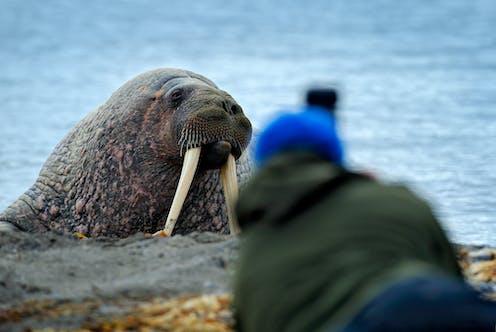
In a bid to protect animals from poaching, the UK government has strengthened legal protections for five more species. Trading in ivory from hippos, walruses, narwhals, killer whales and sperm whales is set to be prohibited under the extended provisions of the Ivory Act 2018. Since coming into force last year, this act has gained recognition as “one of the toughest bans of its kind in the world”.
Its initial objective was to curb the trafficking of elephant tusks, which are smuggled and sold for purposes including traditional medicine and as trophies and ornaments. It bans people from selling, renting, importing or exporting elephant ivory in the UK. Those found guilty of breaking the law can face fines of up to £250,000 and, in severe cases, even imprisonment.
The newly protected species make up a smaller proportion of the ivory trafficking trade than elephants. But these animals are still hunted for their ivory.
A recent investigation examined 621 online listings of ivory in the UK, and discovered that approximately one-third originated from non-elephant species. Furthermore, a separate report highlighted clear demand for hippo ivory: between 2009 and 2018, an estimated 957kg of hippo ivory was seized globally.
The legal protection of trading in these species potentially serves as a deterrent for ivory traffickers. But it’s important to recognise that any ban is only as good as its enforcement. We think the effectiveness of the Ivory Act’s legal extensions may be hindered by several barriers.
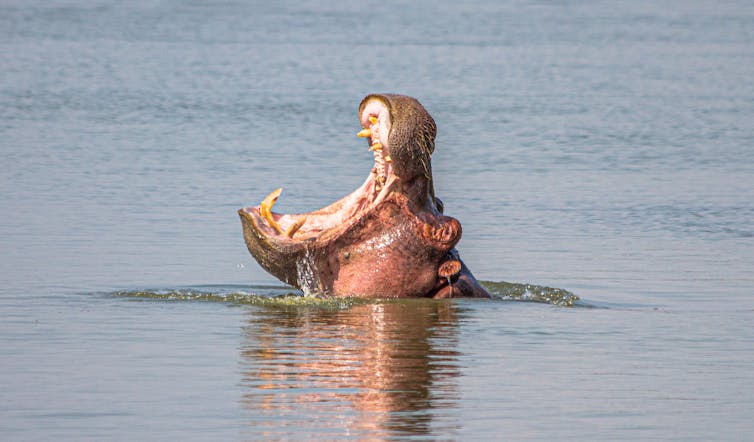
Between 2009 and 2018, an estimated 957kg of hippo ivory was seized globally. Carlene Thurston/Shutterstock
1. Global disparity in wildlife law
In many countries, the trade in ivory is merely “regulated” rather than prohibited, allowing existing markets to persist. In 2022, ten African nations attempted to increase protections for hippos. However, their proposal was rejected and the legal trade in hippo ivory continues in those countries.
The global disparity between wildlife trade laws enables the continued circulation of illegally obtained ivory, often laundered alongside trade in legitimate ivory. Hong Kong, for example, declares a higher volume of hippo ivory imported from Uganda than the volume Uganda declares it exports. Some 14,000kg of hippo teeth were unaccounted for between Uganda and Hong Kong from 1995 to 2013, suggesting actual trade levels greatly exceed the agreed quotas.
The impact on ivory trafficking of an extended ban is likely to remain limited without a global consensus on wildlife laws. Yet unfortunately, there is wide variation in wildlife protection laws across different countries, with each state adopting its own approach. This remains the case despite international law setting out the basis for wildlife protection.
The Convention on International Trade in Endangered Species (Cites), for instance, imposes international restrictions on wildlife trade that signatory countries are obliged to comply with. Similarly, commercial whaling activities are explicitly prohibited by the International Whaling Commission.
However, there are many cases where countries have signed these agreements without implementing or enforcing the necessary changes. Earlier this year, Mexico acknowledged that it faces sanctions from Cites for failing to adequately protect the vaquita marina, an endangered species of porpoise.
2. Policing
Wildlife crimes are not always given the priority they require. Research based on surveys of UK police forces and police and crime commissioners found that wildlife crime enforcement was heavily dependent on the “enthusiasm, dedication and specialist knowledge of individual officers”.
Other studies consistently show that wildlife crime enforcement suffers from inadequate resources, and is not considered a primary focus within mainstream policing in the UK. Although the UK has a dedicated National Police Wildlife Crime Unit, training in wildlife crime is not included in the compulsory training regime for police officers. As a result, wildlife crimes are inconsistently prosecuted, and even when cases do reach the courts, fines and sentencing are often lenient.

Training in wildlife crime does not form part of UK police officer training. Mick Atkins/Shutterstock
3. Criminal organisations
Organised crime networks play a significant role in facilitating the illegal ivory trade. It’s therefore likely that numerous unreported and undiscovered incidents occur. These criminal networks employ various techniques to facilitate their activities, including sophisticated smuggling methods, bribery, corruption and exploiting porous borders.
The participation of criminal organisations contributes to a lack of understanding about the true scale of the ivory trade and the different species involved. This hinders efforts to gather accurate data on the ivory trade and allocate resources for enforcement.
4. Ivory identification
UK authorities enforcing the strengthened ban on ivory trade face the additional hurdle of accurately identifying ivory and ivory products. Traffickers commonly employ tactics to deceive by disguising elephant ivory as other products, particularly on online marketplaces.
Research has documented cases where ivory has been misrepresented as materials from other species, such as cow bone, on ecommerce platforms. This practice makes it difficult to distinguish illicit ivory trade from legitimate transactions.
The situation will be further complicated by the fact that some existing ivory markets, such as those involving warthogs, are not covered by the extended Ivory Act. These gaps in protection again provide avenues for traffickers to exploit, by hiding illegal ivory among legal ivory trade.

Accurately identifying ivory and ivory products can be challenging. Christopher PB/Shutterstock
Any law that protects threatened wildlife should be welcomed. However, a ban alone will not prevent illegal activity. The establishment of a properly funded enforcement regime is essential if we are to safeguard our natural world.