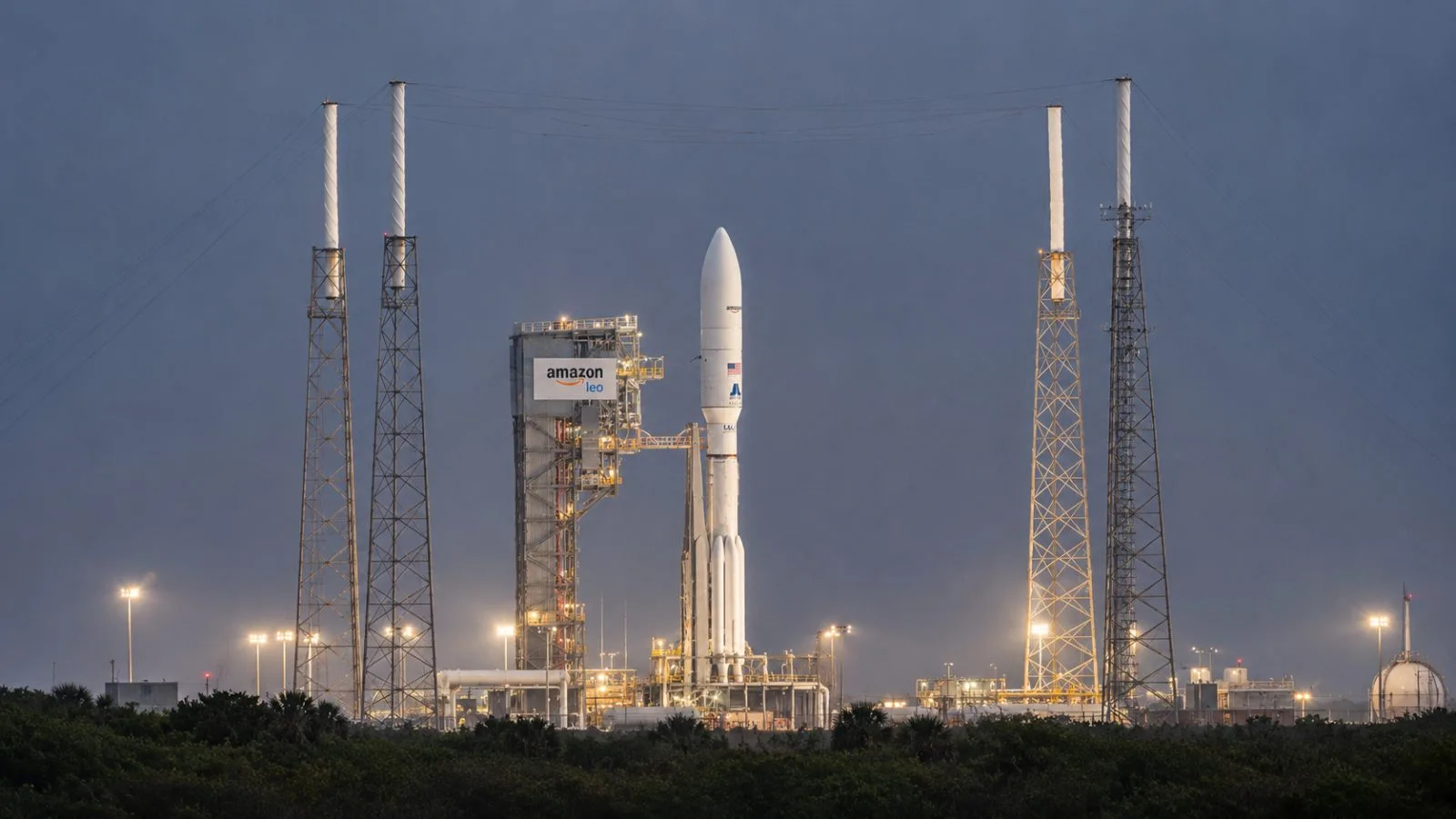
United Launch Alliance (ULA) said its Vulcan rocket failed to deliver Amazon Leo’s first Vulcan mission to orbit Sunday, a setback for a satellite program facing U.S. regulatory milestones.
The rocket lifted off from Cape Canaveral Space Force Station on Nov. 15 carrying 40 satellites for Amazon Leo’s LV-01 mission. Space.com reported liftoff at 12:40 p.m. ET (17:40 UTC), at the close of the 12:11 p.m. to 12:40 p.m. ET launch window listed by ULA.
ULA said data from its Launch Director showed an anomaly about 10 minutes into the flight, and the rocket did not put the Amazon mission into orbit. The company said it lacked enough information to identify the cause and planned to review the flight with Amazon and other organizations before deciding how to respond.
LV-01 opened Amazon’s contract for 38 Vulcan launches. Amazon expects the agreement to put more than 1,500 first-generation Leo satellites on Vulcan rockets, approaching half of the constellation it plans to build. In Amazon’s Nov. 9 announcement, launch systems director Melissa Wuerl said larger rockets and more frequent launches were important to expanding the network.
A Federal Communications Commission (FCC) order dated June 5 describes 1,616 satellites by July 30, 2026, as an interim milestone toward a 3,232-satellite first-generation constellation. The order granted Amazon a limited waiver of interim milestone rules while retaining the July 30, 2029, deadline for full deployment. Amazon had told the agency that launch-provider delays and limited availability slowed its plans; the FCC cited those constraints in granting relief.
Vulcan’s previous flight, on Feb. 12, also involved an anomaly: ULA said one of its four solid rocket motors had a significant performance issue, although the spacecraft reached geosynchronous orbit. Amazon’s prelaunch schedule placed the next Vulcan flight, LV-02, weeks after LV-01 on condition that the first mission went normally. ULA said its review with Amazon and other organizations would inform corrective steps.