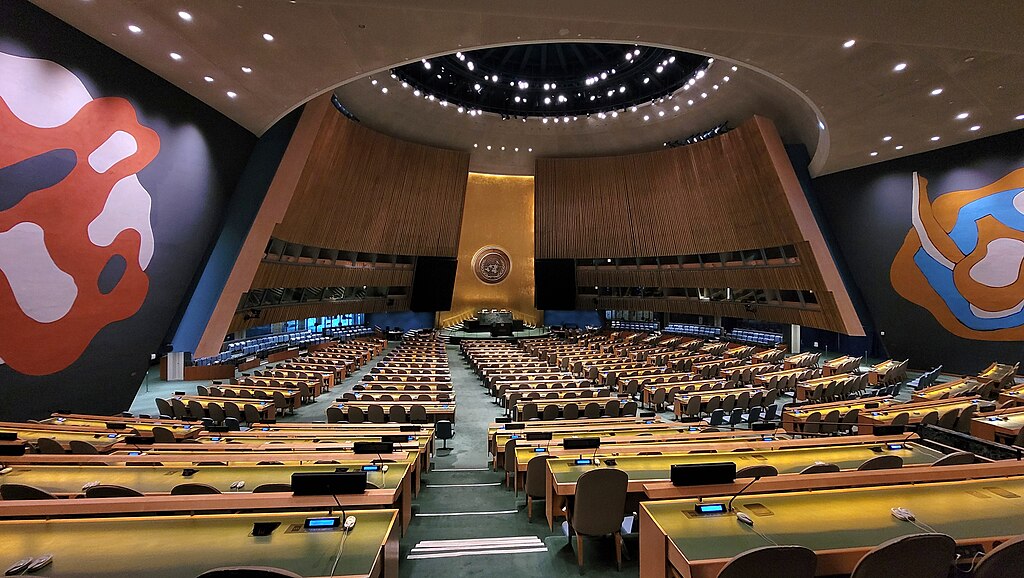
The United Nations General Assembly voted 141-8 to approve a resolution supporting a landmark International Court of Justice (ICJ) advisory opinion on climate change, highlighting growing global pressure for stronger climate action in 2026. The resolution confirms that countries have a legal responsibility to address global warming, reduce fossil fuel use, and protect citizens from the worsening climate crisis.
UN Secretary-General Antonio Guterres welcomed the decision, calling it a “powerful affirmation of international law, climate justice, science, and the responsibility of states.” He stressed that governments must act urgently to shield people from the escalating effects of climate change, including extreme weather events, rising sea levels, and environmental damage.
The climate resolution was introduced by Pacific island nation Vanuatu, which has been at the forefront of international climate advocacy. The measure supports the ICJ’s July 2025 advisory opinion, which stated that nations are legally obligated to combat climate change and limit environmental harm caused by fossil fuel emissions. Although the ICJ opinion is not legally binding, experts believe it will influence climate-related lawsuits and international environmental policies worldwide.
The United States voted against the resolution alongside Saudi Arabia, Russia, Israel, Iran, Yemen, Liberia, and Belarus. Meanwhile, countries including India, Turkey, Qatar, and Nigeria abstained from the vote. U.S. Deputy Ambassador Tammy Bruce criticized the resolution, arguing it contained “inappropriate political demands” targeting fossil fuels.
The Trump administration has continued withdrawing the United States from major environmental agreements, including the Paris climate accord, while promoting increased fossil fuel production.
Vishal Prasad, director of Pacific Islands Students Fighting Climate Change, praised the UN vote as a major step toward climate accountability. He said the decision represents a global commitment to turning climate justice into reality and strengthening international efforts to fight climate change.