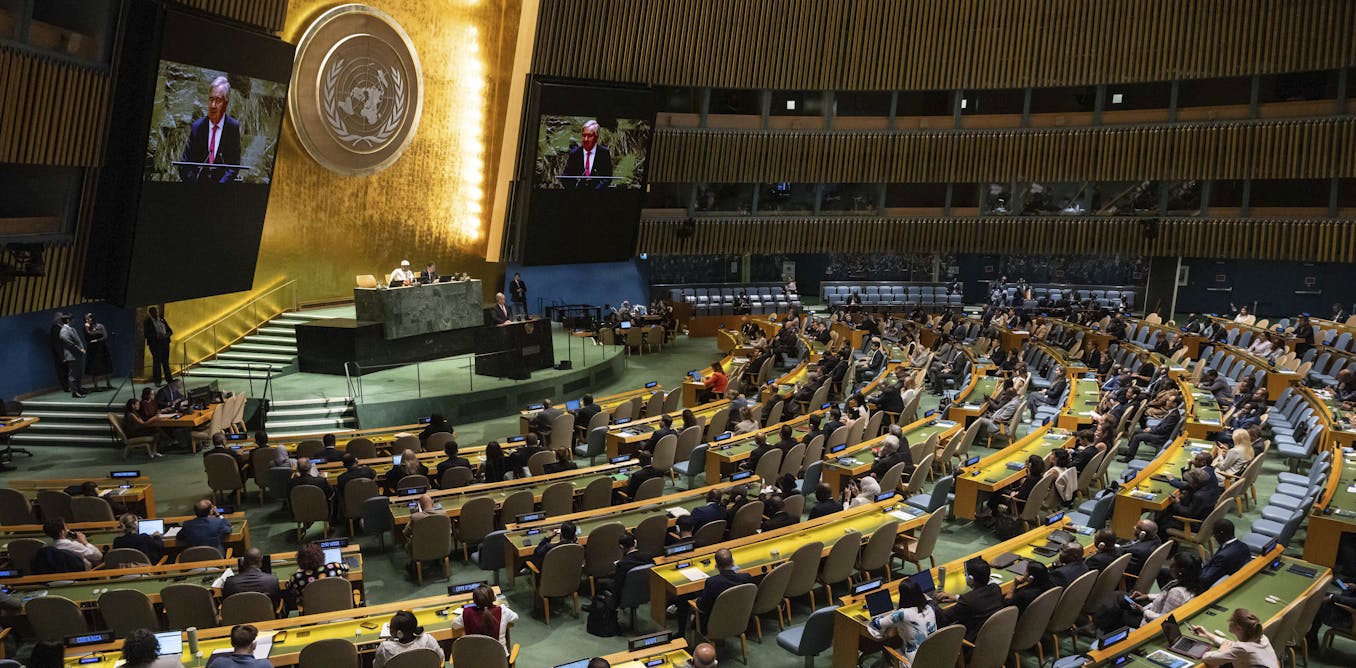
The U.N. Security Council is expected to vote this month on renewing the mandate of a panel of experts monitoring sanctions on Iran, potentially setting up a confrontation with Russia and China.
France, which holds the Security Council presidency for September, said the panel’s mandate is due to expire on September 26, during the annual U.N. General Assembly gathering of world leaders. The ongoing U.S.-Israeli war with Iran is expected to feature prominently in discussions.
French U.N. Ambassador Jerome Bonnafont said Iran’s nuclear program and what Paris considers Tehran’s failure to comply with U.N. obligations would be central to Security Council talks this month.
“The Council will finally have to vote on renewing the mandate of the ... panel of experts on Iran,” Bonnafont told reporters. U.N. diplomats said the vote is expected to take place on September 17.
The proposed renewal could face vetoes from Russia and China. Both countries oppose the current Iran sanctions framework and argue that the Security Council no longer has authority to address Tehran’s nuclear program through the previous oversight mechanism.
In a joint statement in March, Moscow and Beijing said the Security Council could not re-establish the 1737 Committee or its Panel of Experts.
The sanctions committee, named after U.N. Security Council Resolution 1737, was established in 2006 to oversee restrictions imposed on Iran over its nuclear activities. Unlike the panel of experts that assists the committee, the committee itself does not have a fixed mandate expiration date.
Russia has previously blocked similar U.N. sanctions oversight. In 2024, Moscow vetoed the annual renewal of a panel monitoring enforcement of U.N. sanctions against North Korea over its nuclear weapons and ballistic missile programs.
The latest Iran dispute follows a decision by Britain, France and Germany last year to activate the U.N. “snapback” mechanism, restoring sanctions that had been lifted under the 2015 Iran nuclear agreement. The European powers said Tehran had failed to meet its nuclear commitments.
Iran maintains that it is not pursuing nuclear weapons. However, its uranium enrichment activities continue to raise concerns among the United States and its allies about the potential development of nuclear weapons.