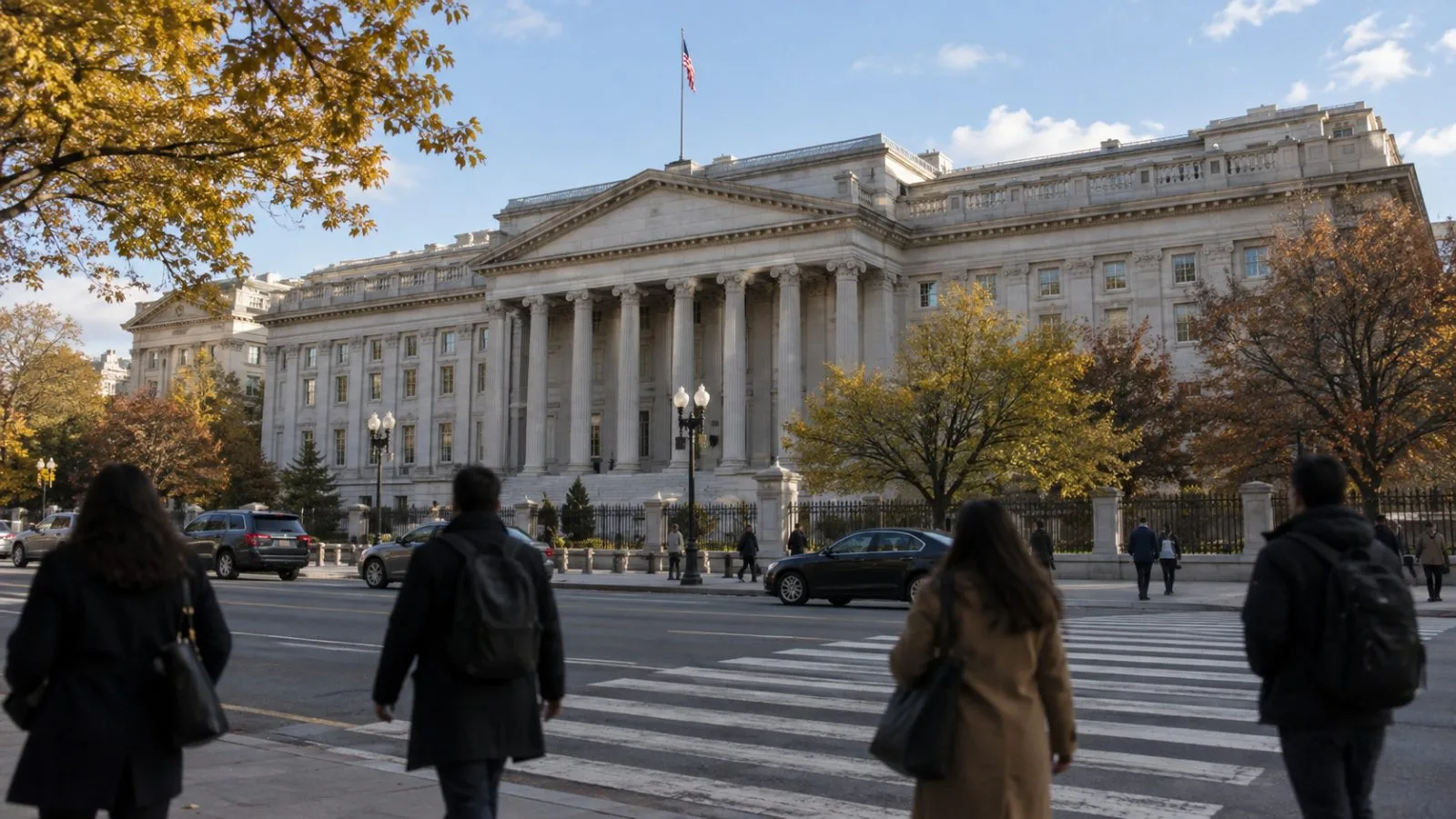
The U.S. Treasury has doubled planned buybacks of long-duration government bonds in an effort to improve market liquidity after a sharp Treasury selloff pushed borrowing costs to multi-year highs.
Under the revised program, the Treasury will purchase at least $4 billion per operation of 10- to 30-year Treasury securities, up from the previously planned $2 billion. The higher buyback amounts will cover both the 10- to 20-year and 20- to 30-year maturity sectors from September 9 through November 4.
The announcement followed intense pressure in the U.S. bond market. The 30-year Treasury yield reached 5.34% on Tuesday, its highest level in 19 years, amid geopolitical uncertainty surrounding the U.S.-Israeli conflict with Iran and growing concerns about the U.S. fiscal outlook. Total U.S. public debt also surpassed $40 trillion on Wednesday.
Following the Treasury buyback announcement, the 30-year yield retreated to around 5.18%, while the benchmark 10-year Treasury yield fell roughly six basis points to 4.66%.
Treasury officials said the expanded bond buyback program is designed to provide greater liquidity support in longer-dated securities, where the government has consistently received significant volumes of high-quality offers from market participants.
Analysts said the intervention could temporarily ease upward pressure on long-term Treasury yields and borrowing costs. However, it does not address the underlying federal deficit or reduce the government's overall financing requirements. The Treasury could potentially compensate by issuing more short-term bills or securities in the five- to 10-year range.
The additional purchases also remain small compared with the roughly $32.2 trillion Treasury securities market and approximately $5.5 trillion of outstanding 20- and 30-year bonds.
Treasury had previously planned to repurchase up to $69 billion of securities across maturities between August 6 and November 5. The expanded long-term operations could increase maximum purchases to approximately $83 billion.
While investors welcomed the move as evidence that officials are prepared to support Treasury market liquidity, analysts cautioned that persistent deficits, inflation risks and heavy government debt issuance could continue putting upward pressure on U.S. bond yields.