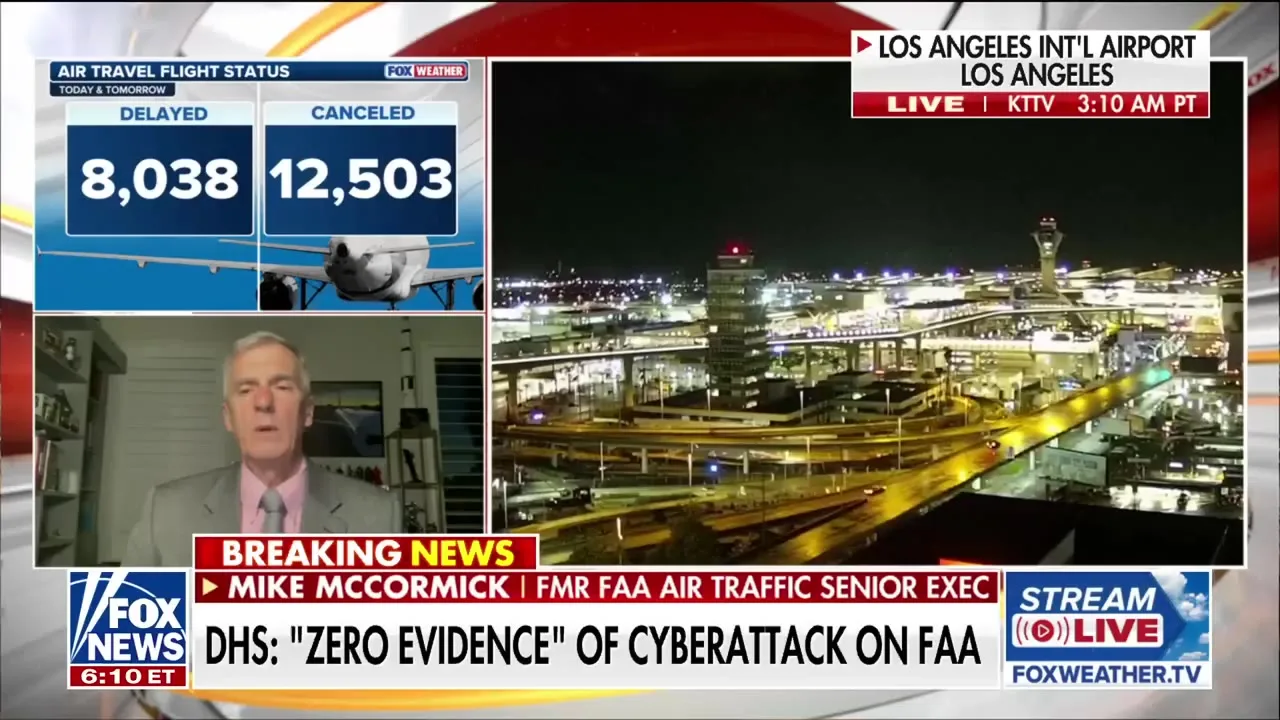
US airlines will need at least 48 hours to fully recover from the nationwide shutdown discussed in a Nov. 14 interview, former aviation executive Mike McCormack told Fox Business.
The recovery involves getting aircraft, passengers, baggage and flight crews into position so airlines can operate their schedules from early morning through evening. “Unfortunately, it won't be today,” he said.
McCormack linked the shutdown to problems integrating newer technology with older equipment in the Federal Aviation Administration's air traffic control system, which directs aircraft movements.
He described modernization as changing a tire while a car is moving. The system must keep providing service while engineers introduce and test new technology to ensure it does not overwhelm equipment already operating.
Newer technology overwhelmed the existing equipment, overloading telecommunications switching equipment and associated software, he said. That caused communication problems and eventually led to the nationwide shutdown.
McCormack declined to assess a $50 billion funding request raised during the interview. He said an earlier $20 billion request sought to replace radar systems across the United States and change some telecommunications equipment.
Those upgrades would help keep the system reliable and available to serve travelers. He supported funding requests that would improve air traffic control across the country.
Asked about the possibility of another disruption, McCormack said engineers must test how new technology works with existing systems before air traffic controllers begin using it fully.
“We need to be able to ensure the new stuff continues to work with the old stuff and it doesn't snowball,” he said.
Airlines, airports, passengers and the wider aviation industry support upgrading the system, McCormack said. He called for that support to translate into action in Congress.
McCormack said Transportation Secretary Sean Duffy and the FAA administrator supported modernization encompassing existing equipment and future technology. The system needs to serve both current demand and the aviation industry's future needs.
The immediate priority is restoring airline systems and schedules while deciding which flights should resume first to serve thousands of stranded passengers across the country.
That work includes identifying aircraft and crews that need to move and arranging support to get them into place. McCormack put the recovery at several days, with at least 48 hours needed for full restoration.
He gave no firm completion time beyond that estimate. He also did not assess whether the larger funding request would meet the system's needs or specify when the technology upgrades should be completed.