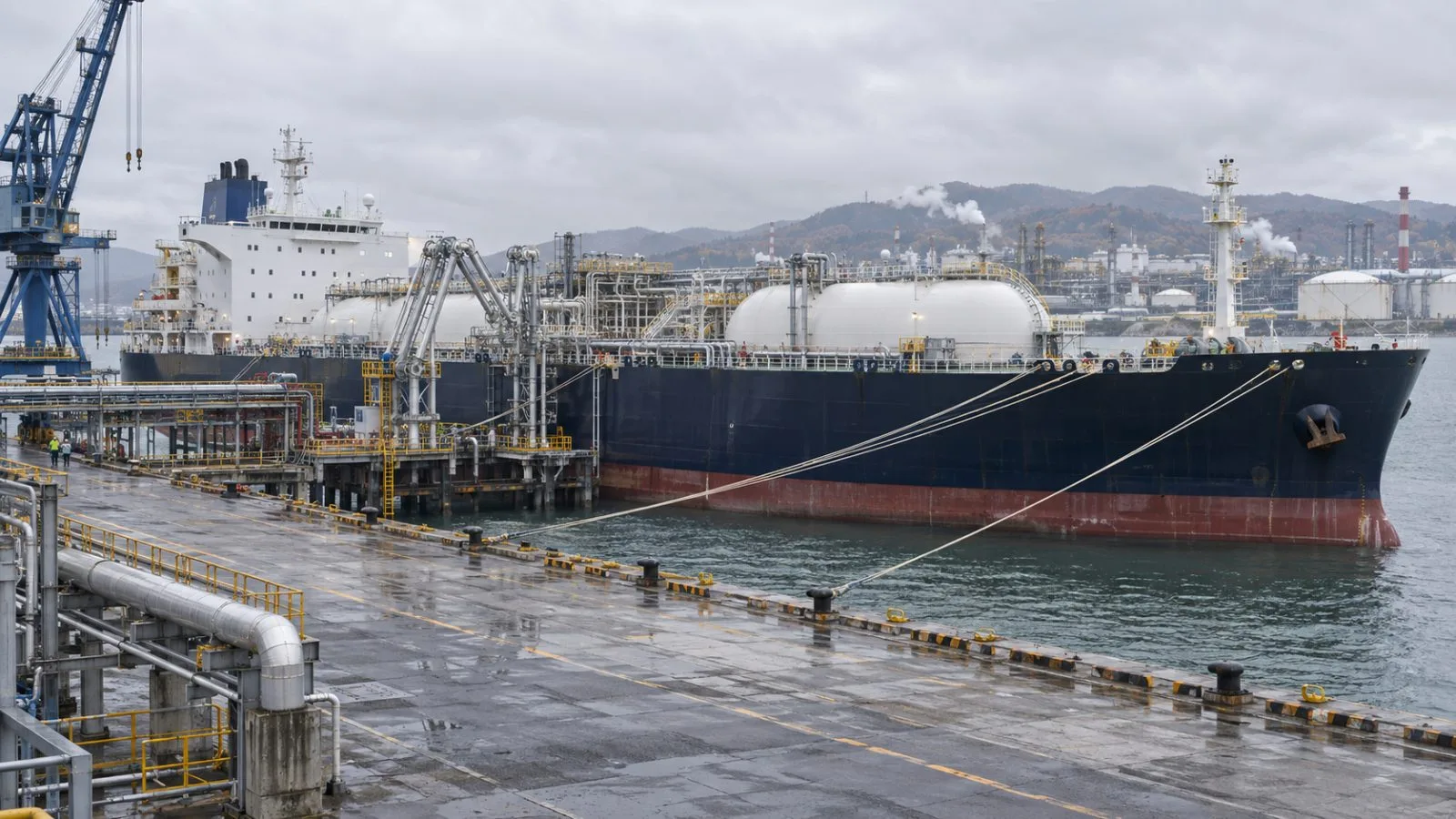
Ulsan Port Authority said a transfer of 800 tonnes of renewable-energy-based ammonia to a dual-fuel carrier at the port marked what it called South Korea’s first commercial ammonia marine-fuel supply demonstration.
The transfer took place at Pier 2 of Ulsan Main Port on Oct. 25-26, 2026, through a pipeline from shore to ship, the authority said. It named LOTTE Fine Chemical as the fuel supplier.
Envision Energy said the ammonia came from its Chifeng Green Hydrogen and Ammonia Industrial Park in Inner Mongolia. The facility produces 320,000 tonnes a year, according to the company, which said planned capacity is 1.52 million tonnes.
The Terra Clove, owned by Eastern Pacific Shipping (EPS), is a 93,000-cubic-meter very large ammonia carrier (VLAC). EPS says the vessel is the first VLAC designed for ammonia dual-fuel operation. Singapore’s Maritime and Port Authority (MPA) identified it as the first commercial newbuild with ammonia dual-fuel capability to join the Singapore Registry of Ships.
EPS said before the transfer that the ammonia was intended for onboard burning trials. Envision said operating the vessel on the fuel would significantly reduce lifecycle greenhouse-gas emissions; EPS described the reductions as potential. Neither company provided a quantified estimate.
Ulsan Port Authority said the Terra Clove operation was its fourth ammonia marine-fuel supply demonstration since April 2026. The previous three supported sea trials for medium-sized carriers, the authority said, which plans to expand its commercial ammonia supply system.
Envision said the bunkering followed a February 2026 shipment from Chifeng to LOTTE Fine Chemical in Ulsan. The company described that delivery as the first end-to-end commercial green-ammonia shipment from renewable-hydrogen production to international maritime logistics.
The MPA said the vessel’s development included design reviews against International Maritime Organization guidelines and hazard and operability studies. The MPA said its work included regulatory guidance on ammonia detection, fuel-system safety and emissions management. It said developing new technologies brings uncertainty and investment risks.