Uzbekistan’s government will landscape 30% of New Tashkent under the city’s master plan, replacing a requirement imposed on individual developers as it seeks more private investment in the planned city.
Investors previously had to reserve 30% of each plot for green space. The state will also pay for green building certification on nonresidential projects worth more than $50 million, the presidential office said Oct. 12. The changes reduce developers’ obligations while putting the citywide landscaping target and qualifying certification costs on the government.
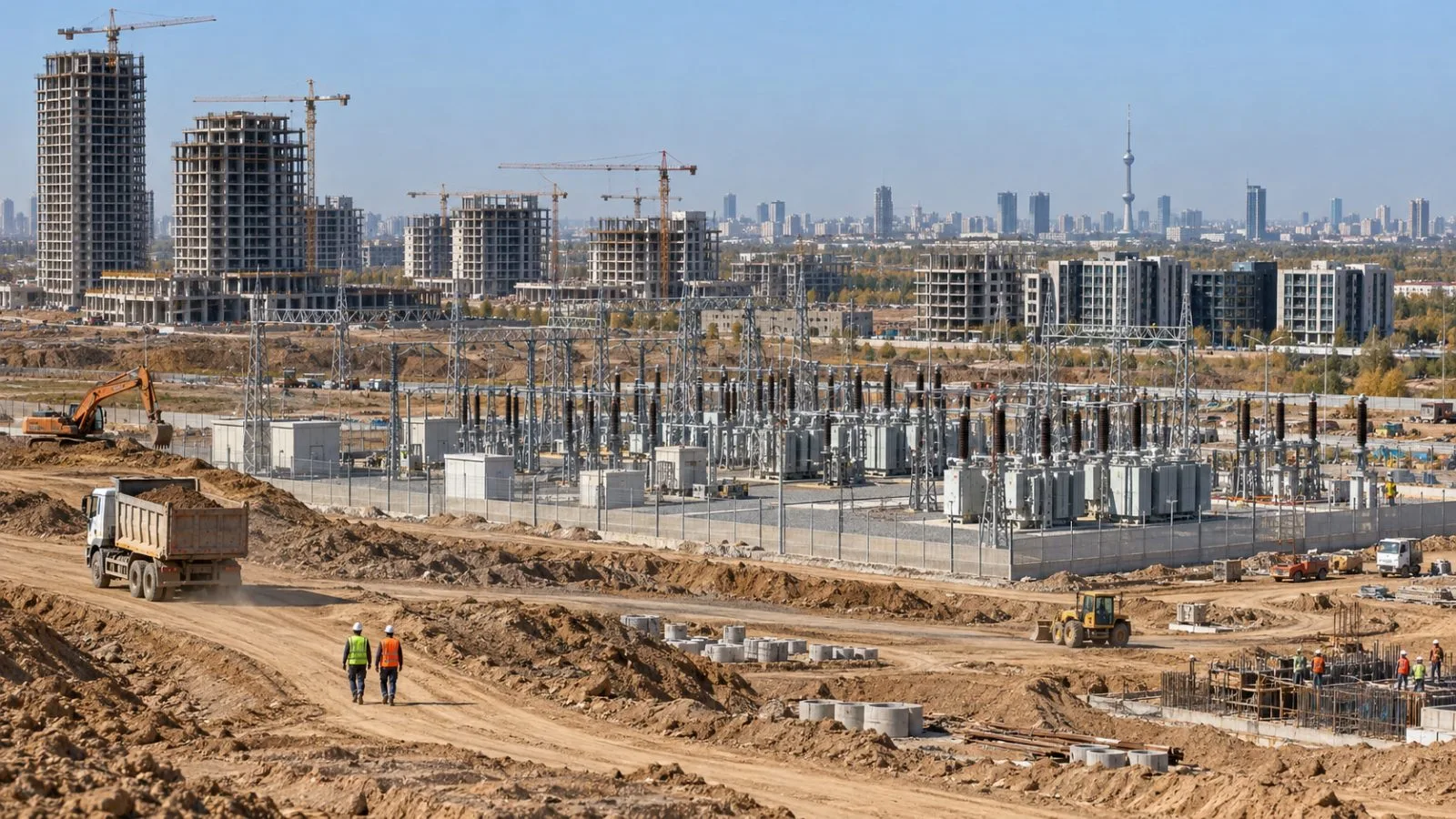
The presidential office cited outdated requirements and permit delays as barriers to investment. It plans $50 billion in first-phase projects across 6,000 hectares. On Oct. 12, Uzbekistan commissioned seven New Tashkent facilities valued at a combined $1 billion, including an electrical substation and a $73 million trigeneration plant.
The plant is intended to generate electricity and supply heating and cooling to 100,000 households. Officials also plan 2,000 hectares of green space and 500 hectares of parks. A separate infrastructure plan calls for treated wastewater to be used for irrigation and technical needs.
Water scarcity, drought and extreme heat are among the risks the World Bank has identified for Uzbekistan. In the existing capital, an Uzbek government notice says more than 1.35 million tree and shrub saplings were planted from 2022 through 2026. It also lists green belts planned in Bektemir district and along the Chirchiq River for 2026 and 2027.
In Türkiye, a rural housing project begun after the February 2023 earthquakes is receiving more funding for homes designed to address both seismic and climate risks. The World Bank approved an additional €250 million loan June 30, 2026, alongside €150 million in co-financing from Agence Française de Développement (AFD).
The financing expands a project approved in June 2023 and will support 3,000 more rural homes and essential services. The World Bank said the homes will continue to be designed for earthquake and climate risks while using energy and water more efficiently.
Türkiye’s presidency reported Dec. 27, 2025, that 455,357 independent units had been completed in the earthquake recovery. An earlier breakdown from the Ministry of Environment, Urbanization and Climate Change counted 367,995 residential units, 65,672 village houses and 21,690 workplaces.
Uzbekistan’s next stated New Tashkent construction target is to commission 20,000 apartments by the end of 2026.