Clinic director Bianca Dámaso said two foundations have records of more than 150 people needing prostheses after Venezuela’s June earthquakes, as device prices and rehabilitation add to the cost of recovery.
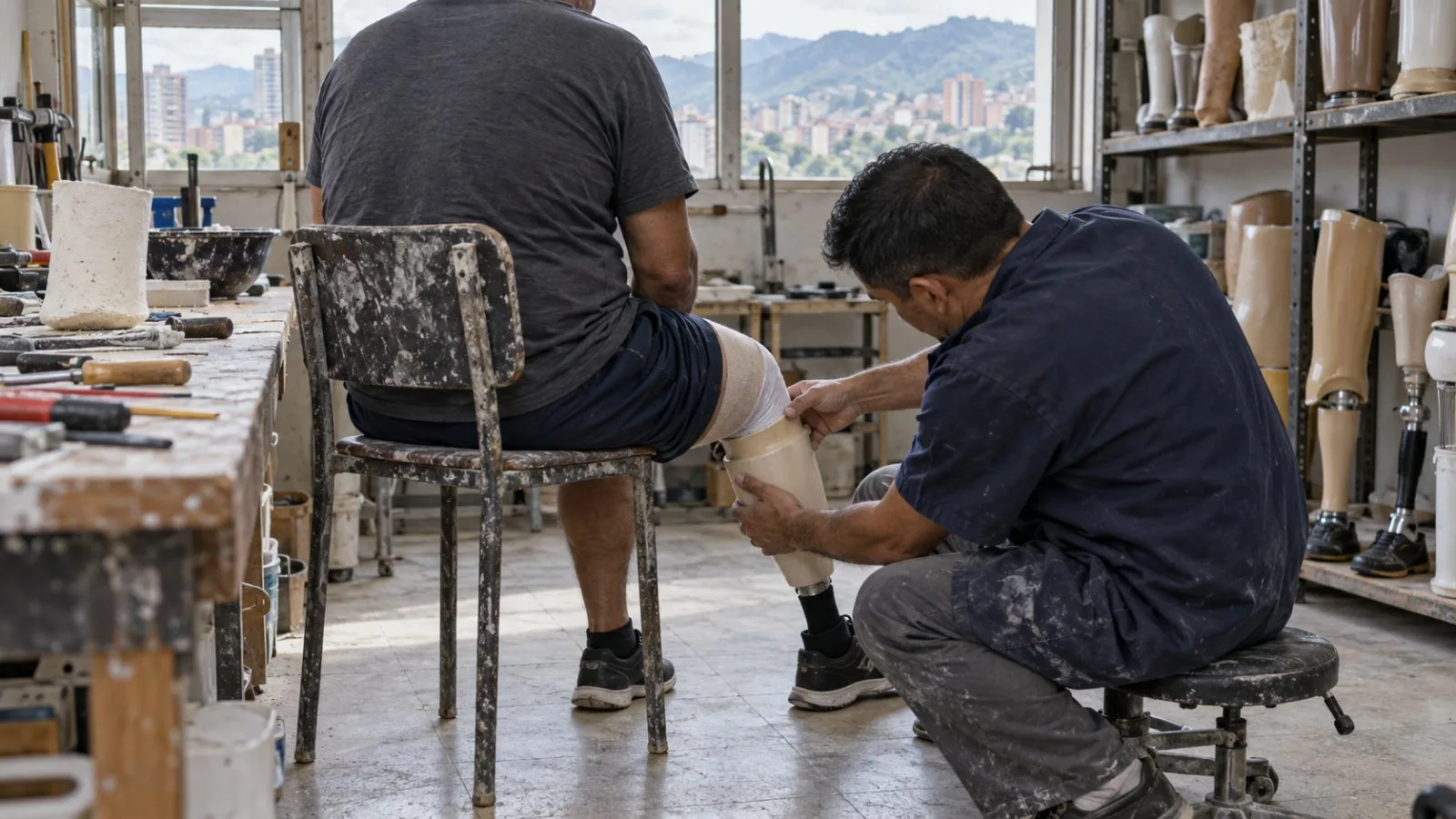
On Sept. 12, Dámaso told Radio Fe y Alegría that the records came from the Juan Pablo Dos Santos and Cirec foundations. She said there was no official figure for people needing prostheses. Ortoprotécnica planned to provide devices and strengthening physiotherapy to 31 people. The International Federation of Red Cross and Red Crescent Societies (IFRC) said the earthquakes struck 39 seconds apart on June 24 and measured magnitudes 7.2 and 7.5.
Dámaso put prosthesis prices at 3,500 to 25,000 dollars and said the workshop was using labor at 25% of its usual level to reduce costs. She said children may need four to six replacement devices before age 18.
An Oct. 26 Al Jazeera profile reported that preparation at the Caracas workshop usually takes two to three months before a patient is ready for a prosthesis. The period can be longer when injuries take more time to heal or other health conditions slow recovery. Adults may later need adjustments and repairs, the profile said.
Caracas Nurses Association President Ana Rosario told Al Jazeera that patients may still pay for medicines, supplies, tests, transportation and rehabilitation, even though health care is technically free.
The broader earthquake response also faces funding gaps. UNICEF’s report covering Aug. 18 to Sept. 7 said it had mobilized US$29.5 million of the US$65.7 million required, leaving a US$36.2 million gap. The IFRC said Sept. 24 that 39.8% of its CHF 50 million appeal for response and recovery had been covered. Neither update specified funding for prosthetic care.
Al Jazeera’s profile described Ricardo Contreras, 24, who returned to university on crutches after losing a leg; his professors moved his classes to ground-floor rooms. “Now it’s about regaining a little of the independence I had before the earthquake,” he told the outlet. The profile also said Karina Bechara, who lost both legs, was using a wheelchair and hoped to stand on her new feet by Dec. 1.