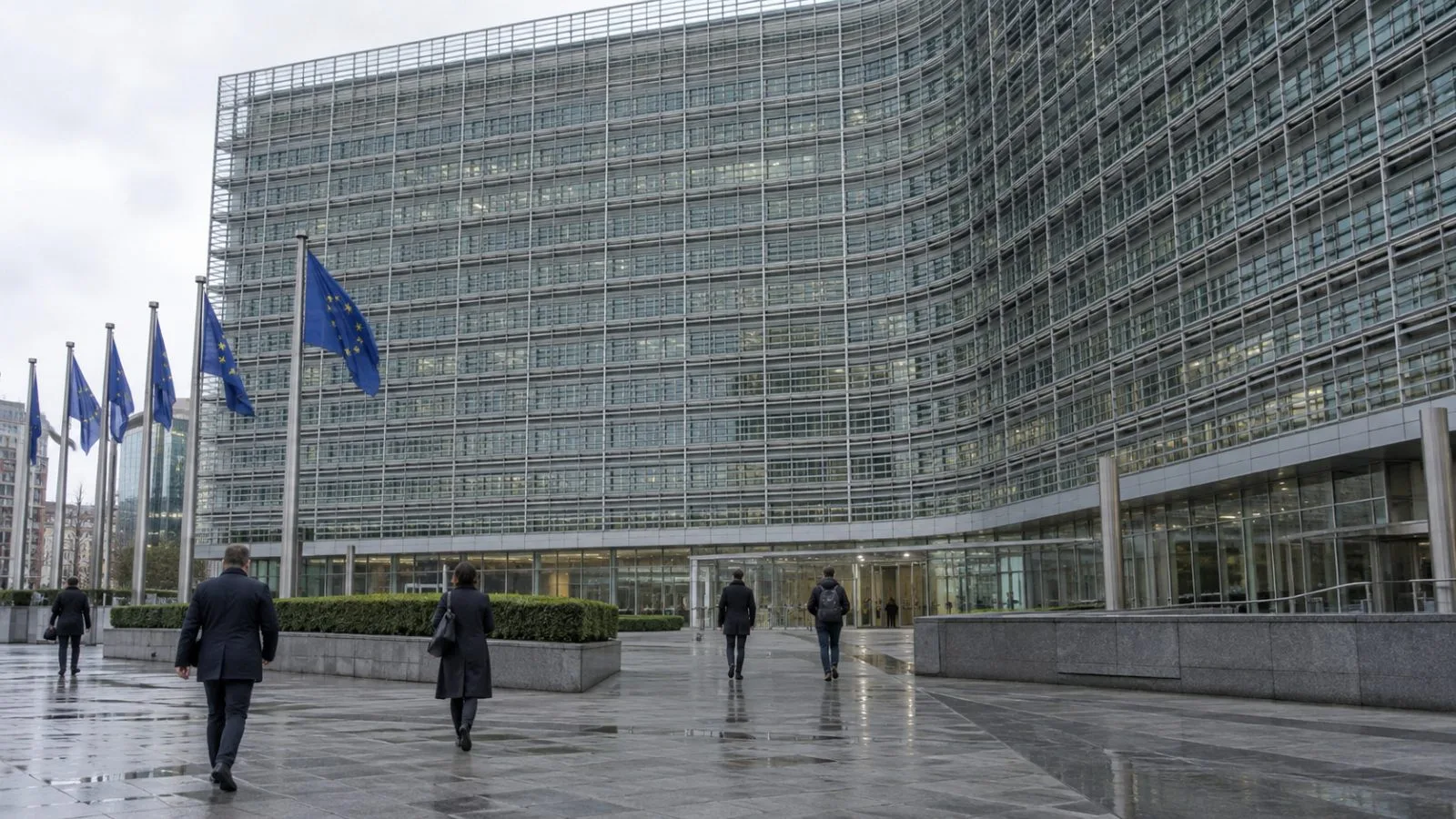
Energy ministers from Czechia, Hungary, Poland and Slovakia sought more flexible European Union funding on Oct. 19 to help industries facing high energy costs as the bloc’s staged Russian gas ban approaches.
Slovak Deputy Prime Minister and Economy Minister Denisa Saková said the four countries requested a temporary exception that would let EU resources support industry. TASR reported that the proposal could involve Cohesion Policy funds or greater flexibility within the Modernisation Fund. It could cover companies’ operating costs alongside investment, easing pressure on national budgets, according to TASR’s account of her remarks.
The ministers signed a joint declaration after meeting EU Energy and Housing Commissioner Dan Jørgensen in Bratislava. Poland’s Energy Ministry said the declaration calls for simpler rules after 2030 and equal access to EU funding for nuclear and renewable energy. It also addresses electricity prices, state aid for energy-intensive businesses, more varied supply sources and stronger connections among countries.
Czechia, Hungary and Slovakia are landlocked. Slovakia’s Foreign Ministry says they face particular challenges accessing alternative energy sources. The EU’s gas regulation notes that finding replacements can be harder for pipeline-gas customers, especially where liquefied natural gas infrastructure is lacking.
Jørgensen said measures to ease high prices should be temporary and consistent with the EU’s longer-term effort to reduce energy dependence, TASR reported.
EU leaders committed in March 2022 to phase out dependence on Russian fossil fuels as soon as possible. Under Regulation (EU) 2026/261, imports of Russian liquefied natural gas covered by qualifying long-term contracts are barred starting Jan. 1, 2027. The cutoff for qualifying long-term pipeline contracts is Sept. 30, 2027. It shifts to Nov. 1, 2027, in a member state if the European Commission confirms that the state risks missing its 2027 gas-storage target.
Poland’s Energy Ministry’s summary of the declaration does not list a request to change those deadlines. Slovakia and Hungary have separately asked the Court of Justice of the European Union to annul the regulation; Slovakia’s case is pending.
The funding request arrives as EU leaders negotiate a budget for 2028-34. In conclusions from their Oct. 15-16 summit, they said an agreement before the end of 2026 would allow funding laws to be adopted in 2027 and money to reach recipients in January 2028.