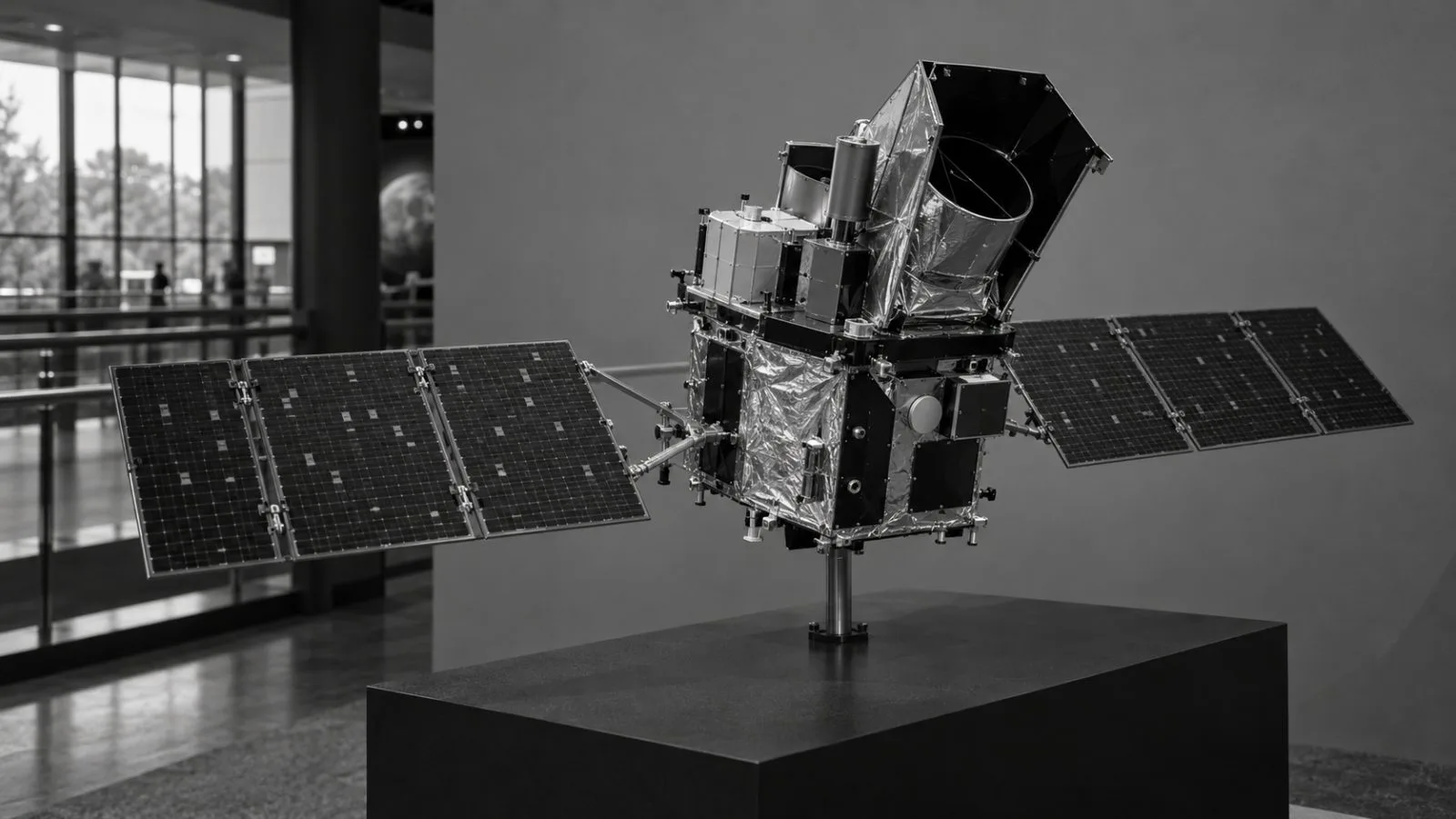
On Nov. 18, NASA expects its Voyager 1 spacecraft to cross the one-light-day threshold from Earth, leaving controllers waiting at least two days for a full radio exchange.
NASA's light-day figure is 16,094,799,096 miles (25,902,068,356 kilometers). From that far away, the outbound signal needs a full 24 hours to reach Voyager 1, while a reply adds another 24 hours on the return leg. NASA expects the crossing to mark a first for a human-made object. The spacecraft and its surrounding space will remain unchanged by the milestone, NASA says.
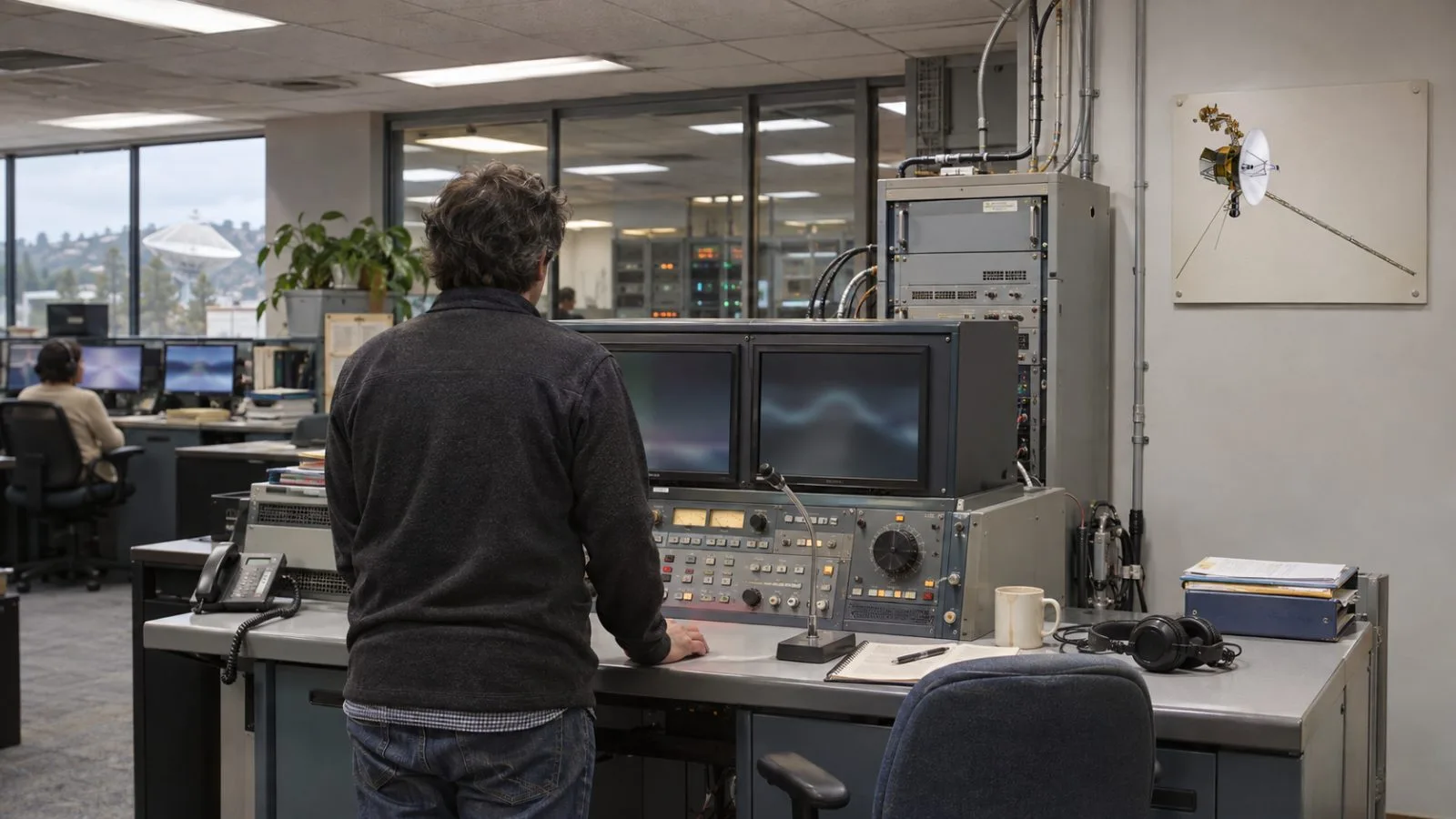
Such a delay shapes communication with the mission. Suzanne Dodd, Voyager project manager at NASA's Jet Propulsion Laboratory, described the wait after sending a message: “you wait two days before you finally get a response.”
The spacecraft's power supply is a separate operational limit. NASA says each Voyager probe's electrical output declines by about four watts per year. In September 2026, engineers replaced three devices on Voyager 1 with lower-power alternatives to help keep its two remaining science instruments operating. NASA said another instrument would have needed to be turned off as early as summer 2027 without those changes.
NASA also missed scheduled signals from Voyager 1 on Oct. 18 and 19. Contact resumed Oct. 20, and engineers are investigating the cause.
A light-day describes Voyager 1's separation from Earth rather than the total length of its path through space. It is based on light's travel time across that gap. NASA projects Voyager 2 will reach the same distance in November 2035.
Launched Sept. 5, 1977, Voyager 1 flew past Jupiter and Saturn before entering interstellar space in August 2012. It photographed Earth on Feb. 14, 1990, for the image later known as the “Pale Blue Dot.” The probe remains the most distant human-made object. NASA places the crossing at 5:16:07 a.m. EST on Nov. 18, 2026.