An estimated 45% of Ethiopian health facilities had no water service in 2025, according to United Nations data, as WaterAid warned of infection risks for mothers and newborns.
The World Health Organization (WHO) and United Nations Children’s Fund (UNICEF) Joint Monitoring Programme estimated that 37% of Ethiopia’s health facilities had limited sanitation and 5% had no sanitation service in 2025. The figures cover health facilities generally, rather than maternity units alone.
Under the program’s definition, “no water service” includes a facility with no water source, one using an unimproved source, or one whose improved source is more than 500 meters away. The estimates appear in the program’s 2026 report and describe conditions in 2025.
WaterAid estimates that more than 16 million women worldwide give birth each year in facilities without adequate water, toilets or hygiene. The charity says such conditions expose mothers and newborns to preventable infections and make midwives’ work more difficult. Its global estimate does not measure the number of births affected in Ethiopia.
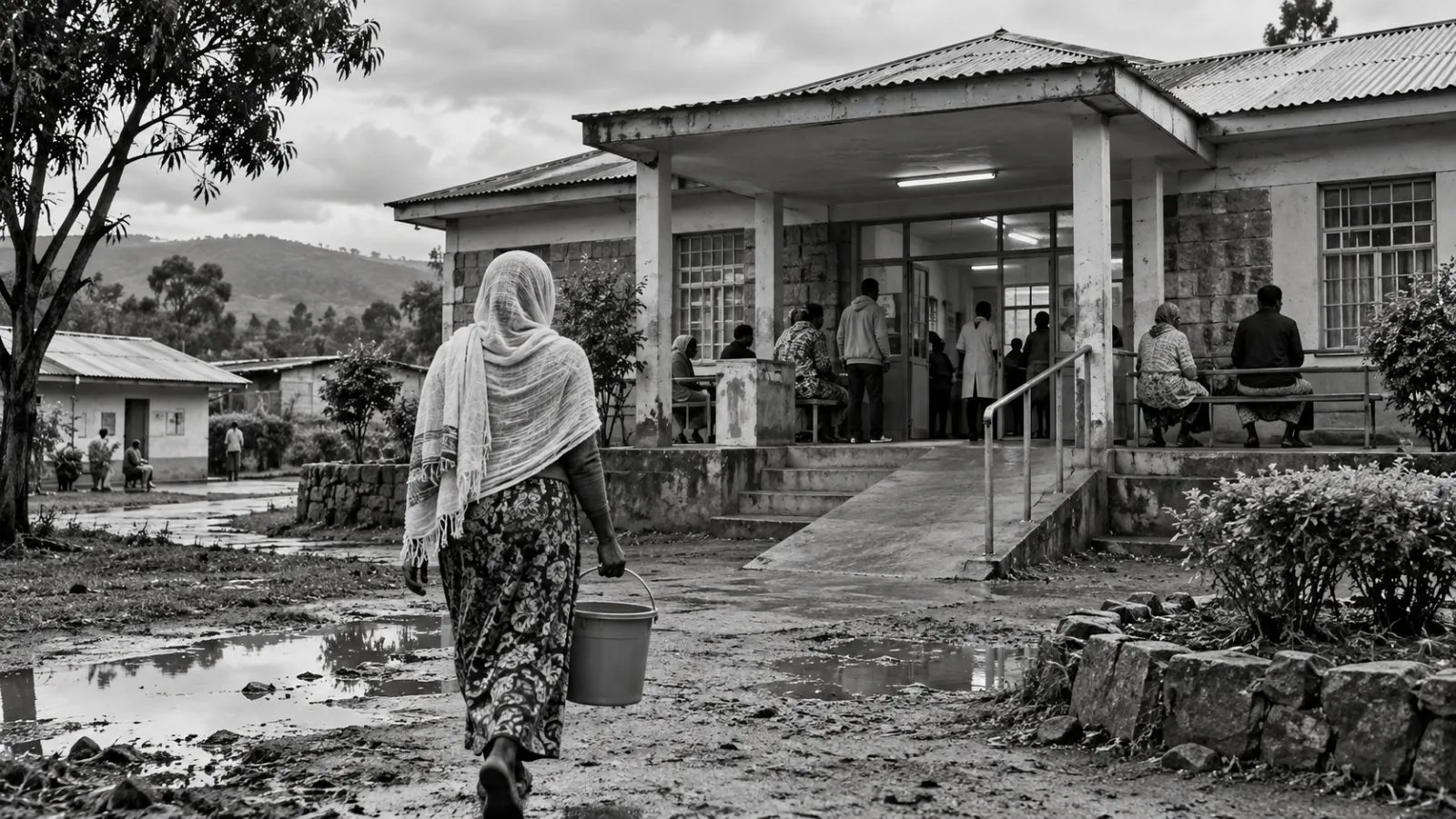
In an account published by WaterAid, Anshiya Haji Hussien was preparing to give birth at Gada Tokuma Health Centre and planned to bring a bucket because water might not be available. Midwife Hindiya Abdulkadir said the center sometimes went more than a week without water.
Frehiwot Gebrewold, a WaterAid community voices specialist in Ethiopia, argued in an essay for The Independent that health systems had failed to prioritize water, sanitation and hygiene. She described that failure as a cause of unsafe childbirth conditions in sub-Saharan Africa.
The Joint Monitoring Programme says its global database is next due for an update in 2028. WaterAid is urging governments to provide clean water at every health facility and has called on the United Kingdom government to prioritize water, sanitation and hygiene during its 2027 G20 presidency. It also wants the issue addressed at the United Nations Water Conference, scheduled for Dec. 8–10 in Abu Dhabi.