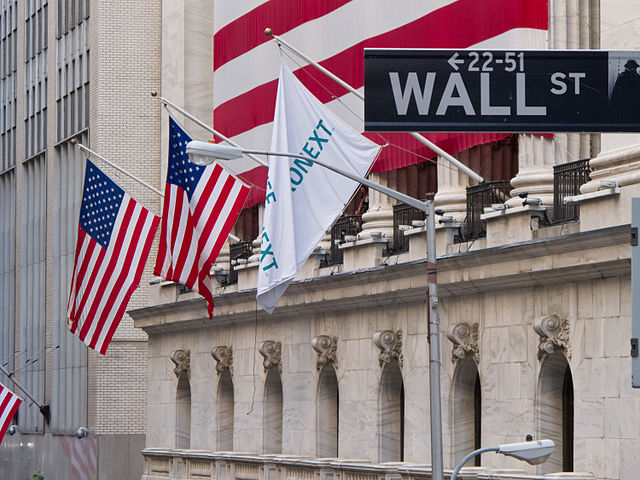
U.S. stocks closed mixed on Monday as a sharp decline in Alphabet shares pressured the communication services sector, while investors closely monitored evolving developments in the Middle East and assessed the Federal Reserve’s increasingly hawkish stance.
After returning from the Juneteenth holiday weekend, the benchmark S&P 500 fell 0.3% to 7,475.17, while the Nasdaq Composite dropped 1.3% to 26,166.60. The Dow Jones Industrial Average managed to gain 0.3%, ending the session at 51,712.53.
Among the S&P 500 sectors, Communication Services posted the steepest losses, largely due to Alphabet’s decline. In contrast, Real Estate, Energy, and Healthcare led the market higher. Analysts noted that investors are rotating out of high-performing technology and AI-related stocks into more cyclical and undervalued sectors.
Market sentiment remained sensitive to geopolitical developments in the Middle East. Concerns resurfaced after reports of renewed clashes involving Israel and Hezbollah despite a recently announced U.S.-Iran memorandum of understanding aimed at reducing regional tensions. While both Washington and Tehran highlighted progress during peace discussions held in Switzerland, uncertainty surrounding ceasefire violations and the status of the Strait of Hormuz continued to influence investor sentiment.
Oil prices extended their recent decline as hopes for diplomatic progress reduced fears of supply disruptions. Brent crude futures fell 2.8% to $77.84 per barrel, approaching levels seen before the recent conflict escalation.
Investors are also digesting last week’s Federal Reserve projections, which signaled a more aggressive approach toward inflation. Several policymakers now expect potential interest rate increases later this year, citing inflation risks linked to higher energy prices.
Corporate news also weighed on technology stocks. Alphabet shares fell 5% after losing two prominent artificial intelligence leaders, including Gemini AI co-lead Noam Shazeer and Nobel Prize-winning DeepMind researcher John Jumper. Both executives are reportedly joining rival AI companies.
Meanwhile, SpaceX shares dropped 16.4%, extending losses for a third consecutive session. Despite reporting more than $100 billion in cash reserves and announcing a new bond offering, investors appeared concerned about valuation levels following the company’s strong market debut earlier this month.
Looking ahead, Wall Street’s focus will shift to upcoming U.S. economic data, including purchasing managers’ index (PMI) figures and a revised first-quarter GDP report, which could provide further clues about the economy’s strength and the future path of interest rates.