Preliminary Kpler figures cited by The Wall Street Journal put Middle East oil flows above their prewar benchmark in the week through Oct. 18, while refiners faced higher delivery costs.
The newspaper reported a regional total of more than 24 million barrels a day. Kpler’s published benchmark for the same broad measure is about 23.3 million barrels a day. It covers crude and other oil products moving through the Strait of Hormuz and alternative regional routes, excluding Iranian-origin shipments.
For the same week, the Journal reported flows through Hormuz of about 14 million barrels a day, including offshore transfers in the Gulf of Oman. That was 82% of the prewar level.
The volume recovery has not brought delivery costs back down. The U.S. Energy Information Administration (EIA) said security risks, insurance and tanker rates were raising the cost of crude delivered to refiners.
Kpler’s research shows how export routes had changed in an earlier period. From Sept. 1 to 28, at least 16.5 million barrels a day of non-Iranian crude and condensate left the region, matching the prewar average for that narrower category. Of those shipments, 40% bypassed Hormuz, compared with 17% before the war.
Two pipelines carry crude to ports outside the strait: Saudi Arabia’s East-West Pipeline and the United Arab Emirates’ Abu Dhabi Crude Oil Pipeline.
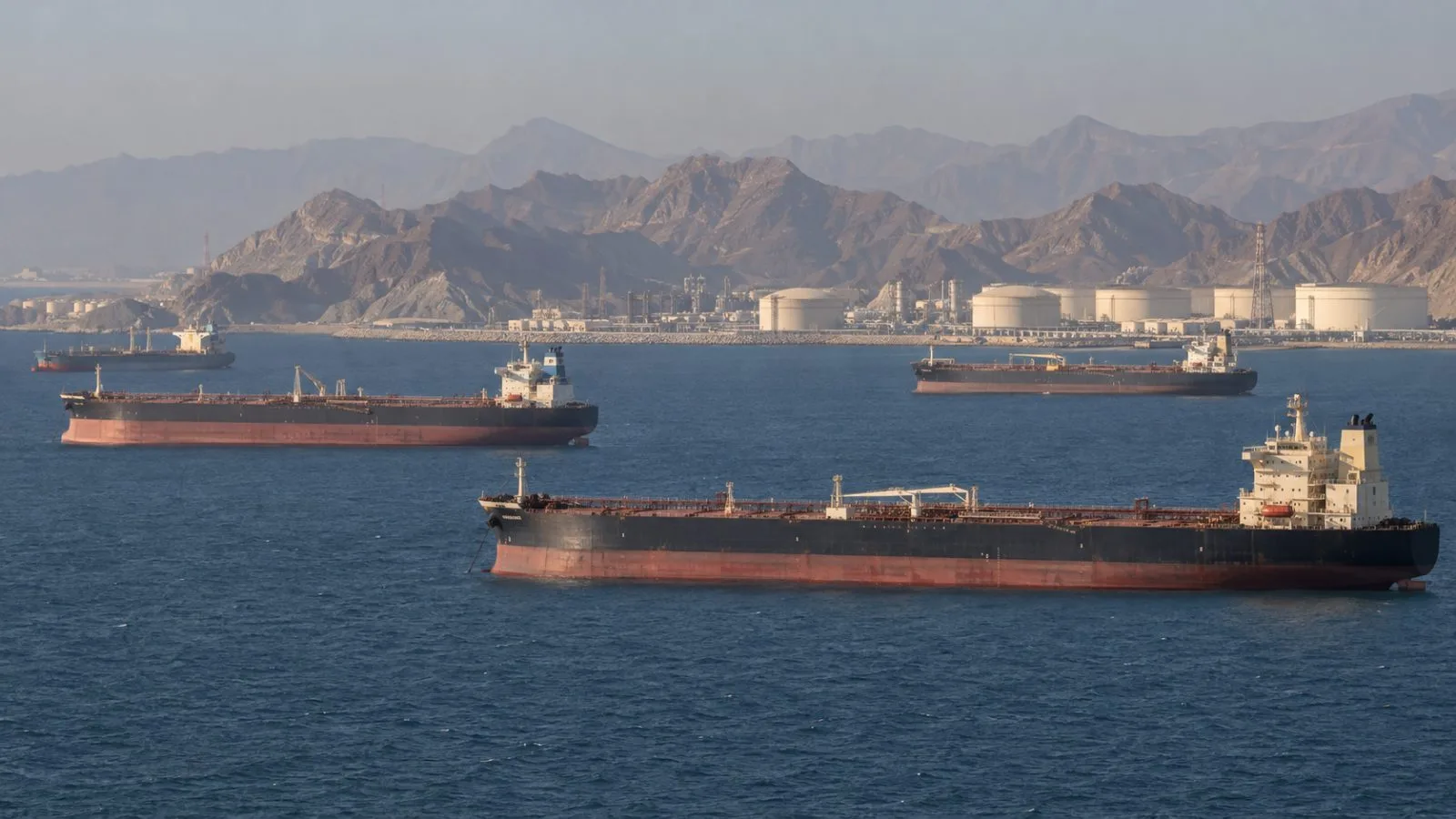
Cargo transfers off Fujairah or Sohar also allow tankers to return for further Hormuz crossings. Kpler counted at least 63 very large crude carriers in that shuttle trade, including 35 that had made three or more round trips.
Exports and production remain different measures. Kpler estimated that Middle Eastern crude and condensate output was about 5 million barrels a day below its February level as of Oct. 6. In an Oct. 7 assessment of crude and condensate exports, it said Saudi inventory drawdowns had supported shipments and cautioned that the recovery could be temporary.
United Kingdom Maritime Trade Operations (UKMTO) said a tanker master reported a rocket-propelled grenade attack from a small boat near Saudi Arabia on Oct. 16. The agency said the vessel was damaged and its crew was safe.
The EIA’s next Short-Term Energy Outlook is scheduled for Nov. 10.