
Last Friday's non-farm payroll report surprised to the downside. The miss was worst since 2009.
98 economists were surveyed by Bloomberg, all failed to come even close to the actual number. US reported only 126,000 payroll number compared to median forecast of 245,000.
Weaker NFP immediately produced volatile reactions across markets.
- Euro jumped above 1.10, however failed to break above the resistance. Similar performance was seen across other pairs and US money market.
- Metal segment is performing very well today, as it was closed on Friday over Easter. Copper Jumped to $2.83/pound. Gold is testing resistance at $1224. Silver is up 2.85% trading at $17.25.
Rate hike expectation -
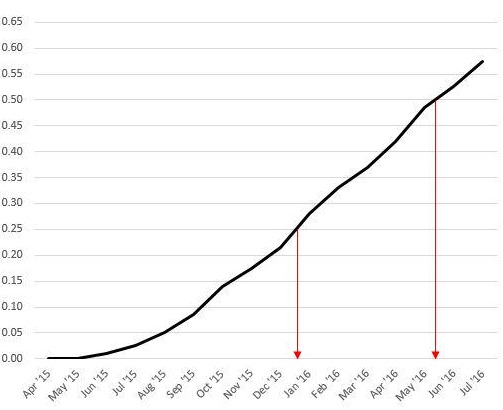
- FOMC participant Mr. Evans will be more than happy now, as Market now pushed first rate hike expectation to next year. Mr. Evans is extreme dove among the member, who relentlessly tried to convince partners to push first rate hike to 2016.
- According to Fed funds rate futures market is expecting first hike in January 2016. Focus is now on FOMC participants' commentaries and FOMC statement. Chart courtesy Soberlook.
Dollar is still doing well, as yield spread still remains attractive in favor of dollar. However it is now more vulnerable against other high yielding pairs such as GBP, NZD and CAD.


