


 AstraZeneca Halts Phase III Volrustomig Lung Cancer Trial After Efficacy Setback
  Moderna Wins FDA Approval for mFLUSIVA mRNA Flu Vaccine for Adults 50+
  Moderna Short Sellers Hit With $4.8 Billion Loss as Stock Soars
  Novartis M&A Strategy Faces Investor Scrutiny After Drug Setbacks
  Hanmi Pharm Soars 30% on $2.3 Billion Genentech Obesity Drug Deal
  Venezuela Earthquake Health Risks Rise as Disease Monitoring Intensifies
  Trump Signs Order to Cut Routine Childhood Vaccines
  Novo Nordisk Raises 2025 Outlook Despite Wegovy Pill Miss and CagriSema Setback
  FDA Weighs Safety Standards for Psychedelic Therapies
  U.S. Issues Cuba Health Alert as Illnesses Rise
  US-Backed Pediatric HIV Treatment Drops After Foreign Aid Changes, Study Finds
  GLP-1 Weight-Loss Drug Use Surges Among U.S. Children
  Hims & Hers Shares Fall as GLP-1 Costs Widen Q2 Loss
  Trump Administration Bars U.S. Travelers From Congo Flights Amid Ebola Outbreak
  Sanofi, Regeneron Expand Drug Partnership in $8 Billion Deal


 Add as a preferred source on Google
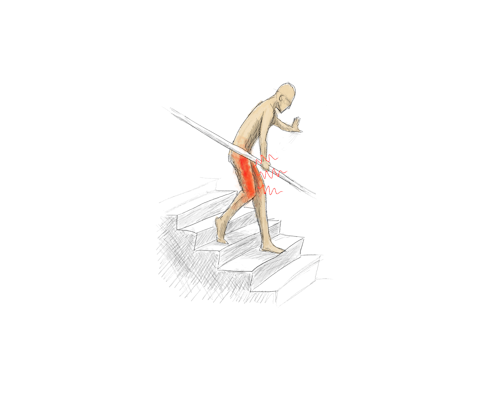


The Paris 2024 Olympics have inspired you to take up running again this year. Your shoes are all laced up, your headphones plugged in, and you’re off. 15 kilometres later, with no cramps or stitches to report, you’re home. But two days later, shooting pains in your calves make it almost impossible to climb the stairs. And yet, before you went to bed last night you were fine, so what could have happened?
Complex mechanisms yet to be elucidated
Aches and pains are diffuse muscular pains that generally appear in the days following intense effort and gradually disappear. Strange as it may seem for such a common phenomenon, the scientific community has not pinned down the mechanisms responsible for muscle soreness. As with any issue that deals with the sensation of pain, understanding muscle soreness involves looking at complex biological processes.
Pain is first and foremost a subjective experience resulting from the nervous system’s interpretation of sensory signals, whether or not there are associated physical lesions. Scientists have put forward many biological mechanisms to explain the origin of muscle soreness, and the current consensus is that several phenomena are involved. And contrary to what you might have heard, “lactic acid” has nothing to do with it.
After an intense workout, and particularly after eccentric contractions (contractions that involve resisting a stretch, for example when descending stairs), we can pick up micro-lesions at the smallest unit of striated muscle tissue, the sarcomeres.

Drawing of muscle cells as observed by electron micrography. On the left, a healthy muscle. The sarcomeres (visible here as grey bands separated by dark lines) are continuous and aligned. On the right, the same muscle after intense and unusual exercise. We can see that the continuity of the sarcomeres has been compromised, corresponding to microscopic muscle damage. The orange areas represent the tearing of the proteins that structure the sarcomeres. Fourni par l'auteur
But it is not the lesions themselves that are painful, as they are already present immediately after the effort, whereas muscle soreness generally only appears 24 to 48 hours later.
On the other hand, these micro-lesions trigger a cascade of physiological phenomena in the hours and days following intense or unusual physical exercise. Some of these phenomena are almost immediate, such as the leakage of components, in particular enzymes and proteins contained in the muscle cell, which diffuse outwards from the damaged cell membranes. Others occur later, such as inflammatory and immune reactions, which can take several days or even weeks.).
In addition to these physiological phenomena, micro-injuries also lead to functional impacts, such as a loss of strength, increased stiffness or visible swelling of the muscle. However, none of these markers seems to correlate perfectly with the sensation of pain. It is therefore likely that multiple mechanisms interact to give rise to soreness.
The nervous system itself also plays a central role in the appearance of muscle soreness. The sensation of pain as such does not exist in the muscle. It results from the interpretation of nociceptive signals – warning signals – received by the brain. Furthermore, several of the proposes proposed to explain muscle soreness directly involve the various sensory sensors located in the muscle.
How to avoid aches
Muscle soreness isn’t something to worry about and generally disappears within a few days. However, functional impacts, such as loss of strength, can sometimes last a little longer (particularly when the workout has been intense), and the disappearance of muscle soreness is not necessarily a good indicator of muscle recovery.
The best way to prevent muscle soreness is to prepare for this unusual demand by training gradually. As the muscle is a highly adaptable organ, having already been confronted with an exercise makes it much more resistant to muscular damage caused by other stresses in the future. Contrary to what you may hear, stretching before or after a session has no real impact on muscle soreness. And unfortunately, if it’s too late and the aches and pains are already there, no solution has really been proven to improve all the symptoms; the best thing is to remain patient. You can, however, continue to train at a more relaxed pace, which may ease the symptoms a little.







